A full featured article discussing what makes a Pokémon game, and the conceptual directions of how Pokémon Rom hacks may themselves act as Pokémon do — and Evolve.
Widget best viewed on computer
The Culture of Pokémon Gaming
From Pokémon’s meteoric success before the millennium to today, a subculture has emerged, not much younger than the franchise itself, referred to as the ‘ROM hack community’. ROM hacking games are not exclusive to Pokémon titles, but custom versions and alterations are very popular in the genre we could call PokéROMs.
In PokéROMs, enthusiasts and programmers alike tell their own complex stories — or versions of stories — from the Pokémon world, presented as if they were official titles. They create new experiences, plots, adventures and monsters, erase longstanding flaws and redesign competitive balancing — all in a format players are accustomed to. Today, there are over 151 ROM hacks (probably) to choose from.
The ROM hacks themselves are much like Pokémon’s highly successful game formula — a formula that has had a permanent and influential impact on the gaming industry in its own right. Pokémon likely was the first video game to introduce the concept of ‘shinies’ that later became a part of their trading card game as shiny cards. To many, shiny Pokémon were introduced as the ‘Red Gyarados’ of Lake Rage, in their second instalment, the Gold, Silver and Crystal versions.
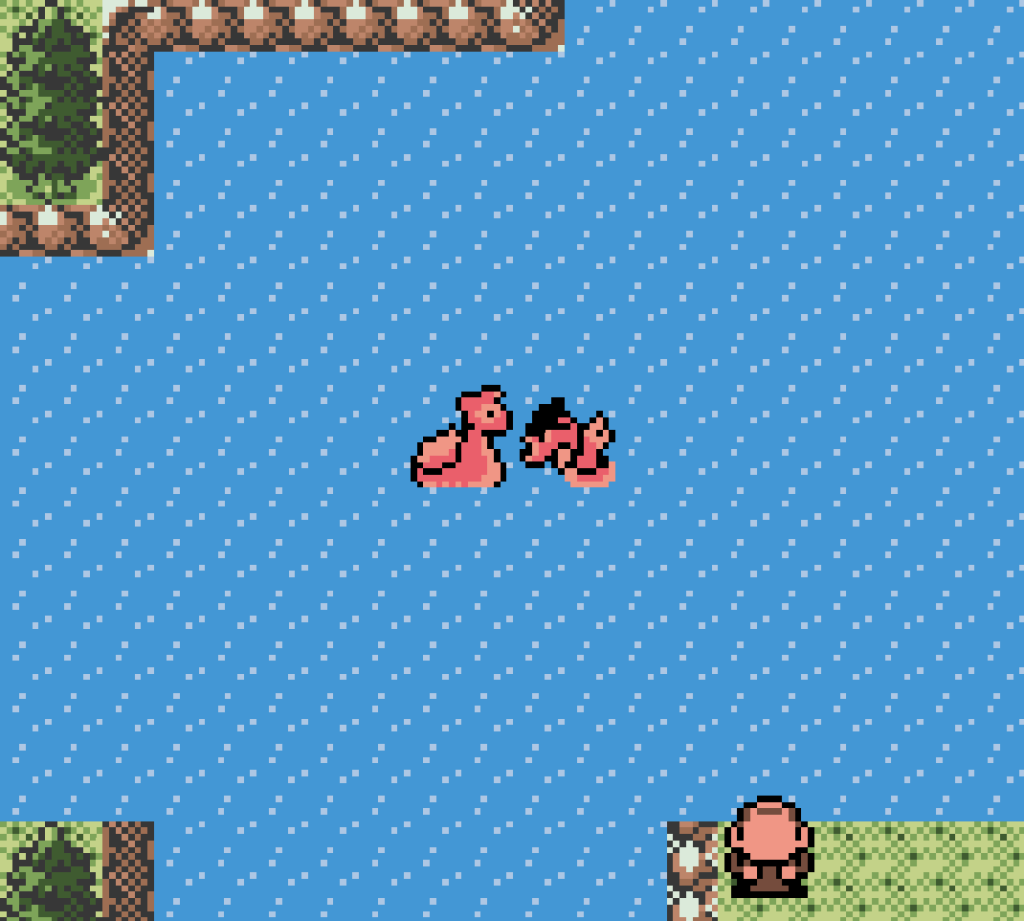
The ‘shiny Pokémon’ is a rare variant but its difference is purely aesthetic. Shiny Pokémon has proven very popular with fans. There is even a type of live streaming called ‘shiny hunting’ that focuses solely on restarting the game or a Pokémon encounter hundreds of times, hoping the probability triggers to reveal a different coloured creature.
The popularity of shiny Pokémon may have paved the way for monetising freemium cosmetics flogging, which uses similar rare, special sparkly visual rewards driven by how sought-after they become.
The game’s competitive element sees a developed web of naturally apparent strengths and weaknesses. The most famous is the rock-paper-scissors relationship of fire, grass and water — but unlike the hand game that decides who goes first outright, this relationship doesn’t guarantee absolute victory. Pokémon was among the first to implement this kind of system — a foundation that has since become common in games modelling real-world dynamics and turn-based strategy.
The original Red, Blue and Green versions contain arguably the most famous glitch in gaming history. That is the MissingNo. glitch — short for ‘Missing Number’. It occurs when the game doesn’t know the Pokémon to generate in an encounter, because there was no Pokémon was assigned to that area. MissingNo. then acts as the default.
This mysterious accident gained something of a following — enough to draw the attention of American sociologist William Sims Bainbridge, who observed how fans reacted to it. Not to mention the famous ‘Mew Under the Truck’ rumour — a pre-internet myth that spread through playgrounds worldwide, leaving many players disappointed.

As you may be aware, Pokémon games don’t come with a difficulty setting. Instead the player essentially ‘self-moderates’ their own difficulty, by choosing which monsters they use and how much assistance they receive for victory. But for some, that isn’t enough. And instead implement artificial handicap rules they enforce themselves in a sort of ‘self-governed’ playstyle.
One popular such rule is the ‘Nuzlocke challenge‘, thought of by Nick Franco — who wrote comics for “Pokémon: Hard-Mode” in 2010 as used ‘Nuzlocke’ as his screen name. This includes a ruling of considering a Pokémon as dead and therefore void of use when it faints in battle, instead of using the game’s free veterinary healthcare system to revive their beasts after a dogfight.
Another variation of playthrough would of course be speedrunning, a culture that emerges amongst any hardcore video-game fanbase. Pokémon is no exception. In fact the game is so well understood that dedicated players have discovered how to hack it through ordinary gameplay — in a very particular way. This is done by a technique called ‘Arbitrary Code Execution’ (ACE). This involves something like naming certain variables — like your in-game name — certain characters, and the game’s CPU reads those characters not as letters but as instructions — running whatever tiny program the player has spelt out, character by character, in their own name. This can then achieve warping, maxing your Pokémon team’s level, or stocking the mart with a certain item.
This kind of hack has been popularised by speedrunners like ‘Shenanagans’, who presented a Pokémon Glitch Exhibition at Awesome Games Done Quick 2016 — a charity speedrunning marathon that, in that year alone, raised over $1,200,000 for the Prevent Cancer Foundation. The broader scene features other prolific names like Werster, who competes across a wide variety of Pokémon titles, and ‘MrWint’, a TAS (Tool-Assisted Speedrun) specialist behind multiple Gen 1 records. As of writing, the French speedrunner Grogir holds the Pokémon Red ‘Any%’ world record at 1m 17s 577ms — where ‘Any%’ means completing the game by any means necessary, glitches included.
That is but one method of deliberate fast play. Another more sociable practice could be called ‘Racing’, where friends gather and start the game at the exact same time, and are only allowed to play whilst the others are also playing. Their objective is not simply to complete the game, for in this competition, working through the game only serves to develop the player’s strength. The ultimate objective here is that, after the agreed time limit, players must immediately stop. If they can’t stop — say, mid-battle — they must finish the battle, then use an escape rope or teleport to the nearest Poké Centre to ready up. Like a real-life rival mode, the competition can be tense — especially if there are more than two players involved, fighting for points in a league, where team balancing becomes tricky. Since such competitions can last a few days, it’s advisable that all competing players physically lock their game away. You never know who will cheat, but the in-game timers should always be checked.
These out-with conditions, especially those of Nuzlocke runs, have helped shape the PokéROM community into something of an autonomous character. And such a character could just shape how ideas expand and manifest in this community in the future.
Secret Recipe
But aside from the creature collecting element — that nobody legally owns by the way — what makes a Pokémon game? What is the appeal of their recipe beyond the head start they had with no real competition in the open-world games of their time? ✓
When a new Pokémon game comes out, fans become excited. They love seeing the new monsters. The new region to explore. Additions to the lore and introductions of beautiful, stylish characters to draw. And additions and improvements to the game. What battle mechanics will be added this time? What ‘gimmick’ are we in for? Be it mid-combat temporary ‘Mega-Evolutions’ or the super juiced — once per battle — ‘Z-Move’? Or what of ‘Gigantamaxing’? There’s always something new to try. But these aren’t the only aspects that generate the cravings fans have for more Pokémon.

A Pokémon game’s structure is well known but varies from game to game. Starting a journey as a kid and leaving home. Meeting a professor to give you a monster. Working through badges that act as keys until fighting four strong trainers at the end and then a fifth extra strong trainer that was some influential character throughout the story. Oh yeah and at some point come across some organisation branded as evil with some ideology and plan — normally involving a ‘legendary’ extra powerful Pokémon or some special class — to bring about a change to the world, that the police force don’t address.

Stories in games unfold as stories do — through triggered events. And the characters, they show so much interest in you, unlike life, where stagnation occurs. Such escapes allow a breath of fresh air. In a world where the bar is so incredibly low that a 10-year-old can become champion of that region in less than a year. But you don’t think about these things. You see a blank canvas and jobs to work through as you incrementally progress, discovering the next thing and collecting as you go.

And there is another variable baked in. The ‘rival’ component. Someone who starts on the same adventure, at the same time, and with the same advantages. And you just can’t let them beat you. You don’t want to be left behind, even though they’re always a step ahead — so confident, as if knowing something we all once wished we had more of. It all brings a masculine-spirited competitive drive as an in-game community forms and dramas unravel.

You can imbue yourself with a false sense of accomplishment as the level of your creatures increases and the contents of your belongings grow. Set paths unfold onto greater things, giving a shared sense of purpose. To feel like the things that you do matter.

The franchise loves to reference how much the player has grown on their — keyword — ‘journey’ since the game started. Even in the anime adaptation of the original game, the protagonist Red introduces himself as ‘I’m Red, I’m on a journey’. Like what does that even mean???

This reference to personal growth may seem like a big deal for a kid playing the game, who probably isn’t reading the story anyway and is just mashing the A button trying to get all the coolest shit. But this message of personal development is strongly wired into the core of the game series.

In this fictional world, there are such things called ‘Gyms’, protected by Gym Leaders and their wacky sense of fashion you can’t buy in clothes shops. These Gyms present difficult challenges that act as life goals and offer token commemorations called badges for defeating the Gym Leader. These badges also act as qualifiers, working towards a grand final tournament. And with victory, these challenges earn you status as you ‘grow as a person’ working your way through the society’s hierarchy — like a rite of passage that is based on skill and effort.

And as the player seeks to collect all the gym badges, they’re simultaneously embarking on a noble quest in pursuit of science on behalf of a renowned professor. This professor just happens to take an interest in you, researching these bizarre powerful species that change and that humans tame. For as you receive the information logging device known as the Pokédex that helps you as a trainer identify the Pokémon, the scientist gets free field research data. It’s as if the professor was sponsoring the trainer’s primary main objective: collecting all the Pokémon through capture devices in a world where victory yields financial reward.

During this adventure — or rather, journey — the way the budding trainer interacts with Pokémon also increases the player’s enjoyment via neurological stimuli. This injection is delivered directly into the reward centres by ‘encounter rates’ and catching probability. For it’s not just tapping into the human desire to hoard and feed our materialistic tendencies by collecting cool stuff that hooks you in. Finally finding the rare monsters that make you feel special, nearly making them faint as you weaken them to catch them. And of course, the gambler’s rush of ‘nearly’ as the Pokéball wiggles — an intellectual property Nintendo legally protects. Or, as Nintendo’s patent JP7545191B1 calls it: ‘an indicator indicating the likelihood of making a positive judgment on the successful capture’.

These creatures you collect and like the look of aren’t just for show — they let you feel represented as your own character in this imaginary world. Of them, you select special candidates that become your ‘team’ based on their attributes. That selection becomes your strategy. With their strengths, weaknesses and special powers, each one then enables you to have a personal experience during the game’s playthrough in a way that you choose.

And what’s more as these creatures transform and grow stronger — supported by the dialogue of the story — a real sense of team-based camaraderie emerges. After catching them, you train them up to become your combat-ready Tamagotchis, your weaponised Furbies, ready to back you up in any situation. But they aren’t just your wild attack-dogs. They’re your ‘friends’ — a component for which the imagination element of this whole formula does a lot of heavy lifting. It could even be comparable to the inner human child’s appreciation of animals — or at least a publicly accepted representation of it, despite our modern industrialised contradictions — to have grown up with the family dog or the house cat. They’re childhood friends, even — who you care for and feel sad about when they are defeated. This adds to the emotional intensity and rush of a battle.

Lastly, there is a perfectionism aspect to cater to the more experienced and devoted players and keep them busy. Naturally, what one might expect through a title that espouses evolution and Darwinian competition is the development of the game’s built-in digital eugenics system. From here, the goal isn’t to create a master-race of blonde-haired, blue-eyed show dogs like people do with animal ‘breeds’, but to tweak the perfect fighting force for competitive battles. Some even gain real-world clout and web traffic by distributing these perfect specimens.

It could take hundreds of attempts — waiting for the egg to hatch and checking the creature’s capabilities only to release it back into the wild if it fails to measure up. Giving their monsters the perfect combat stats — be it speed, attack, defence, etc. — or helping them learn techniques only learned through what’s supposed to represent reproduction. This is commonly performed by the transformative gender-fluid slime creature known as Ditto in the innocent environment known as ‘Day Care’.

These ingredients seem to be what makes up the highly successful Pokémon formula that has fans coming back after three decades beyond people simply ‘growing up with it’ — that’s another cash cow altogether. But it does then feed off a certain character-set of someone who is perhaps lacking these qualities in their life, and supplies a superficial illusive substitute for how they perceive themselves or their life circumstances. Like a kind of cope, to feel like an individual, even a somebody they worked to become in this sandboxed, imaginary, but utopic reality.

PokéROM developers use the Pokémon game formula when designing their titles. Here is a showcase of popular PokéROM titles that involve a Gameboy / Gameboy Advance format in their cover art:
Popular Roms
The Tools of PokéROMs
“Skip ahead if you’re not interested in the tools side.”
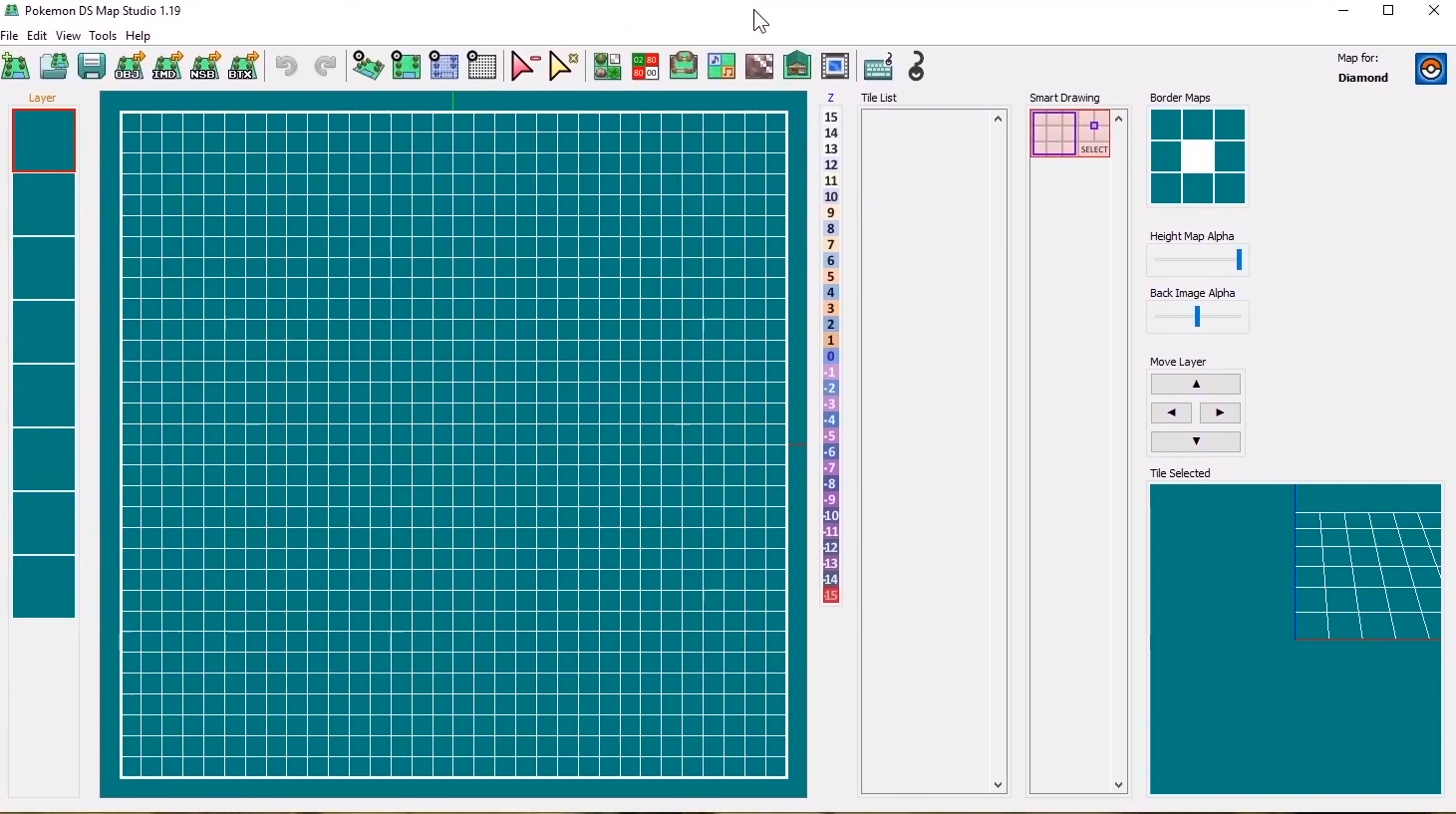
PokéROMs don’t all just start out as a Notepad file. They are built on structural layer upon layer where frameworks and engines and script libraries all combine to provide the platform for the creator’s story. Tools have been created to enable designers and developers to better their craft — even helping create scripting languages specifically for Pokémon’s game engine. Traditional click-and-drag map makers with toolbox interfaces do exist for creating Game Boy-esque Pokémon environments such as Pokémon DS Map Studio (current GitHub), available for the Gen 4 and 5 Pokémon DS games. Sometimes the starting point is a downloadable game itself, purchased from Steam.
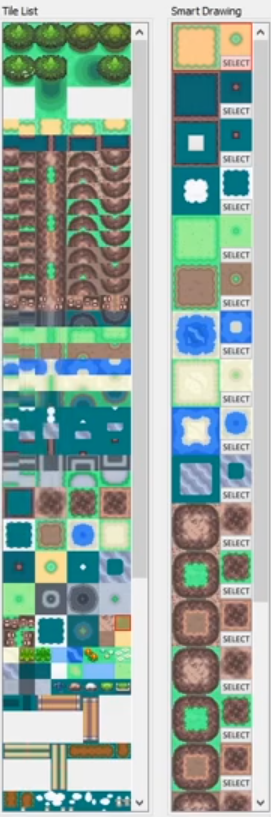
RPG Maker XP is such an example found on Steam. It is capable of making games similar to Pokémon. It runs scripts, triggers events, has map tiles and battle mechanics. However, on top of that, to make it like Pokémon, in particular the GBA style, other packages are required to be installed, like a kind of framework.
An example of a framework for RPG Maker is Pokémon Essentials, a collection of gameplay-altering original code designed for use in an RPG Maker XP game by Maruno17. Games are built on top of a fork of the Pokémon Essentials repository so that when updating, the fangame can update with improvements. Features include improved battle AI that can use more items such as revives, and won’t use moves that will fail. It has improved debugging functionality. It makes game translations easier. It features components like Super Shininess, which has a different sparkle animation, with a rarity of 1/65536! And it also features random generators that are good for making dungeons. Even little features have been considered, like being able to use the rare candy at maximum level if it means it can trigger evolution, or adding higher intelligence to ‘Legendary’, ‘Mythical’ and ‘UltraBeast’ status monsters. More information can be found at: Essential Docs.
Frameworks can be built on Pokémon Essentials itself. PokéVerse, by KishoreMuruganantham, is one example — an open-source Pokémon development kit built on Ruby and Pokémon Essentials, providing a platform for Pokémon data and mechanics for fans, developers and researchers.
Another example is the open-source Pokémon fangame framework ‘Pokémon SDK’ — Software Development Kit (PSDK). Pokémon SDK currently works with RPG Maker XP and requires it. It promises no lags or display problems, game text exports for ease of use when translating, and boasts simplified means of creation.PSDK was created by Nuri Yuri and others. Pokémon Studio, initiated by ‘Aerun’, is a companion tool providing a GUI for the PSDK. With Pokémon Studio, you can create your own moves, ‘fakemon’, abilities & items.
We wouldn’t actually call these things hacks, as in ROM hacks. An example of that would be pokeemerald-expansion, which modifies the actual game engine. Built on top of pret’s pokeemerald decompilation project, it’s a GBA ROM ‘hack base’ — a kind of code-based foundation. From its own documentation: ‘pokeemerald-expansion supports multiplayer functionality with other games built on pokeemerald-expansion. It is not compatible with official Pokémon games.’ It offers hundreds of features as well as quality-of-life enhancements — an upgraded battle engine with the battle gimmicks (Mega Evolution, Z-Moves), battle types like multi battles and Sky Battles, a large variety of items, and improved features throughout. They ask that if you use pokeemerald-expansion, you credit RHH (ROM Hacking Hideout).
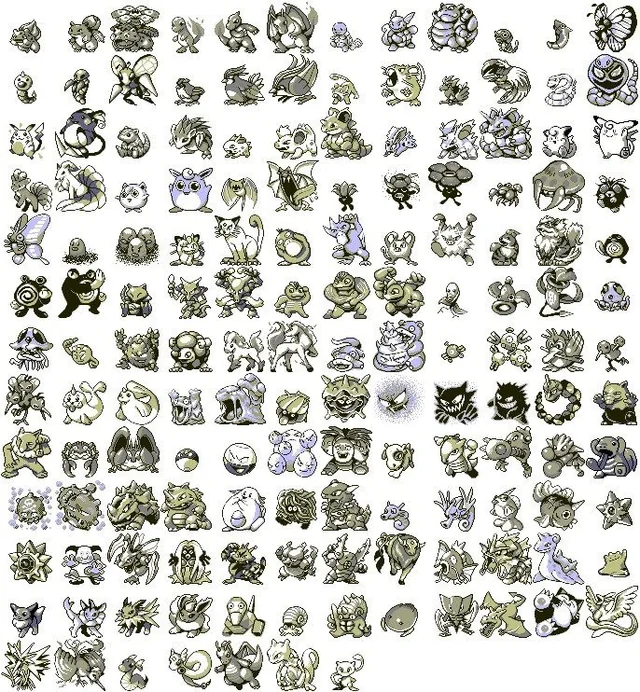
MMOs
It’s not just virtual cartridges that are available; there are also Pokémon-orientated massively multiplayer online experiences — namely PokéForce and PokéMMO.
PokéForce, formerly known as PokéRPG, is a fan-made project. The Discord, as of writing, has 17,946 members. Their GitHub, acting as their main website, reads: “PokéForce is a semi-open source Pokémon MMORPG that is currently in the early stages of development. Utilizing modern code practices, this project aims to bring an unparalleled Pokémon online experience. Be prepared to battle other trainers, complete quests, participate in world-events, procedurally generated dungeons, farm crops and more!” It seems to have started around 2022. There isn’t much official documentation on the project.
Then there is PokéMMO, which on its website reads: “Welcome to a new era of online monster battles. Stop playing by yourself and start playing with everyone else.” PokéMMO features Kanto, Sevii Islands, Johto, Hoenn, Sinnoh and Unova. It appears to have started around 2012. Their forum features an events thread covering the day’s activity on the server, and they also run various features — at Christmas 2025, for example, they altered the shiny rate and featured special ‘sightings’ of rare Pokémon in different regions, alongside character customisations they call ‘Vanity’. They also allow players to contribute to the project for virtual currency.
Will ROM players embrace AI?

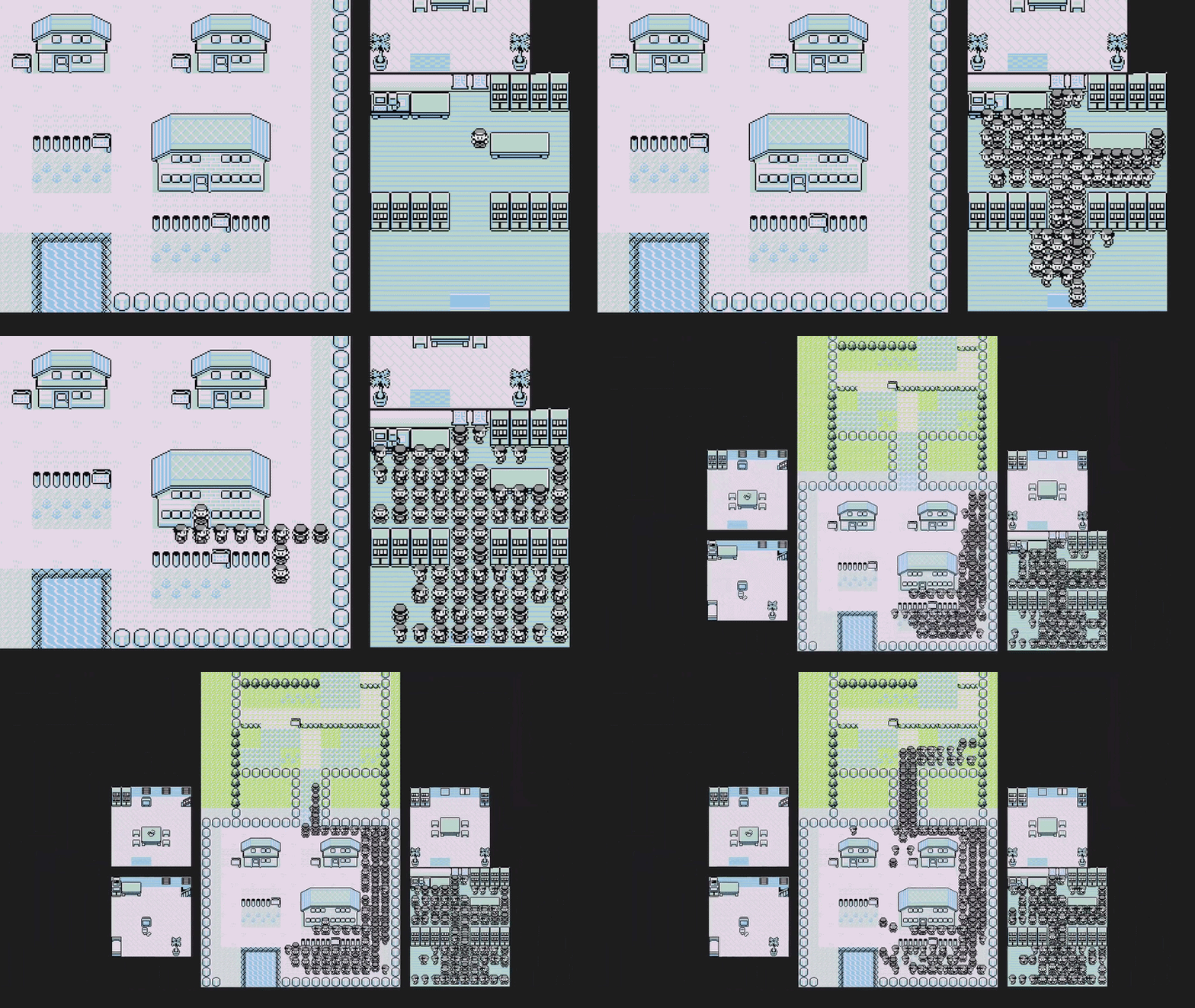
GIFs adapted from “Training AI to Play Pokémon with Reinforcement Learning” by Peter Whidden. Watch the original video on YouTube →
Click anywhere to close
Inspired by someone called Joel Z, Pokémon’s classic titles are sometimes the theatrical stage of the latest AI in competition as they question and plot their every step in the game, bearing in mind they were not built specifically for doing this, unlike a Chess program. Though they are equipped with an ‘agent harness‘ “designed to give them full agentic freedom”, Joel Z insists that these harnesses are not cheating. These live-streamed displays are not simply to show off the models. In an announcement on 24 February 2025, Anthropic said: “Together, Claude’s extended thinking and agent training help it do better on many standard evaluations like OSWorld. But they also give it a major boost on some other, perhaps more unexpected, tasks.”
But in this race to Victory Road, it wasn’t Claude 3.7 Sonnet that took 78 hours to get through Mt. Moon alone. It was actually Google’s Gemini 2.5 that was crowned Champion of spring 2025 with a playtime of 813 hours. But Gemini was later dethroned by GPT-5, which only took 6,470 steps in 7 days to finish the game compared to GPT-o3’s 18,184 steps. As for Claude, rumour has it the model is still wandering the caves of Mt. Moon to this day. This fun little gimmick could be the start of a tradition of more intelligent AI exhibitions competing to play more Pokémon titles. And as they themselves evolve as Pokémon do, they may grow to play more than one title at a time — and not just as single players either.
Will the ROM community embrace AI as it develops and integrate it into the games they build? Unlikely. The Pokémon fanbase has, for a very long time, co-existed with a skill-based community that has very staunchly and publicly rejected manifestations of artificial intelligence. For as long as Pokémon has existed, fans have been imagining new adventures, creating their own ‘fakemon’ — or ‘spriting’ — and portraying romantic relationships of the series characters — known as shipping — through their drawings to share in conversations. Illustrators have always played a central role in fan fiction.
When AI was first being used to create pictures and people could publish their own creations, the disfigured, blurry and barely recognisable monsters actually received some encouraging responses if not commenting on how nightmarish they looked, but there was little disdain. And then came dedicated services for that very feature — ‘Nokemon‘, for instance — where posts showing AI-generated creations could be upvoted and garner 20 or 30 upvotes.
That was before AI-generated content had improved enough to pose any threat of replacement. But now with similar or arguably better-detailed replications, the public response has shifted to something more political, where things become slightly more, heated. Take this offering — by clicking on the Pokéball widget — from one 'AI-ROM creator' who decided to share their misplaced content, and see the reception it was met with.

I Generated a Pokémon ROM Hack Where All Pokémon Are AI-Generated
I wanted to share this project I've been working on. I made a ROM hack where I replaced every single Pokémon with AI-generated ones.
What I did:
- Used SDXL with a custom LoRA trained on Pokémon sprites to generate all images
- AI-generated & randomized all stats, moves, and abilities
- Created new Pokédex entries for all Pokémon
- Removed the badge boost system (I personally find it annoying lol)
- Created multiple Python scripts that first generate all the data needed (including sprites), then insert everything into the decompiled FireRed ROM
Quick disclaimer: This is just a fun experiment! The real champs are the ROM hack creators who put in the hard work to create things by hand. AI generation is neat, but it's nothing compared to the skill and dedication of traditional ROM hack developers.
im just here to see the comments lol
Get your popcorn ready lmao
But why? Surely you know how this is gonna go, right?
Cool man it sucks
I hate AI. Nobody wants to play a game that was made half assed and by a computer. OP you are better than this
Nobody has to play this - just showing a possibility using a tool. It could in the future be something similar to randomized Pokémon runs that many people enjoy!
> just showing a possibility using a tool
*digging random hazards and garbage out of Pandora's box* "oh, im not expecting you to use this; i just want to show you what's possible uwu"
> This is just a fun experiment! The real champs are the ROM hack creators who put in the hard work to create things by hand. AI generation is neat, but it's nothing compared to the skill and dedication of traditional ROM hack developers.
I, too, have fun when using a plagiarism machine to encroach on the creative endeavors of the people whose craftsmanship I claim to admire.
I'm not sure what you are getting at with your first sentence. This project isn't pretending to be something it's not or trying to replace handcrafted ROM hacks. Its just showing the possibilities that it has right now. AI tools are being used across many fields as starting points and learning tools. Being interested in those possibilities doesn't mean I don't genuinely respect traditional creators. Appreciating traditional craftsmanship and exploring new technologies aren't mutually exclusive.
You're not particularly bright. Tons of people will play this. You can have criticisms, but you shouldn't be delusional.
“You’re not particularly bright” brother I’m a teacher at a behavior school. Yeah people will play it no doubt doesn’t take my og statement away
[Comment Image]
Sloptastic!
Booooo!
You smell bro
The only reason im not reporting this is because the subreddit doesn't have a gen Ai rule. It should.
“I don’t like it so there should be a rule against it” is such a dangerous sentiment. I’m anti-AI as well, but this is a subreddit for modding a game that none of us own the rights to. If you don’t like it, just move on to another thread.
Looks just as awful as I thought after reading the title lol
What's the point of this? The descriptions and names are nonsense, the sprites are barely parse-able. If you couldn't be bothered to design it, why would anyone bother to play it? If the "designs" you are showing are the best ones you have, this is a waste of server space.
Funnily enough, I would have asked if it was Ai generated without being told! It's awful, and you wasted our time
Will this be advertised as a true rom hack? A lot of people will rightfully take some issues with that and probably not play it. If however it is advertised as a proof of concept to demonstrate how creatively bankrupt an AI rom hack would be, a project that is intended to be offensly bad, then some might play it out of morbid curiosity. I know that sounds mean, but I think that is really the optimal approach to getting this off the ground.
I've not bothered to download it, so this is purely based off the images you posted. They've got a couple issues that need to either be ironed out or more likely they need a human's touch to fix. The names and flavor text are really generic, which isn't surprising considering the state of LLMs. Sorry if you did those manually, but they reek of bland generated text that doesn't really say anything, plus the names are extremely repetitive which is common with generated text.
The sprites obviously have lots of flaws that would need to be fixed, like off shading and their eyes, but they aren't terrible starting off points in my opinion. I don't think any of those are good 3 stage evolutions though. For all 3 of them, the first two stages look way too similar. It's more like they're mini-mega evolutions or paradox versions than proper evolutions.
Leragon screams ghost to me more than dragon, so compare its evolutions to the evolutions of Gastly, Misdreavus, Shuppet, Duskull, Litwick, and Phantump. It's a night and day difference, real Pokemon change their form quite a bit when evolving, while Leragon and its evolutions look more like Misdreavus and Flutter Mane. I do kinda like the look of Leragon though.
Yeah they've got issues for sure. Currently the Pokédex text is generated before the images. For improvement, I'd have the AI see the image first to create more fitting descriptions rather than generic ones. For evolutions, I kept them similar on purpose with slight size increases to make them cohesive. Earlier versions had evolutions you couldn't even tell were related. It definitely needs a human touch like you said. The AI is still subpar with real thought-out designs, but it could eventually be a good starting point for creators!
Would be more interesting without a fixed dex, and Pokemon are randomly seeded with each save file
Yeah, that would be cool! It would probably need a pretty large game rewrite to implement though. I think what would be nice is to have like 20 patches ready and being able to do a randomized nuzlock and on death switch rom/patch
[Comment removed by moderator]
[Comment removed by moderator]
AI Minecraft is at least funny. This doesn't even have that.
Thanks! Yeah, I know AI stuff can be divisive :') , but I just made this for fun. Appreciate you seeing the potential in it.
Not to mention the sheer overexposure of market production of such content has caused something of a nuisance for everyone questioning what is and isn't AI. So much so that some communities outright ban it. On some platforms, there's even a whole category dedicated to AI-Generated Pokémon called 'Okaymon', to filter it out of other people's hand-drawn submissions.
AI usage is seen as lazy, and a sign of bugs and problems to come. Large swaths of Pokémon communities reject it outright. Bulbagarden has on their rules, "any and all AI-generated media (which includes, but is not limited to: art, writing, and music) is not allowed anywhere on our site." Pokecommunity.com considers it a 'major offence' along with uploading pornography and racism. Or on the Subreddit r/Pokemon: "OC rules further apply to AI generated content. This is not to devalue or discredit the artistic work of formulating AI prompts, but the policy to remove AI-generated content was decided by the fact that AI generators draw from other artists' and writers' work without permission." The Fakemon Subreddit under their low-quality post rule reads: "Low effort posts include but are not limited to: Low effort drawings (i.e. stick figure-like drawing), simple modifications of existing Pokémon, reposts, AI-generated art, other automatically generated images (i.e. Infinite Fusion), low effort shitposting, etc." And interestingly, on the r/PokemonRomhacks Subreddit's rule 9, also as a low-quality fluff post: "Concept art or AI-generated content does not count as quality content."

Sometimes it's not rejected if the quality exceeds a certain threshold, such as the Nat Geo trend. But overall, there is strong pushback against AI. ROM communities in general tend to take an anti-corporate stance. They are a counterculture to corporate control and a statement of moral protest. They want to rip away from being spoon-fed trademarks and capitalist permissions by classic Nintendo's shameless money-grabbing, nostalgia-flogging greed machine of reheated packages. But they still want to capture the essence of that previously discussed winning formula.
There's a dichotomy with AI, though. For whilst any user of it — like everyone now 'guilty' of using Google and the like — is contributing to a corporation that is massively gaining and using power, raising the looming threat of automation replacement, AI also presents the option to liberate oneself from the dependency on intelligence itself, which other firms gatekeep. For example, it can help users navigate the legality of starting a certain business, or do number crunching to go with it that they would otherwise be financially blocked from doing — positioning AI in a particular light regarding what it could come to represent.
Could the reputation of AI at least change in the ROM community? It can be difficult to see that outcome through the fierce opposition. But perhaps the programmers — as in the people who do the heavy lifting in game creation — will find AI harder to ignore as it progresses to wand-waving capability.
Through observations of Pokémon ROM criticism, reminders that the coders are unpaid hobbyists frequent the comment responses. And so there may be an internal clash here hinged on the reception and gratitude of the consumer accustomed to the products of a billion-dollar franchise. Bear in mind, programmers as a group have a history of 'borrowing', or 'making it their own' like how AI is 'trained'. This could cause some clashing issues with the absolute permissions policing upheld by the artists. Programmers must now deliberately take the long way around during debugging, all just to protect a safe space and prevent offending an identity.
From an efficiency and supply and demand perspective, it's a no-brainer, again, should AI continue to progress in intelligence as it has done. But what could that outcome — the development of what may become known as AIROMS — symbolise and represent? The consequences of such a fork in the road for this community look to be a social challenge other groups will share, and a challenge to creative ownership of a kind we haven't faced before.
Idea concepts
In the social fantasy game Dungeons and Dragons, players are given a character sheet on which to imagine and design their character on. That character is given a level — earned through experience, or 'exp' as a Pokémon player might abbreviate it. A potential exploit of this is to say, what is stopping someone from just rewriting their character's level and declaring them to have gone on more quests? And the answer, for most games which we can assume can be hacked or cheated, is absolutely nothing. But a better question would be, who would do that? Or, who are they actually cheating?? What's the point? It's just like buying the colouring books already coloured in.
True to the autonomous culture that has built up over decades in this community, inner-communities will form as a method of filtering out cheaters. This method is composed of floodgates of rules, as opposed to heavy-handed moderation. Community qualifiers then have the final say on who is granted access. Qualifiers could be rules of entry, or rules of conduct within the community itself. For example, players may be awarded houses or buildings inaccessible in the original games — now edited into a personal secret base, just like the customisable Secret Bases of Gen III(Ruby/Sapphire/Emerald), built into treehouses, caves, and the like.
What ROM players want is to continue having the PokéROM experience — but for it to mean more, for their experience to be more grand, and for their previous experiences to be present, rather than in a different saved file. That is essentially the future of Pokémon ROMs. Where each individual ROM game that was once its own separate adventure is now essentially a side quest in a merged world — and should the player choose, one that is MMO-styled. The ironed-out conditions cover things like which Pokémon should and shouldn't appear, and what story or level adjustment are needed for adventure ordering.
But such ironing would be subjected to translation barriers as preference interpretations and conflicts emerge as to how exactly a story should be told and then integrated so that many can enjoy it simultaneously. Though one reason for Pokémon's success is the players' imagination, which carries the story. As they imagine themselves, and only themselves as part of the experience the game unfolds for them as it fills in the gaps of what would and wouldn't happen, even in a fantasy world.
The future of Pokémon ROMs is plug-in data, meaning Pokémon ROMs will be considerably stripped down in the future in terms of file size and workload. This is because the user will already be coming into the game with pre-made libraries — what we'll call the Compatibility Reader — that communicate with the ROM and install packages that generate the game's experience. The Compatibility Reader is designed by the user on a separate platform and serves the purpose of adding in various ROM data, and of communicating with other Compatibility Readers to patch up differences for linking.
One such example of this is 'generationally-based transmigration graphics'. That allows you to play any ROM in whatever art or generation style — even those styles that are only invented through art concepts, like realistic equivalents, such as the art of 'Arvalis', who has been drawing and publishing lifelike Pokémon since 2012. The player can also carry information to insert into the game's placeholders — GIFs, 3D models or various sprites collected from their previous games (including animations of moves), your own designed Pokédex that you coded yourself, favourite OSTs depending on the battle, and other data.
So really, the future of ROM games is just setting the terrain, monster codes and story characters. Many of the components of traditional Pokémon games, like the UI, will be carried over as part of the player's emulator. They will be coming into a ROM game with pre-set interpreters and also have the ability to plug into the game, and change events and dialogue based on the data held within it. The other aspects of the game, such as the monsters and moves, are still conditions that would need to be set but can be carried over by the player's Compatibility Reader from a downloaded library.
Online tools and profiles exist to help players track what they call their 'Living Dex', as they try to complete the Pokédex, which is the ultimate objective of the game. Some, like the 'Living PokéDex Tracker', help you keep track of what variation or gender you've caught.
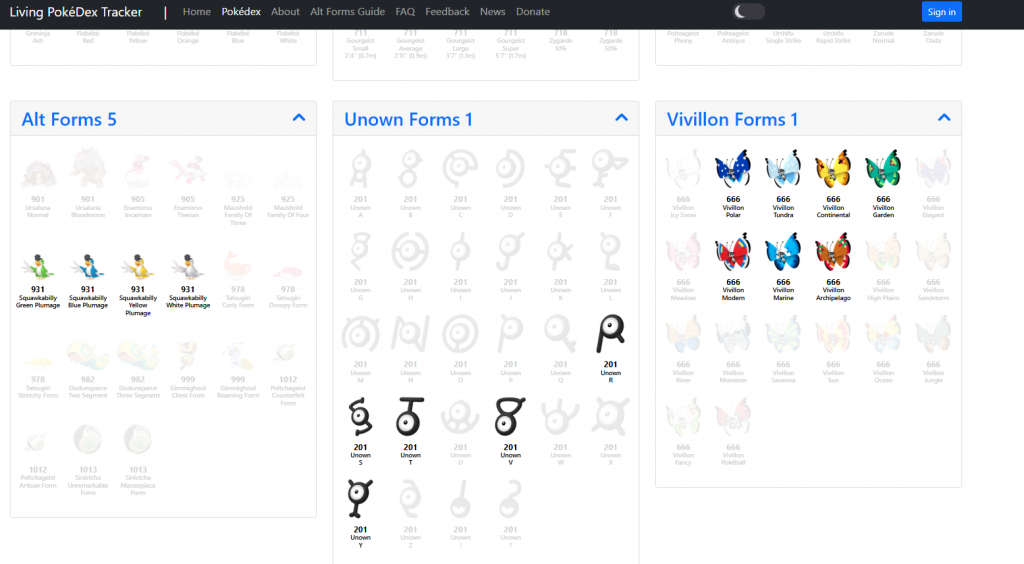
The future of ROMs is for players to carry their 'Trainer_data' that plugs into the ROM. This consists of three primary components. The first is their trainer card, which features badge victories accounted for from each previous game, along with various other merits that might have been applied — 'Achievements' from Xbox or 'Trophies' from PlayStation if you like, created and upvoted by whichever community you are in. The whole thing is tailored to the user's preferred UI plugin.
That is their own Player ID. The second is a customisable avatar, should playing as the main character not be a necessity — unlike other games where it usually is, as a game concept should be. These achievements should actually be doors — if the option is toggled — that allow players to meet each other in-game only. This enables dedicated players to naturally match-make in-game only, where both have qualified to a level — proven by the awards they've earned, and shaping how communities form in the world server they elevate to.
The next pieces of transferable data are then naturally going to be the Pokémon, the boxes they are stored in, along with one's Pokédex, which will collect entries from each game, along with that game's data such as the description, and add them to the index. These Pokémon would not simply be stored in a box, but in a player's own kind of lobby. This would be the ROM equivalent of the Pokémon Bank and Pokémon Home — both cloud-based storage solutions for Pokémon that have the purpose also of transitioning between games. With the Pokémon Bank, you take your Gen 3 monsters (via the Poké Transporter) right up to the recent title through Pokémon Home. Pokémon Home itself is available for Switch and mobile platforms. Both act very similarly to the PC available in-game that the Pokémon are sent to.
There would be their own farm-type place, acting as their own offline Poké Bank — which, true to the Pokémon Universe, enables fans to enact all their inner eugenic desires regarding breeding with their own 'Oak' type professor in the hometown lobby they designed themselves. The lobby can be shared and also stores items. The virtual monsters will not simply reside in a box, or be 'stuffed in their Pokéballs'. They will instead be on a farm area that the player themselves designed, and that can be visited at any point, in-game with any ROM installed. The Compatibility Reader also has the option to offer server-side variants, providing a level of security. So you can roam someone else's hometown and space as agreed upon in the community you are playing in.
Separate from the data the player carries, each ROM World is configured by an 'Overall Rulings' layer — multiplayer-integrated — defining how the world is set up. This is done through the player's 'Compatibility Reader' — a key that, if conditions are true as to how they want to play ROM games, enables those conditions to become shared with others. We'll evaluate what those conditions could be, and how they change ROM games and the players that interact with them — including the obvious required safety barriers for playing with strangers online.
These become not just the way you play the game, but what's inside the game regarding what is banned — like guns for example, and death — which may be permitted in other rulesets and communities. For example, if fakemon are permitted, what are the conditions of these monsters? Or what of the art style? Will there be 'Moemorphism' or 'glitch Pokémon' permitted? Or will visually AI-generated monsters be visible only through the individual user's filter? Perhaps even no instance of AI, including evidence of randomly generated planes. So where one player sees the original art style, an interpreter would show a less cartoon-styled version. Or how the worlds are shaped and linked.

Or to make stories seem relevant for a shared experience. A hosting server may set and reset a world with timed events that is the story. Or stories fit for multiple players rather than a single-player experience, where in the story, one child is essentially able to storm an underground illegal organisation. Some Compatibility Readers may change the nature of the Pokémon games' 'Master Rules' to not be founded upon what Pokémon's origins had to work with. 4 moves? Level 100 cap? 1 held item? Or instead, create a more realistic concept resembling the anime, which could involve cooldowns and multi-attacks for a simultaneous multiplayer experience rather than turn-based combat.
Another example of how the Master Rules could be differentiated per group is the ruling on levels. Or modify the traditional turn-based element entirely. Or include a skill-declining feature, where out-of-shape monsters become rusty with their skills. Or an aging mechanic, exploring the digital pet aspect of the game rather than playing as the story intended. Or maybe enable Pokémon battles featuring a herd, and they can run away at any time — but you can also catch up to them. This realism may even transcend Pokémon logic regarding the accuracy of Alakazam's 5000 IQ. Or what if Pokémon learn to talk like Meowth, with AI agents and chatbots adding a more companion-like element of the game.


This may include implementing Gen 2's cell phone feature as constant NPCs, installed with chatbots that call you — perhaps from different games acting as agents. And maybe you'll then see them in other games. Or are they native to Castelia City, and on holiday in Alola catching the rays depending on the randomised seasonal weather? Or from Dewford Town in Hoenn, but doing a bit of shopping in Celadon City and staying in a hotel — actually moving around between activities, rather than just appearing in a room wandering aimlessly for X amount of time.
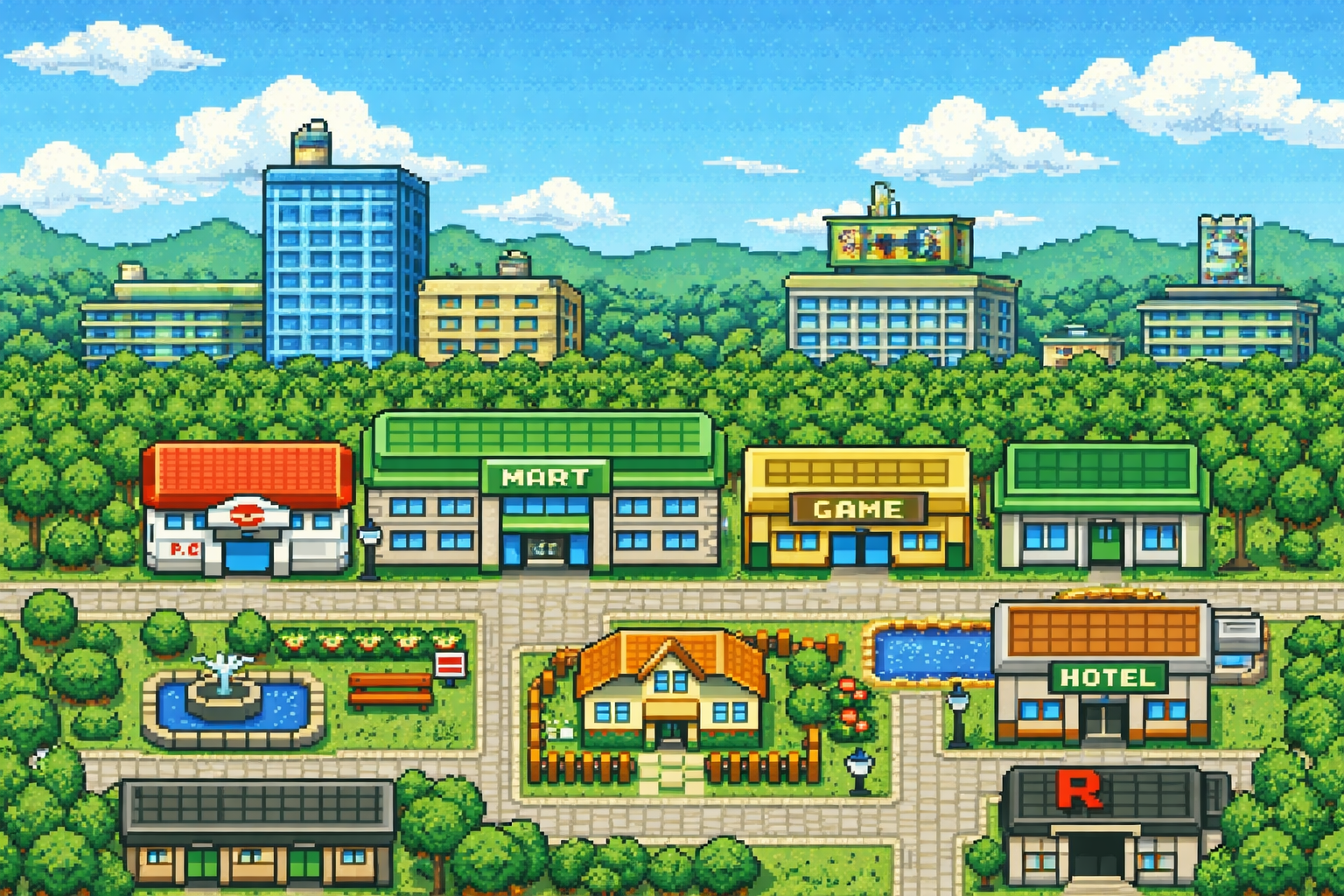
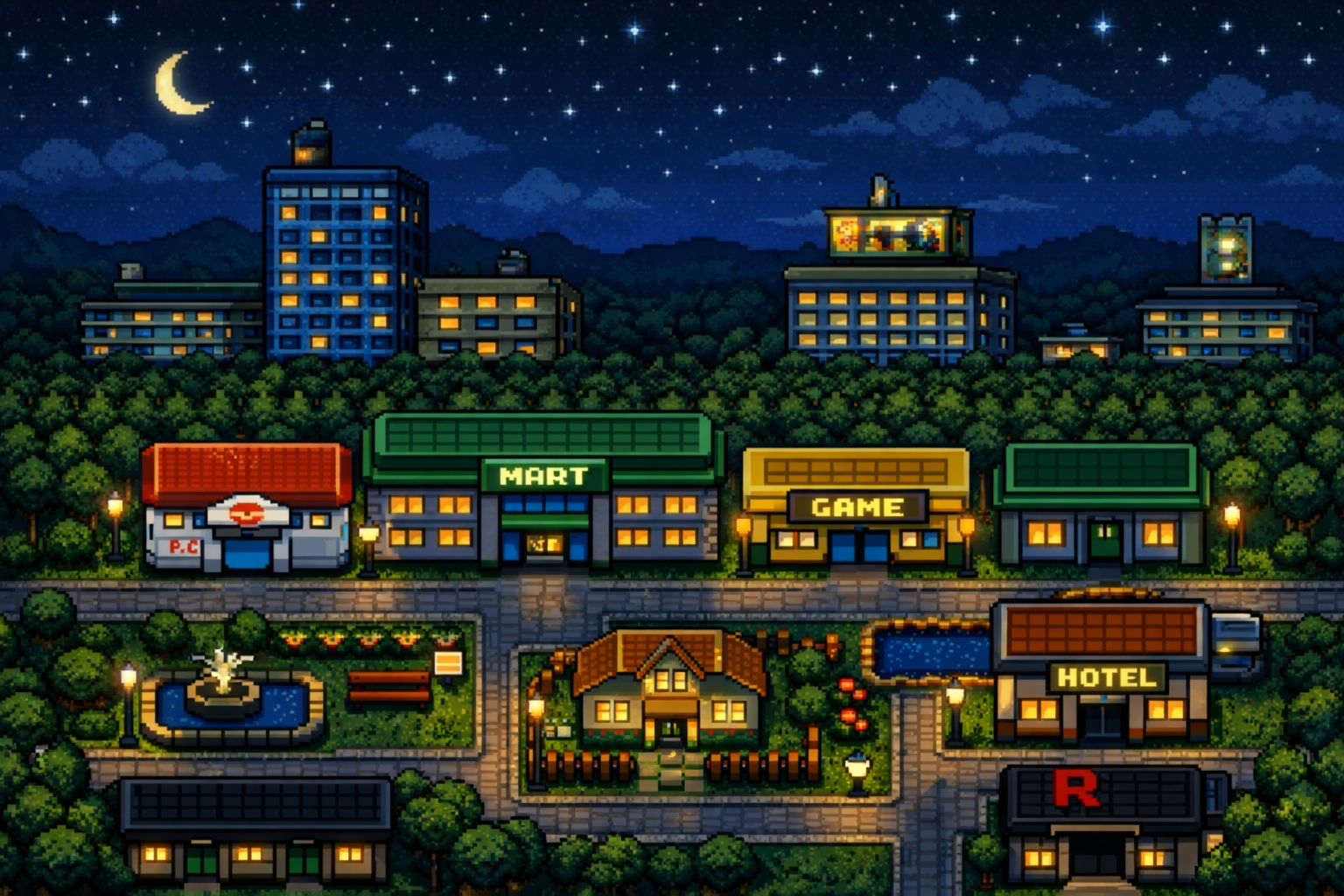
You'd be bumping into characters from different games with their own tasks — not originally set in that game, but a rendition accepted by the player playing. How this would work in a more open-world, public setting would be challenging. Players will download databases for NPCs — or grow them 'agentically' as you play the game, collecting and training Pokémon within the constraints of the in-game timer, while the bot itself plays through the game. That would have subrule sets to follow, such as NPC trainers to get stronger every season.
The Rival, for example, could be a continued version of the character 'Blue' — from Gen 1 if that was when you started your Trainer Card. And that rival is imported into different games — if you accepted that option at the beginning when designing your experience. The rival aspect could do multiple unexpected things — join the bad guys, die, or team up with other rivals that come with the game you're playing. That's unless the rival has already taken on that position through an unpredictable character filter that directs the game's outcome. Or, should the player choose to, actually play as the rival themselves — against what's supposed to be the designated human player's experience in a custom plug-in — so as to go behind the scenes of the game, being that step ahead. You'd be meeting players at the 'point in time' that's supposed to happen as per that story's arc — as if a form of interdimensional time travel that itself could be a ROM of ROMs.
And lastly, also worth thinking about: how previous adventures may still have a knock-on effect. How stories told for that player influence the community and world design the player has opted for themselves. How these characters would have changed their relationships or what happens after. Destructive consequences for losing a battle in the villain arc — such as parts of a town destroyed. Or should you win, have the villains jailed and then somewhat collectable as you rack up each bad guy from different stories and whatever chaos they may plot should they be given agency and escape.
If the community wants to have competitiveness amongst human players in it, and have that competition made in the spirit of Pokémon — as opposed to just hacked, maxed-out stat codes — then in-game money and items could be on the line for forfeits if a trainer loses a match. Or even forfeiting shiny probability modifiers as the infamous Shiny Charm is changed and edited to be consumable and more accessible. Even if it's just setting up increasing or decreasing in the probability by 0.01% that can be the stakes in a battle. Then Compatibility Readers would need to be installed into whatever ROM, along with the player's game, verifying the legitimacy of their gameplay — to see if information checks out with the player's stats in-game, and the information about the Pokémon caught that the players carry on with them.
There would be then communal servers — like IRC servers, in a way — as a non-subscription option, installed through an anti-cheat-like moderator program in the emulator that handles player coordinates and offers a streaming option. If someone wants to spectate a fight, that would be hosted off the main server. This anti-cheat module is a data collection tool and feedback device that comes as part of the data you plug-in. Therefore, reinforcement systems would need to be added into the ROMs themselves, that show legit encounters or hatchings. Any anomalies that wouldn't normally appear in the game would trigger a disqualifier, automatically preventing you from accessing such a community or virtual world. This protects certain gated communities that want an open-world ROM experience without cheaters and strict moderators. Your emulator carries not just the ROM, but your own plugin data files, that perceive how the ROM is run. A bit like spyware double-checking consistency only related to what happens in the game — in other words, how you have played the game becomes your passport. This is to then say ROMs in the future will come with different files than they have now, as the ROMs of the future will have many more placeholders in them.
Sometimes modifications aren't about cheating. Sometimes they are about tailoring to a specific experience for that player, like creating your team from the start. Someone can use PKMDS: Pokémon Save Editor, which allows them to make changes to a game's progress, like a Pokémon's stats, items or location. However, if an online environment wanted a more standard ruleset, then that modification would be breaking their rules. And they would need to find a way around that, perhaps a starter Pokémon professor located around the world.
Of course though, cheaters will always find a way around — though it's an added level of security for a ROM-based competitive scene. This Compatibility Reader will also help communities monitor legit speedrunning times, along with helping build in a Nuzlocke enabler or race mode that automatically teleports competing players to a Pokémon Centre after the agreed time, when it's time to suit up for their battle. So the code handles that element and it's not so 'DIY' and manually managed, but instead a more interconnected autonomous experience. A race could be amongst players in the game. Or it could be a community of players itself, in a realistic Pokémon world where only one of certain monsters exists — and who catches it, and how they catch it, becomes a competition in itself as they race to fill their 'Dex. They could even organise a grand tournament amongst communities of winners, with prizes of 'land' or edit rights in their servers.
Post Game Ennui and Reflection
The natural trajectory in ROM terms is a unified, seamless virtual world — both of previous custom titles and newly created regions that may not be entirely of human design. This includes popularising random map generators, or the ability to copy maps and generate pixelated equivalents that are automatically added into an environment. This isn't augmented reality, but a simulated reality experience.
When this happens, a starting player's workload to progress through the game becomes exponentially larger than in traditional ROM play. There would be so much to work through — maybe even an intimidating degree of gameplay — that someone wouldn't even know where to start, and would feel put off by the sheer scale. And that's after another truckload of pre-existing monster forms gets dumped on them. But that could be the least of the community's worries.
Anyone playing any game, or even watching any film, should ask themselves: what are my motivations here? As they observe something, they are — without knowing — revolving around the question: why should I emotionally invest in whatever X is? To gamers, such a question haunts what is known as the 'Post Main Quest', or simply, 'Post Game'. To Pokémon players, this malaise would commonly hit after 'The Elite Four' — where it is commonplace for players to find their motivation waning as they lose that spark of curiosity to explore, and that dedication to progress.
And it is not just players who complete the game — or even the quarry of any cheater, including those using a fast-forward function to skip through the boring parts, liberating themselves from the rules of the game above all else — that inevitably reach the same wall they cannot cheat: the question, what am I even doing? It is also someone spoilt for choice, meandering aimlessly in the dreaded 'paradox of choice' — without direction, without the virtue of limitation that ignites personal investment. It is a haunting prospect and challenge for multiple communities, and the PokéROM gaming community's attempt to unify players will be no exception.
What am I learning? What does it all mean — me and these… pictures, as I press buttons to increase numbers I try to make represent something inside, the reason I'm drawn inward in the first place? What am I doing? Could I be doing something else I'd find more meaningful?
It sucks.