Author: Benami Ark

  • Challenge: Eating Vegan in China – Difficulty Setting: Hard

    Challenge: Eating Vegan in China – Difficulty Setting: Hard

    This article features a lengthy research section with the purpose of showing the degree of meat eating culture in present China. It also allows me to show off more of my holiday snaps!

    Your advert here!Get In Touch →

    Experience as a Vegan in China

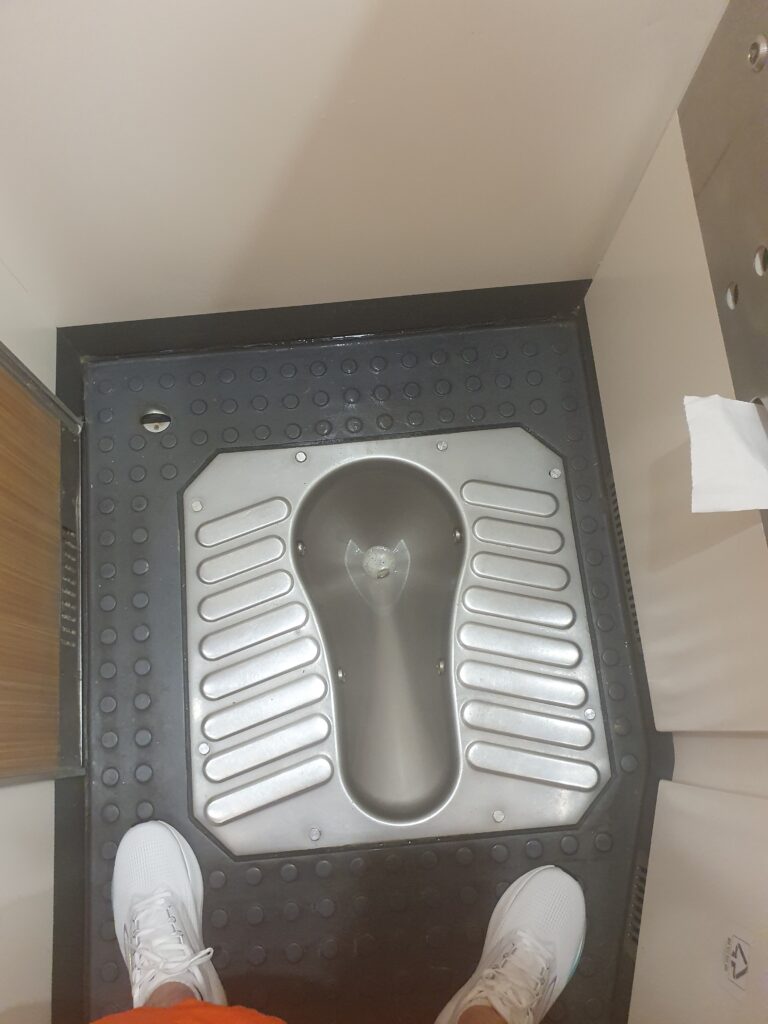
    There will be a few cultural shocks to adjust to. One is that electric scooters, are considered more person than vehicle, meaning that they will pass freely through a green man, along with cars turning slowly at a corner. This makes roads extremely chaotic and dangerous to cross, especially when you realise having a scooter in China is like having a smart phone, in the sense that EVERYONE has one practically. The standing toilets were also quite strange.
    Some things were unexpected. Like the villain of Toy Story 3 – ‘Lotso’ – appeared to be somewhat of a celebrity all over China. I kept on seeing his face everywhere. Other things, like smoking in public places were expected.

    If you are travelling to China, I strongly recommend acquiring some kind of tour guide. You are essentially paying for extra time if you don't know the language and you'll probably end up saving money in the long run related to correctly pre-booking taxis and getting good hotel prices. It makes situations like navigating the subway and inquiring about animal foods so much easier meaning a less stressful holiday. If you know anyone that is Chinese and preferably plant based, try and travel together. Yes translation technology exists. And if Shenzhen is your first visit, you'll probably find a tech-based market place with a host of translator options where if you are good enough, you could get yourself a discount.

    I was overly reliant on my tour guide and then felt like I was pestering and being needy reminding to double check things. Acquiring some kind of translation device is also recommended. Here's the problem: the Great Firewall of China. This deactivates Google, and so Google Translate. You could use a VPN, Proton worked for me, but I only had a couple of servers, and everything was extremely slow throughout the week. Another option recommended to me by someone that lives in China is swtcn.fdkwl888.com, but I didn't use it. Since there were lots of connection issues and super slow internet with a western VPN, that is then why I'd recommend getting a physical device that specialises in Chinese.
    But when buying a translator device, be cautious. It carries with it the same issue as instead of putting the translator code into the device, it's stingy and out-sourced and you require some kind of sim connection or WiFi connection to make it work, meaning conversation still won't be seamless. Though in China, WiFi's aren't a super protected thing like in the UK and people will normally give them out, I assume to help with the WeChat pay or Alipay. It even got to the point where I could guess certain passwords because most of the time they are the same! 88888888.

    And you may think, well I'll just get a Chinese sim card. Okay, but there is ID verification required and negotiation required to make sure you're not getting ripped off in your sim deals there. So it's a whole hassle waiting for you. And you won't even know how good your translator is without reviews as when buying it you won't have on field experience with Chinese people. There's usually awkward delays with translators wondering 'why is that not working' and things taking forever. It's not a seamless experience. So that's why I'd get one to fill in the gaps, but also have your tour guide.

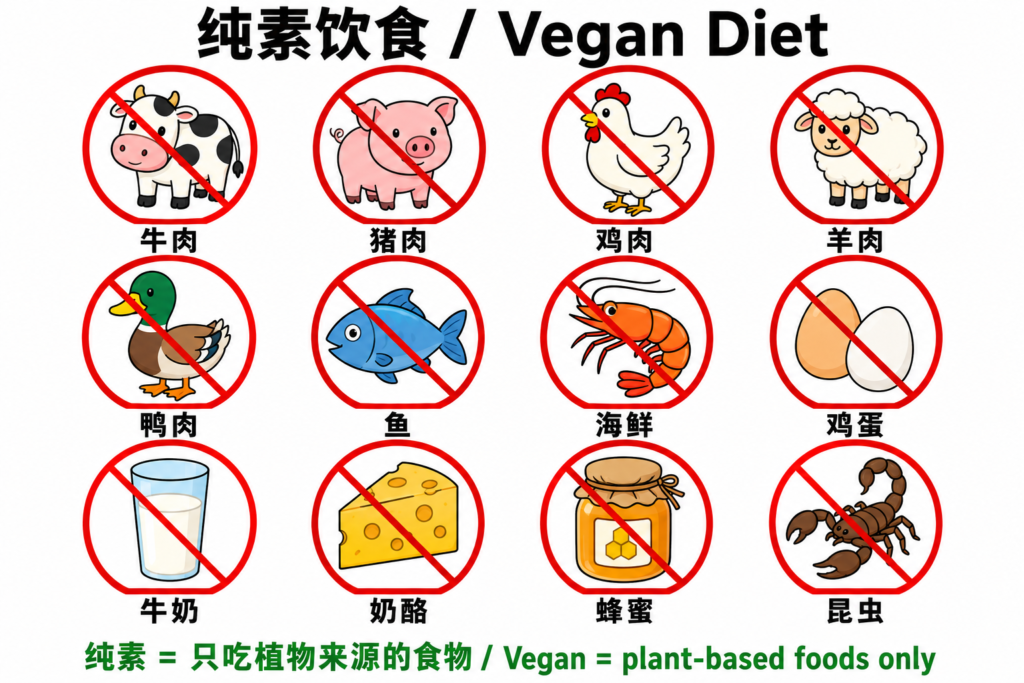
    But it doesn't stop there. I also highly recommend you print multiple pages of sentences of commonly spoken things, both questions, and then answers they can point to when asking people for advice or about something. So it would be Chinese in larger writing, and then English beside for your own navigation and you can familiarise yourself with the layout of it. Here is a cheat sheet and some pointing pictures to help you get started:


    And that's you got a small library of words and pictures you can point to for assistance if you don't have a tour guide or having technology problems. You'll then want to get a screenshot of a map, and the Chinese symbols for where it is you are staying and have it all in one location both on phone, and physical. Printing shops aren't actually that difficult to come by.
    On this trip I visiting Beijing, Jiangxi, Shanghai, Shenzhen, Chengdu, and Hong Kong. Eating a plant based diet had proven to be quite difficult. I stayed in hotels in the down-town big cities, I went into more rural lower-income areas. The options are the same. In any given city or town, you will not find obesity as you would in the UK or of course, the United States, yet. But I assume that won't be for long. Meat — it's everywhere. And asking for it removed, is sometimes met with confusion.

    Western and European cultures could learn something from the Chinese. Each environment I went to across those locations was extremely safe, I assume to be a knock on effect from the strictness of the Chinese Communist Party's security where even train stations and undergrounds had near airport level security. On some trains there is even some interesting reading material:

    Be it the mosquito infested land of Jiangxi or central Beijing, people just, go outside. Go to the mall. In a high rise estate in Jiangxi, I even saw in the evening, children and young adults gathered around a large screen watching a film together. And weather is a factor that prevents gatherings like this in the UK, where the norm is get your shopping, go home, lock your door, draw the curtains and watch TV. But also I have seen the variation of welcoming nature in China that does show me why things are different.
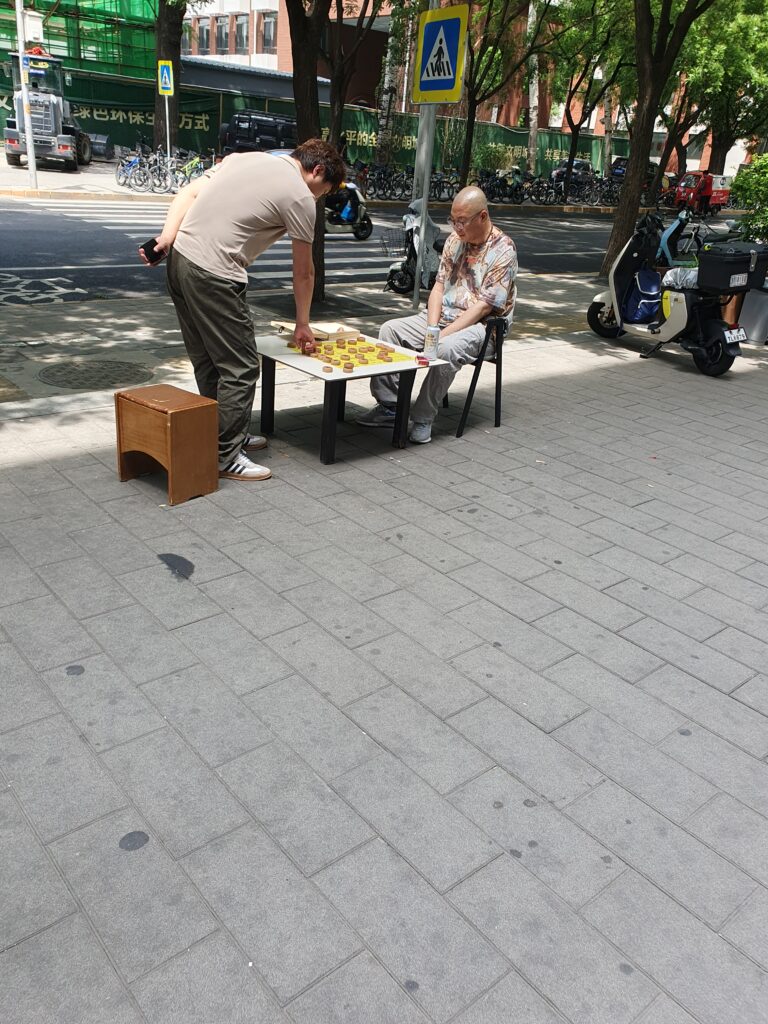
    It was my suffering of jet lag early into my vacation that led to the most bizarre impromptu dentist experience I'll ever have that showed me pure cultural difference. Nap time in China is practically sacred. This particular dentist in question, was part of a hospital in Jiangxi. Worth noting because during lunch time, the whole place was deserted. Bar the two odd ailing individuals limping about waiting, the entire shopping-mall styled complex was deserted. No reception cover, no security, no doctors, nothing. Though I didn't inspect the entire building as I assume this wasn't an intensive care site as they even just turned off the escalators and front doors just wide open. And I thought some might see that as highly unprofessional. I saw it as a form of cultural wealth in terms of progression. Certainly couldn't try that in a lot of other places without total collapse.

    Anyway, in the late afternoon, when the show was getting back on the road. At the dentist they didn't have individual rooms. Instead, a larger room with booths made up by dividers. It seemed like friends of the dentists would just waltz in unannounced and start chatting away mid-operation getting in a right good old gab. And due to these extra interruptions, unaccustomed to the sleeping schedule, I ended up dozing off in the waiting room. It was then I was woken up, not to be told not to be rude for sleeping, but to be led by one of the dentists into one of the booths and recline the dentist chair to have a little nap time myself including a nice fresh overall as a blanket! And my appointment can just resume when I wake up next in time. That just wouldn't happen in the west. A walk-in appointment bear in mind, which I eventually had, and the young man that gave me a scale and polish and replaced my filling without any pain killers did a stellar job at a price that didn't break the bank. My opinion of dentists had improved greatly after that from being glorified overpriced tooth brushes with petty salesmen egos that you'll probably witness in the U.K.

    The other example of Chinese culture we are mainly discussing is woefully in need of improvement. Animal products are unavoidable. Meaning that if you are to eat out, you will experience cross contamination. Characters exist in Chinese for veganism - 纯素 - but even then the concept is widely and poorly understood. Therefore to many, no animal products, doesn't mean no milk. Or if you say, no meat, as ramen based dishes are very popular, you must still confirm additionally no meat exists inside the soup or the broth.

    It was also my experience waiters and waitresses like to play dumb. In the west, if the waiter doesn't know something about a dish, they go find it out if an ingredient is present in a dish or not. But I had found in China it is common if the waiter doesn't know if something has animal products in it, they apparently then don't know and that's the end of it. And since they are not the chef, it's not their job to find it out, so you have to push them on it - politely to achieve your request of course. Though usually if things did get that bad, it's probably not worth eating at that place due to the lack of vegetation in the options anyway.

    And so it is in China as a vegan, a lot of self-employed food vendors, make food to order. Common is it to have an indoor canteen, and chefs rent out small sections of it. And you can simply choose a dish from their limited selection of the garnishes - that is the vegetables, as you'll unfortunately find - and ask for it not to have meat added into it after of course the base ingredients like sauces and such are void of animal products. Egg noodles actually didn't appear to be too popular I found when asking, and commonly met with 'no'. Since a lot of people are self employed, don't feel too bad about being picky, you're a precious customer, they will want to help you to get a payment. And who knows, maybe then you'll eat there again?

    Another extreme cultural difference in China that will work in your favour regarding food is the freedom of places to eat. And it is not an offense to bring food from another establishment to eat in another eatery unless they specifically say, but generally don't. As long as you buy something from the place you are sitting in. Something I assume that is naturally born out of having such high amounts of competition given the sheer quantity of choice those without dietary restriction have, that they aren't going to turn down a customer when providing a service to gain even a little bit of money if chairs are empty.

    This means you can order a nice marinated tofu dish from one location, your stir fried noodles from another location, and a veg dish from the joint you're going to sit in, and don't forget a nice fresh pressed juice from a juice stall or maybe going to a fruit shop and getting a couple of white coconuts, and then eat it all in the one place. Again, where having a tour guide comes in really handy to make the whole thing a breeze.

    Another thing to note about Chinese eating culture is how they eat, and I'm not talking about eating with chop sticks. In social food gatherings, if you are eating with Chinese people, the style is instead a 'central self-serving' system, where large bowls of different food are placed on a rotating table in the centre, as people spin the table to individually pick off the parts they want to eat. And then spitting out their debris on the table.

    If you're thinking like me, then you're going to be immediately thinking unhygienic, and a potential risk for disease though I didn't see people's lips looking ripped off from herpes. But as a vegan also, that means also potential spilling of the meat broth into other dishes voiding them as an option for you. Though for such instances for me, they were kind and patient enough to give me a bigger bowl, and fill up my bowl first so I didn't need to pick off parts of the centre in that free for all.

    That's not to say dotted about in some places though few and far between, there are strictly plant based foods, or 'vegetarian' restaurants. The word 'vegetarian' in China actually refers to what it's supposed to mean - the consumption of vegetation and therefore excluding milk and eggs and honey and such - unlike the corrupted western interpretation. In Beijing, I went to three vegan restaurants, though two were buffets. 

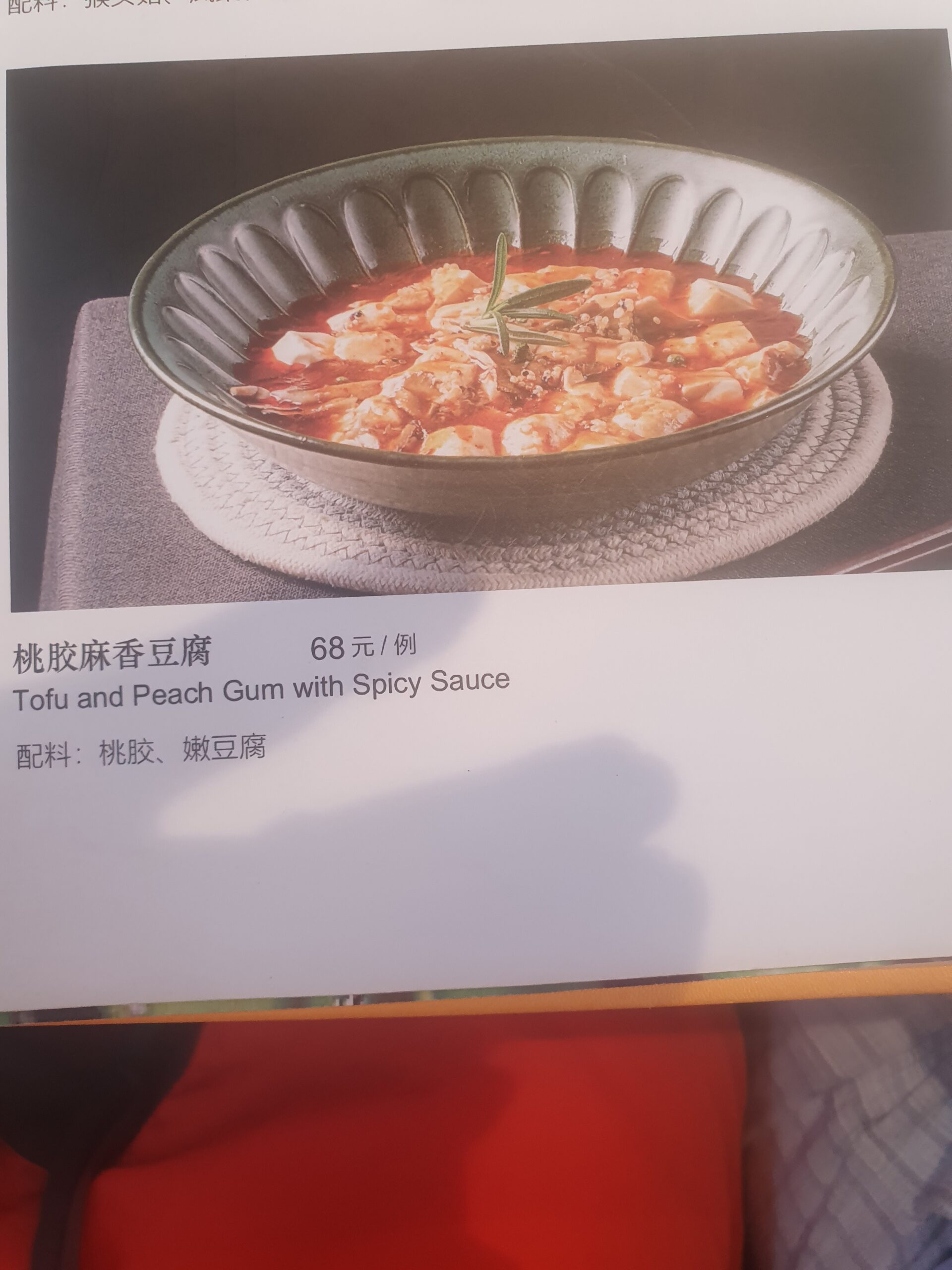
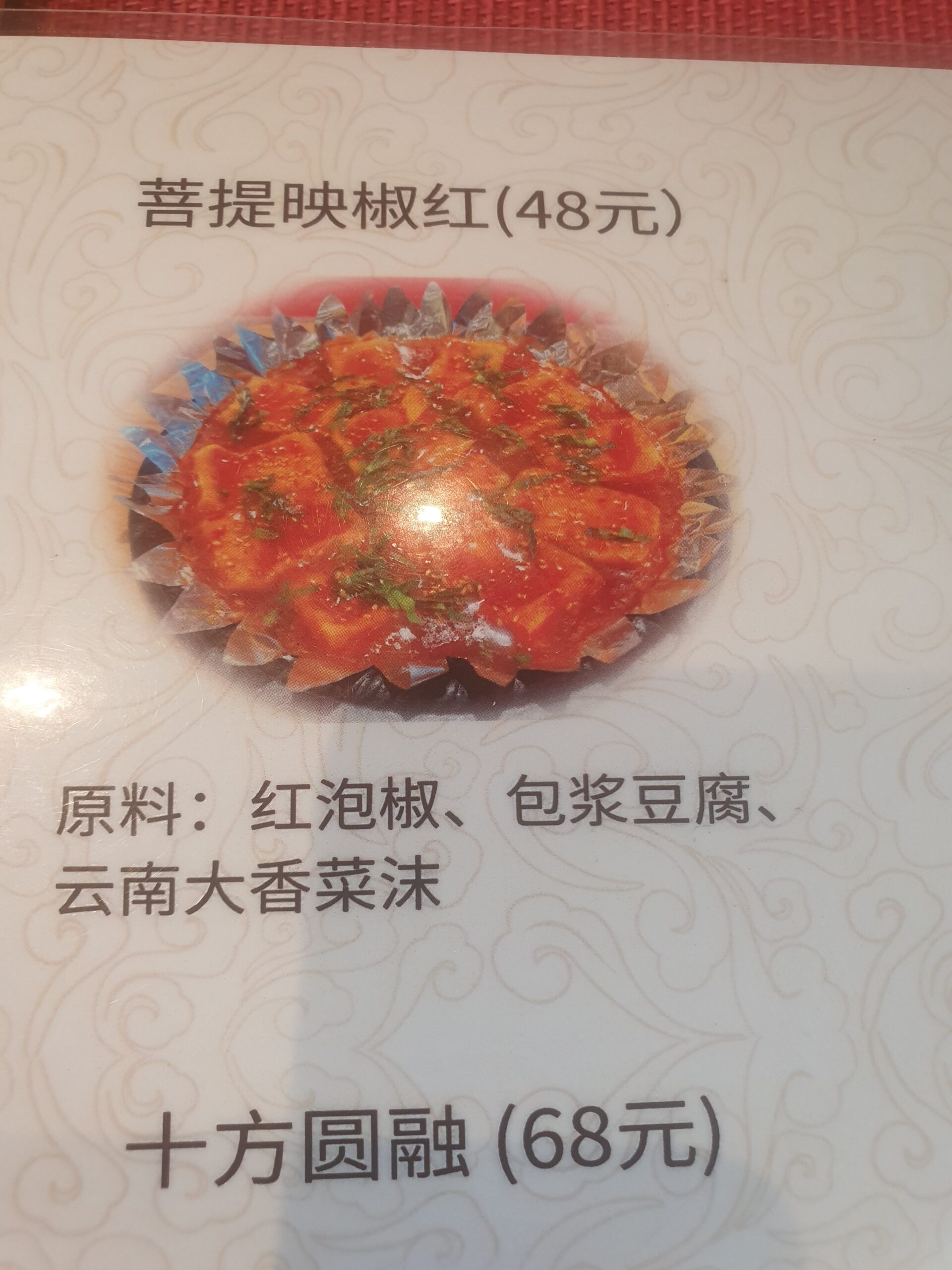
    The restaurant located in a small courtyard off a bustling high street was called 'Vegetarian & Drink'. And had some very nice options that I took pictures of to show the waitress, and now, you too:


    Then after you can try and go for a walk along the pond. There is an array of music venues all stacked beside each other blaring out different types of music. It's on a river called Shichahai 什刹海; and in the evening becomes absolutely mobbed, and still busy right up until 00:00. Alcohol culture is not huge in China, so doesn't become degenerative and unpleasant from people drinking too much like it might in some holiday destinations of Spain.

    As for the buffet places. One was far superior to the other, that didn't even have rice, but still had plenty of options. It's called 世纪金源购物中心 (Golden Resources Mall) located in a maze of a shopping mall that had at least 30 different food outlets in the one place.

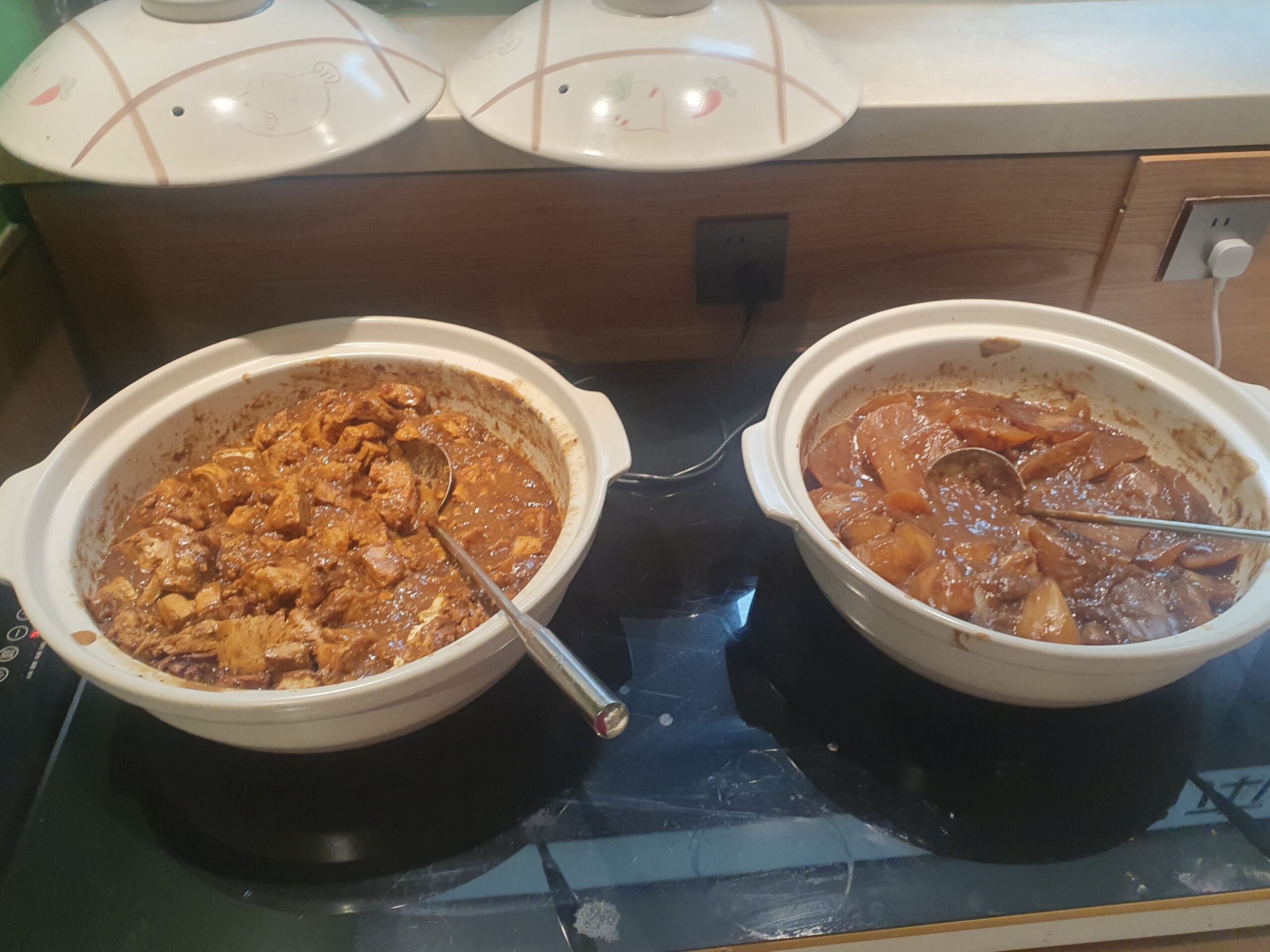
    However the main place we are going to discuss is a bigger buffet. And if you are a vegan going to Beijing then it is an absolute must because it is near both Tiananmen Square, and The Forbidden City which you'll probably be visiting.
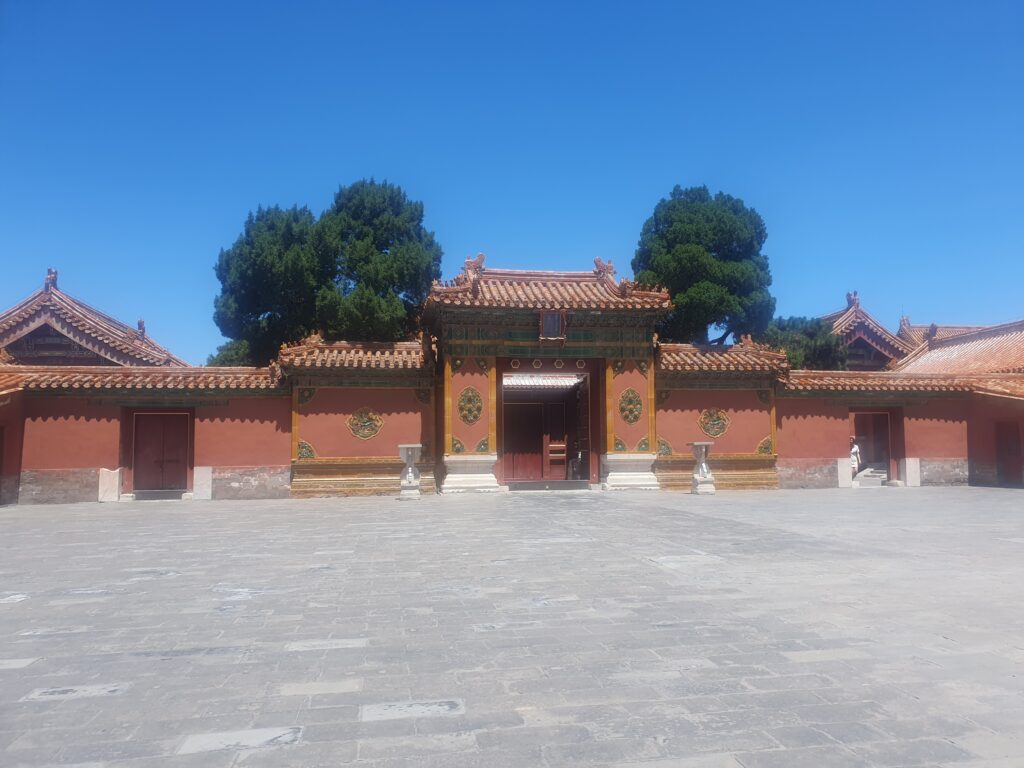
    The Forbidden City is especially charming, because some men, but mostly women make the effort to dress up in traditional dress and take pictures. I was convinced some were doing it just to look nice for going to a special place.

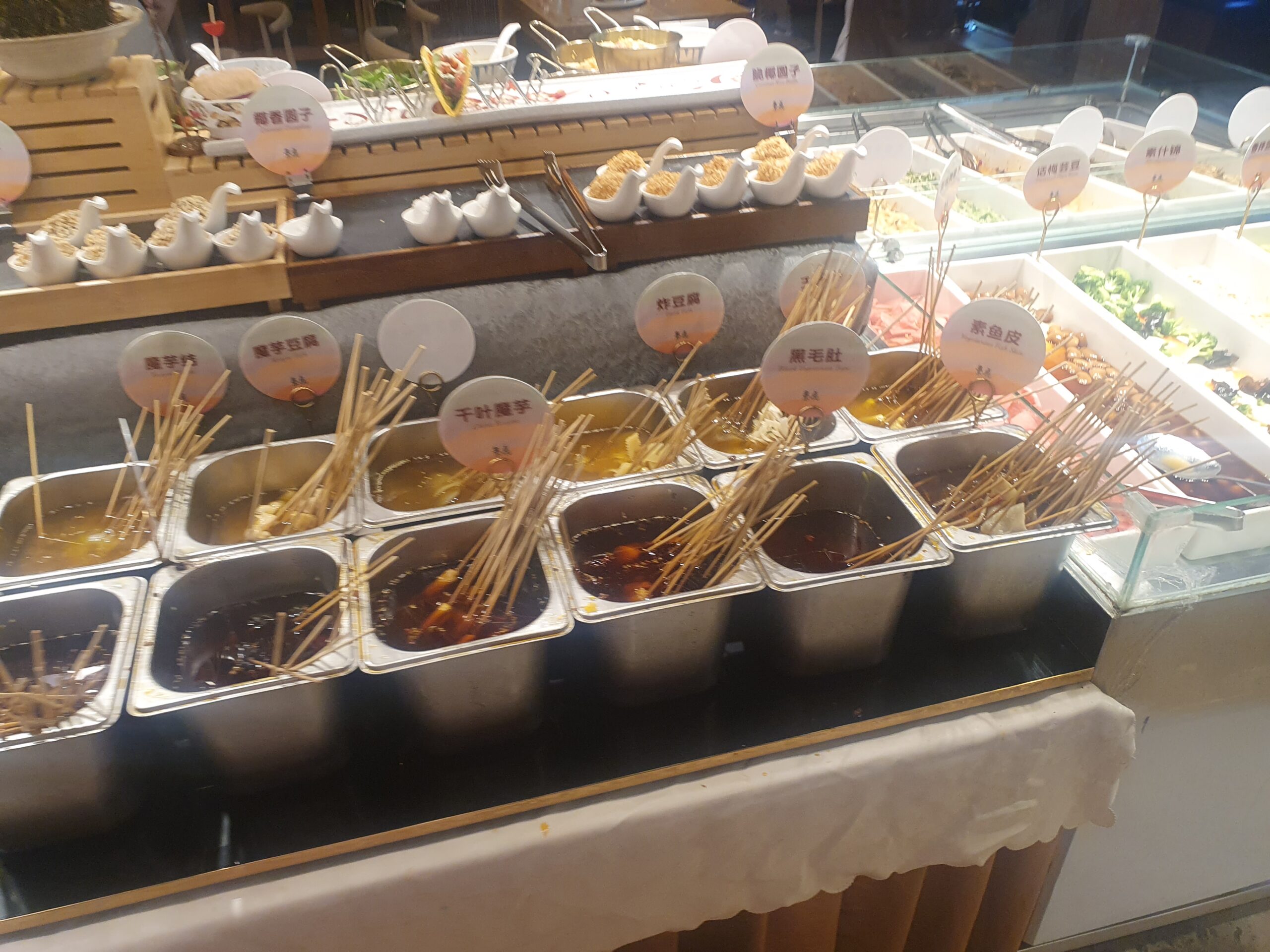
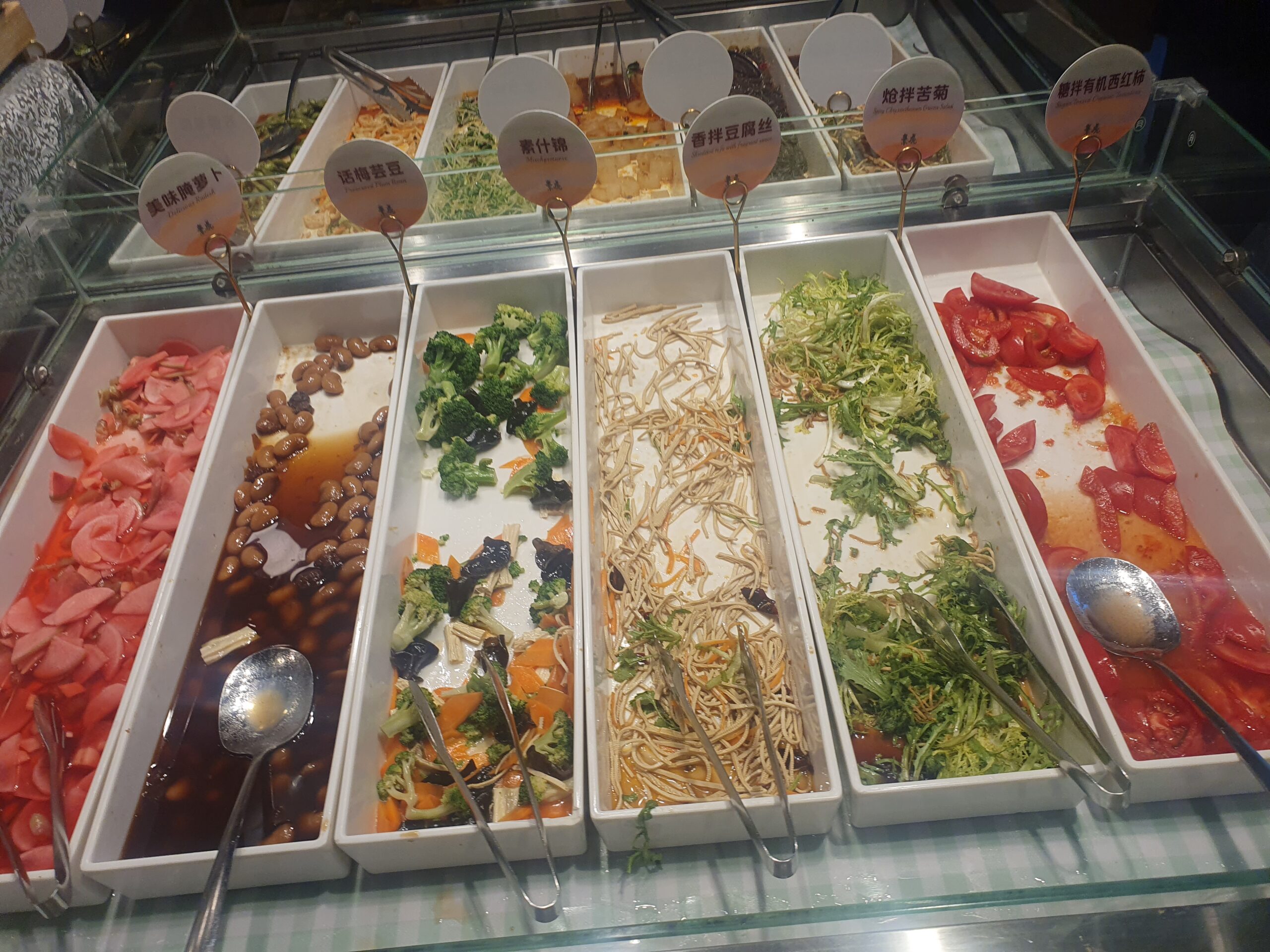
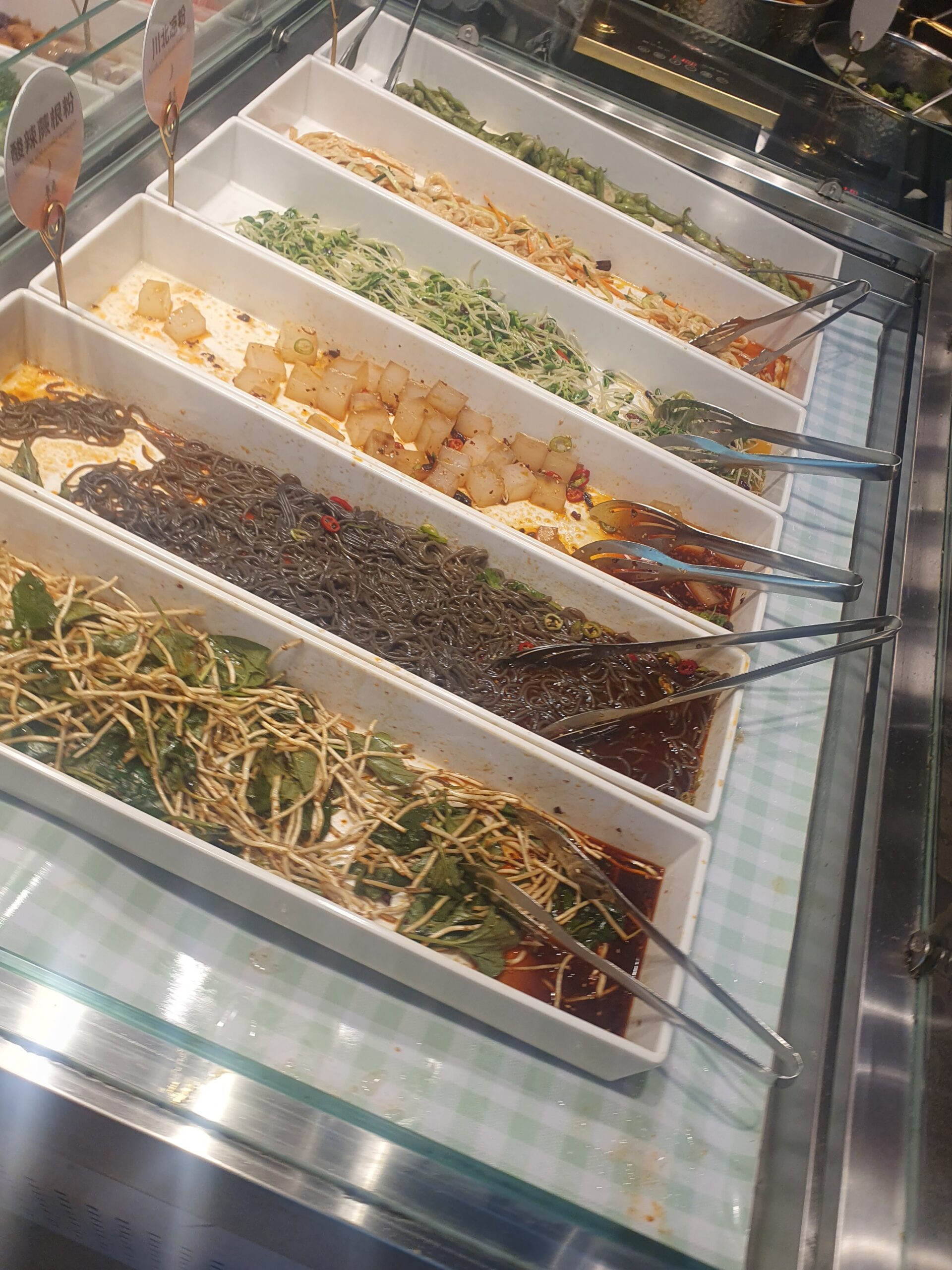
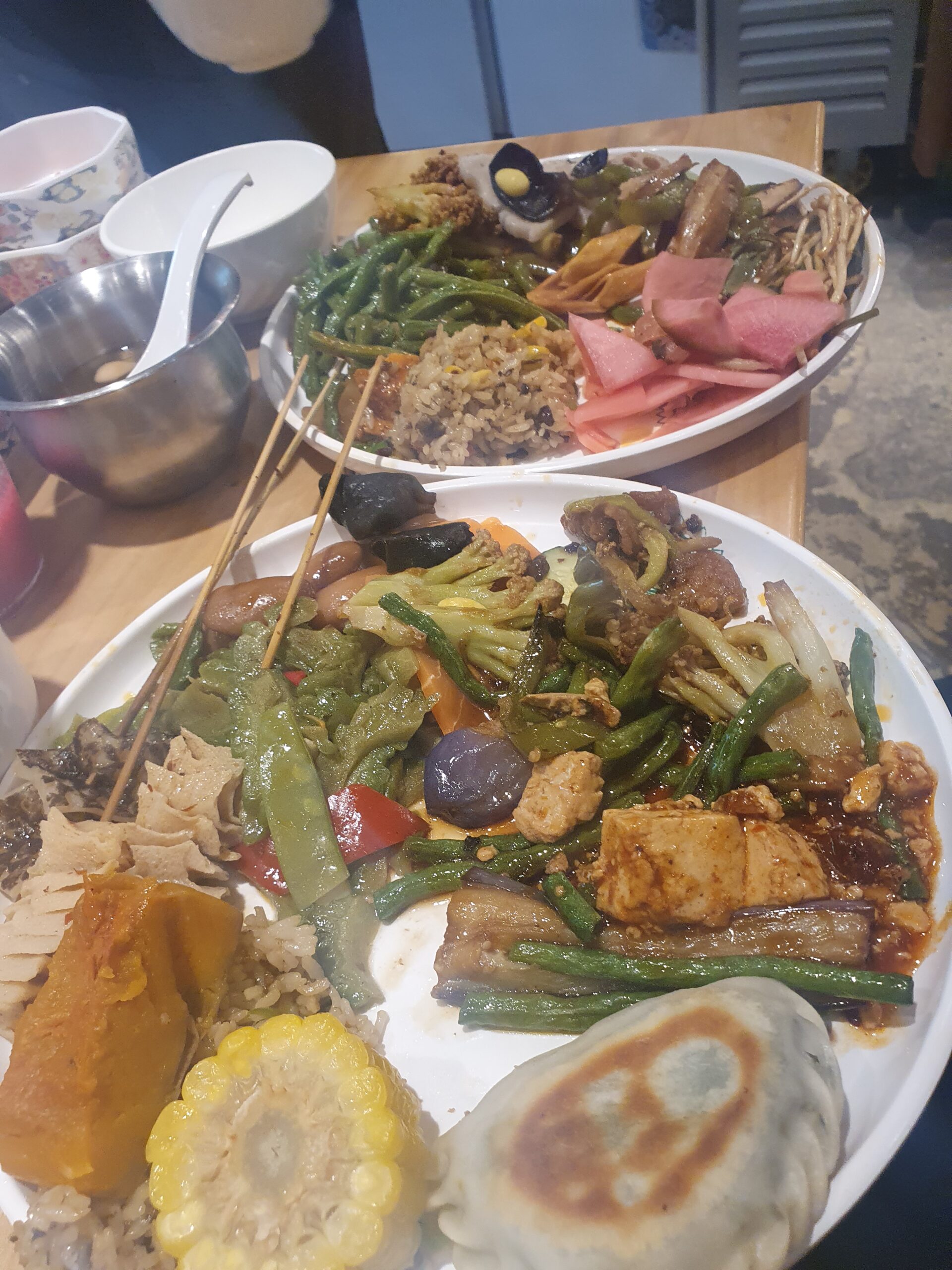
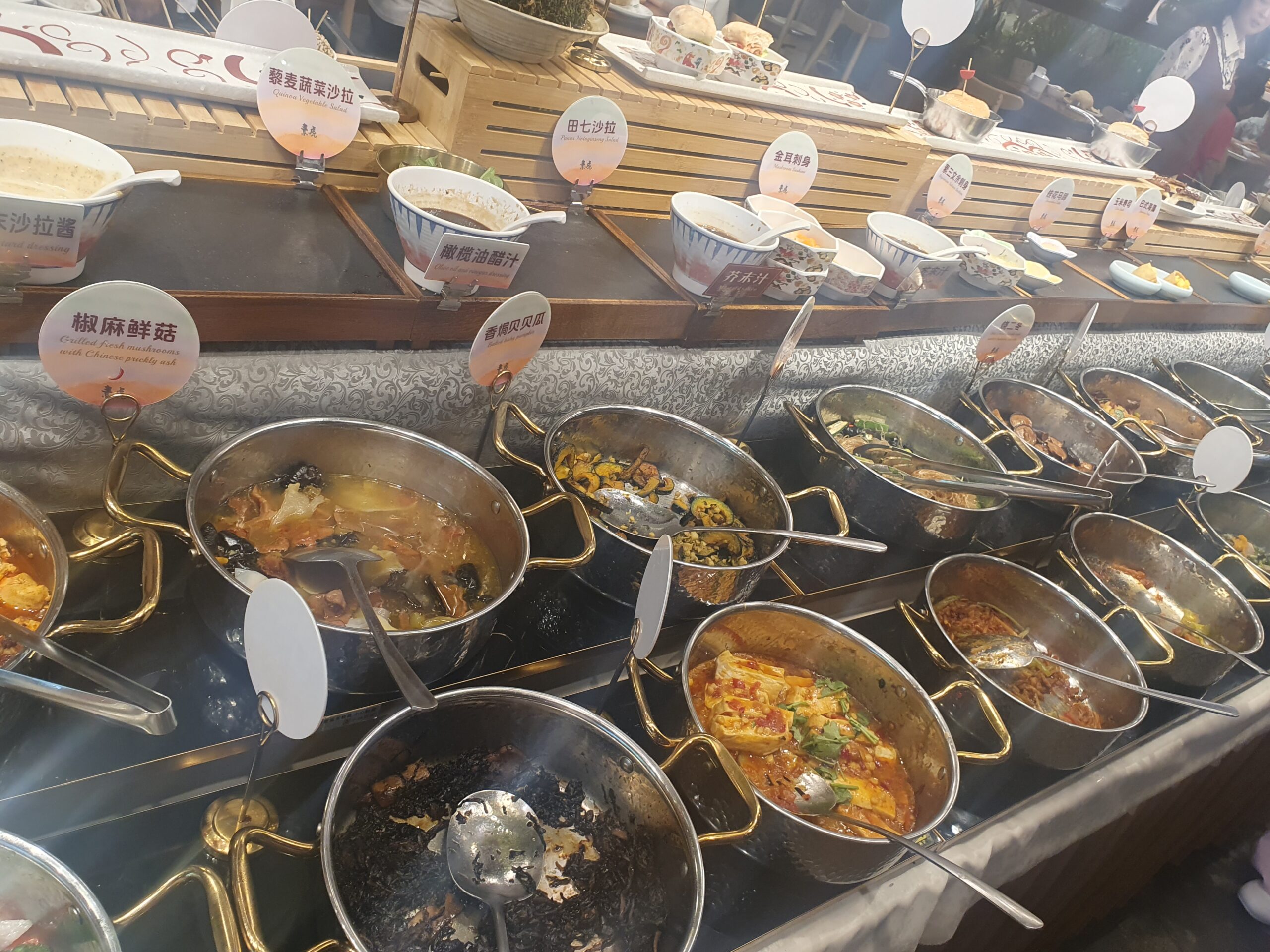
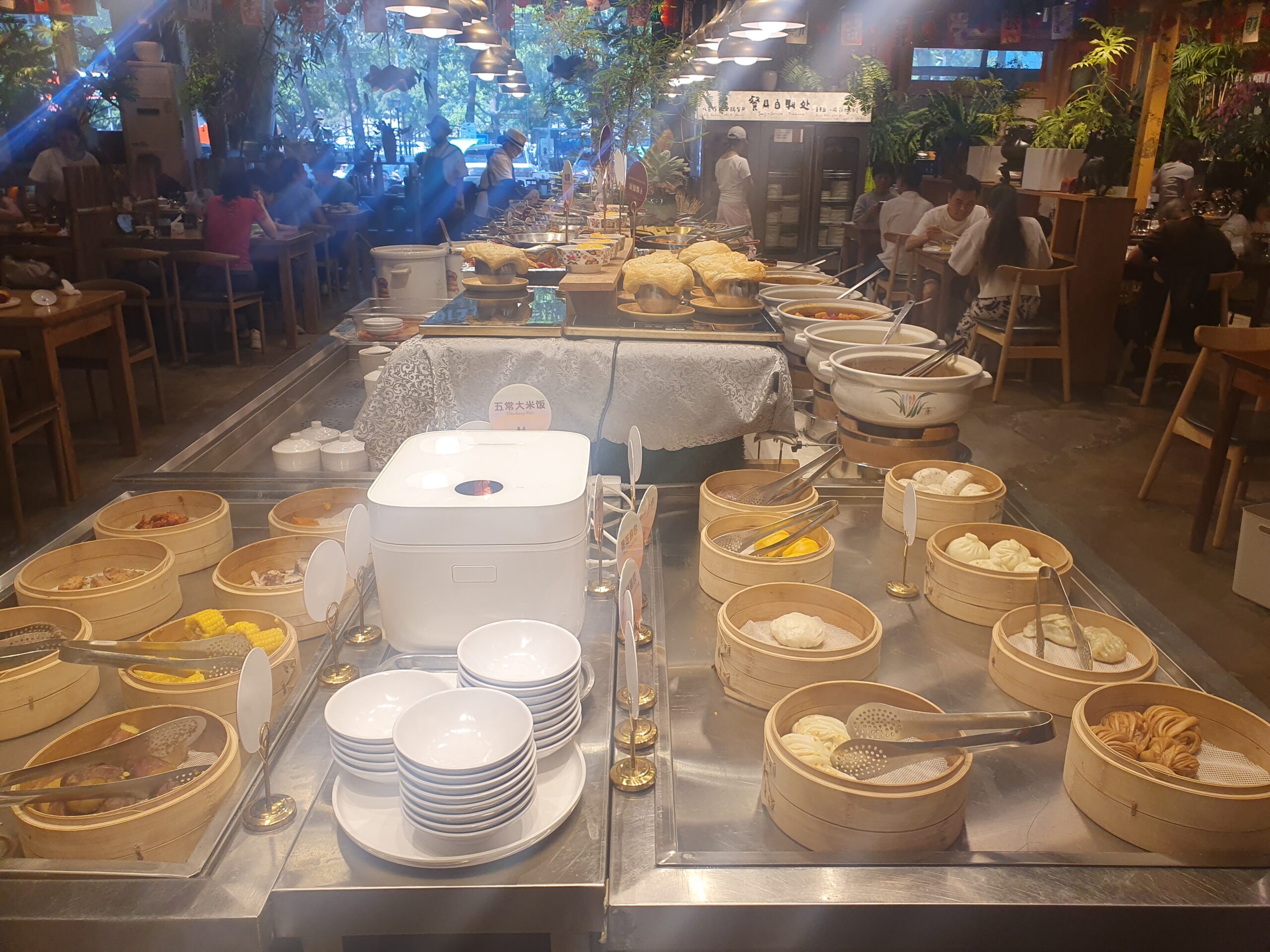
    The buffet is an award winning plant based buffet called, 'Vegetable Feast Buffet'. And the options in here are so vast, you could eat here all week and not get bored. Check out what I filled my plate with:

    Just kidding, that is what I was served on the plane, that's a little vegan in-joke for any experienced travellers. Here are instead the pictures I took of the buffet before it closed for the evening:

    And just like at the dentist, the place did stop serving food early. I think it was 4pm for last orders which we got in at just before. And after we had finished eating, since the chefs and waiters were eating and cleaning up as it appears to be a cultural norm to take food break times all at the same time, they allowed us to go to the back booths and have a sleep for an hour. Can you imagine going to a fancy award winning eatery in say, England and just going for sleepy time inside the building after a munch? Crazy, right?

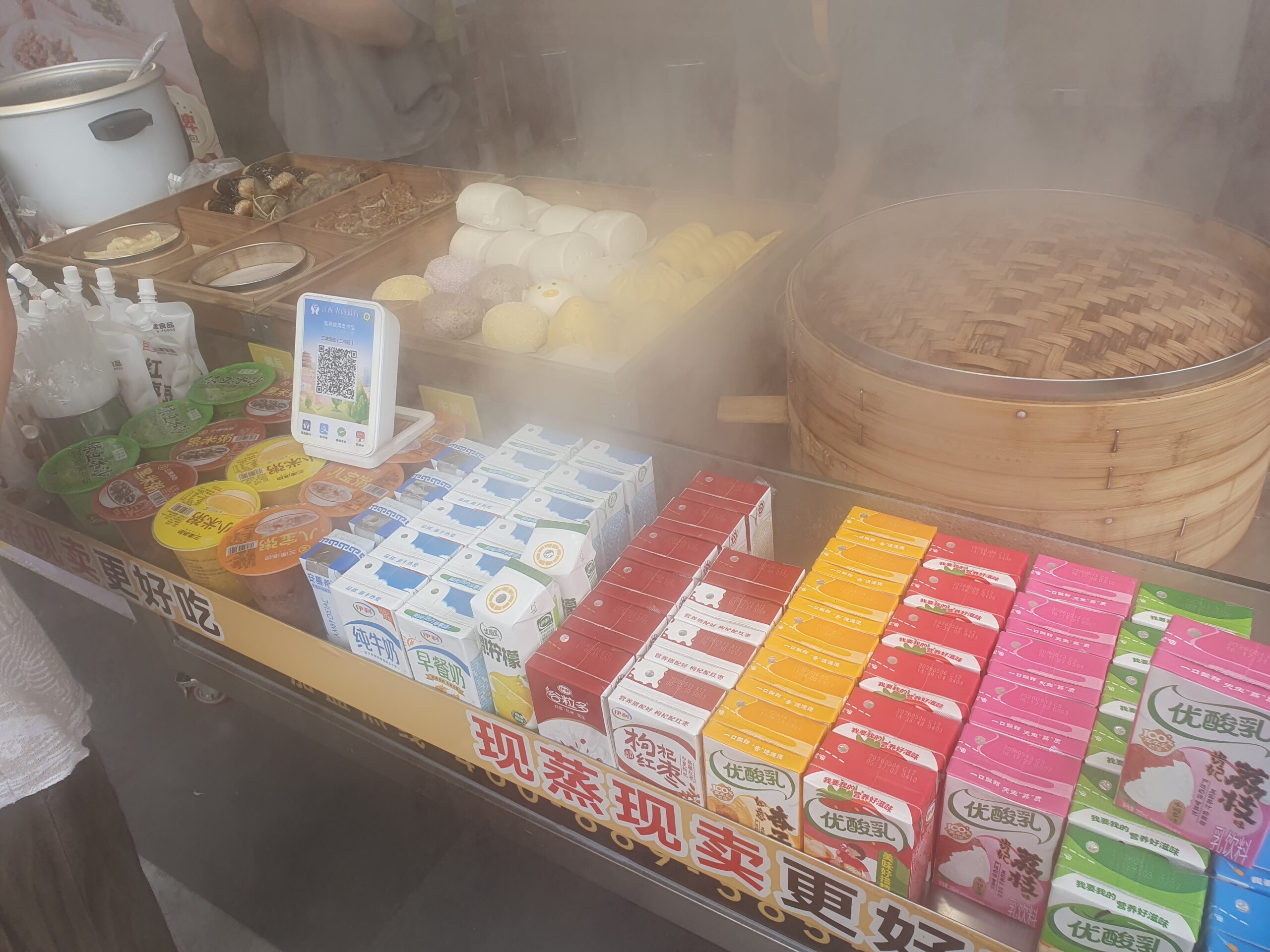
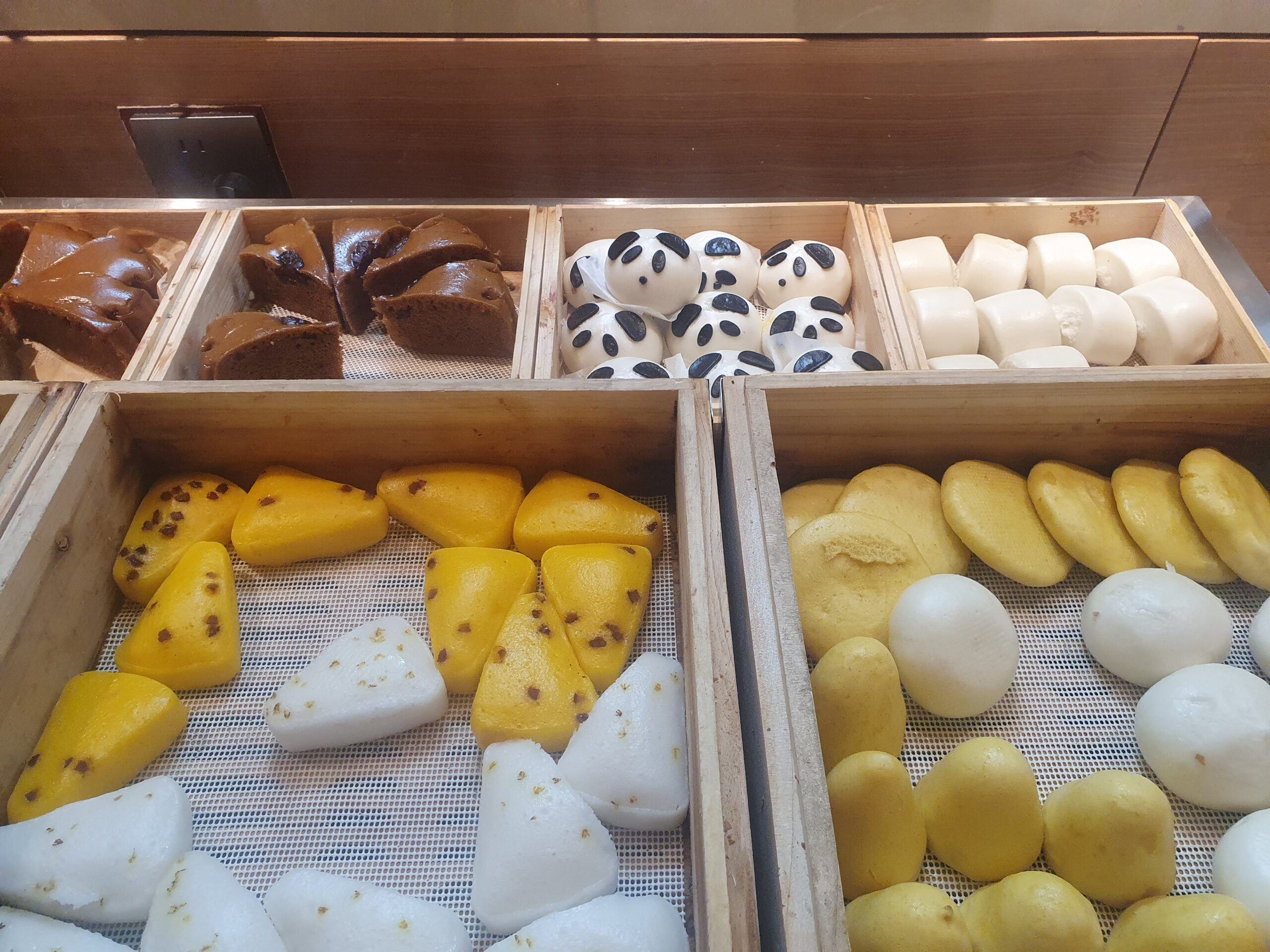
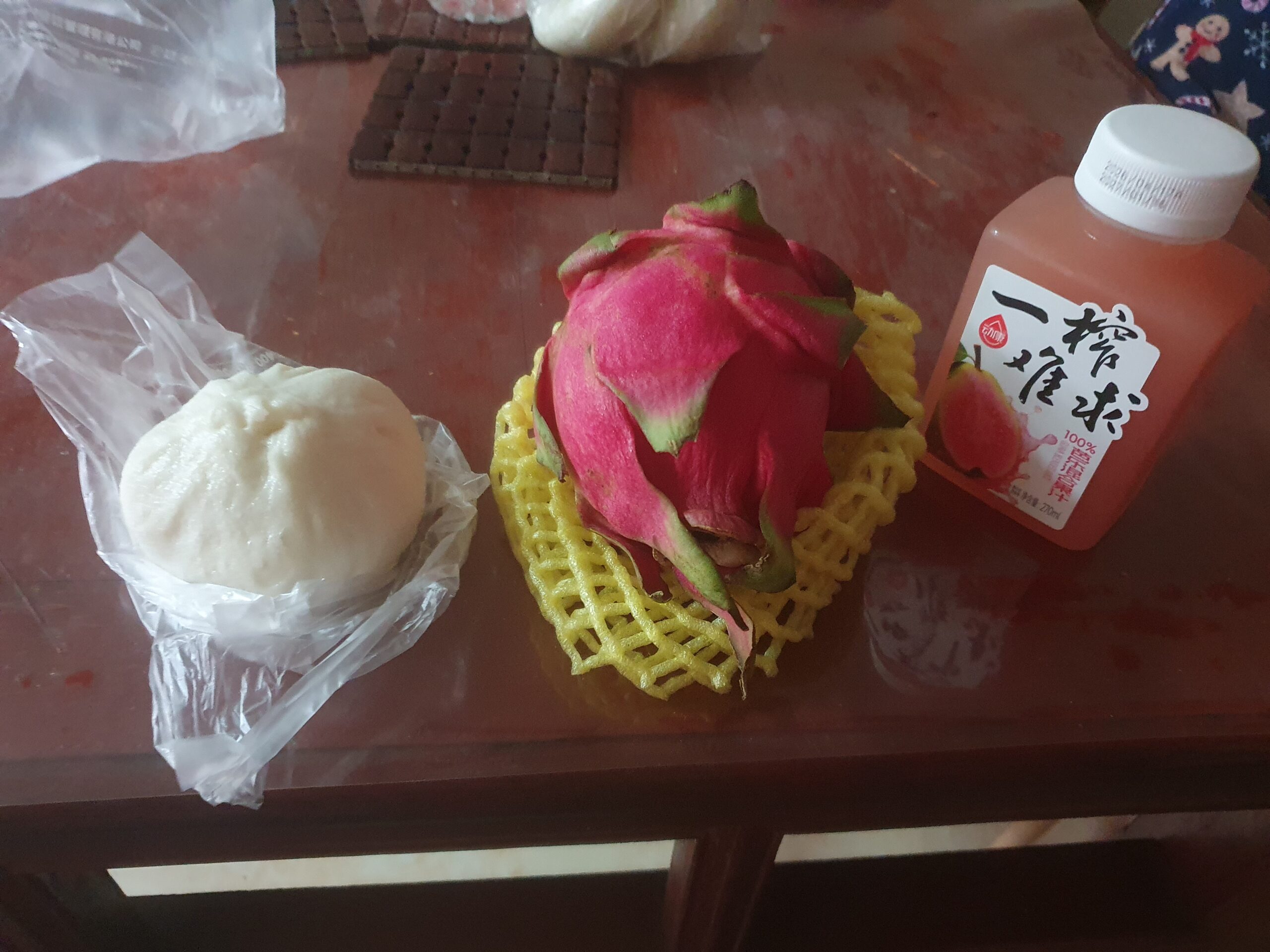
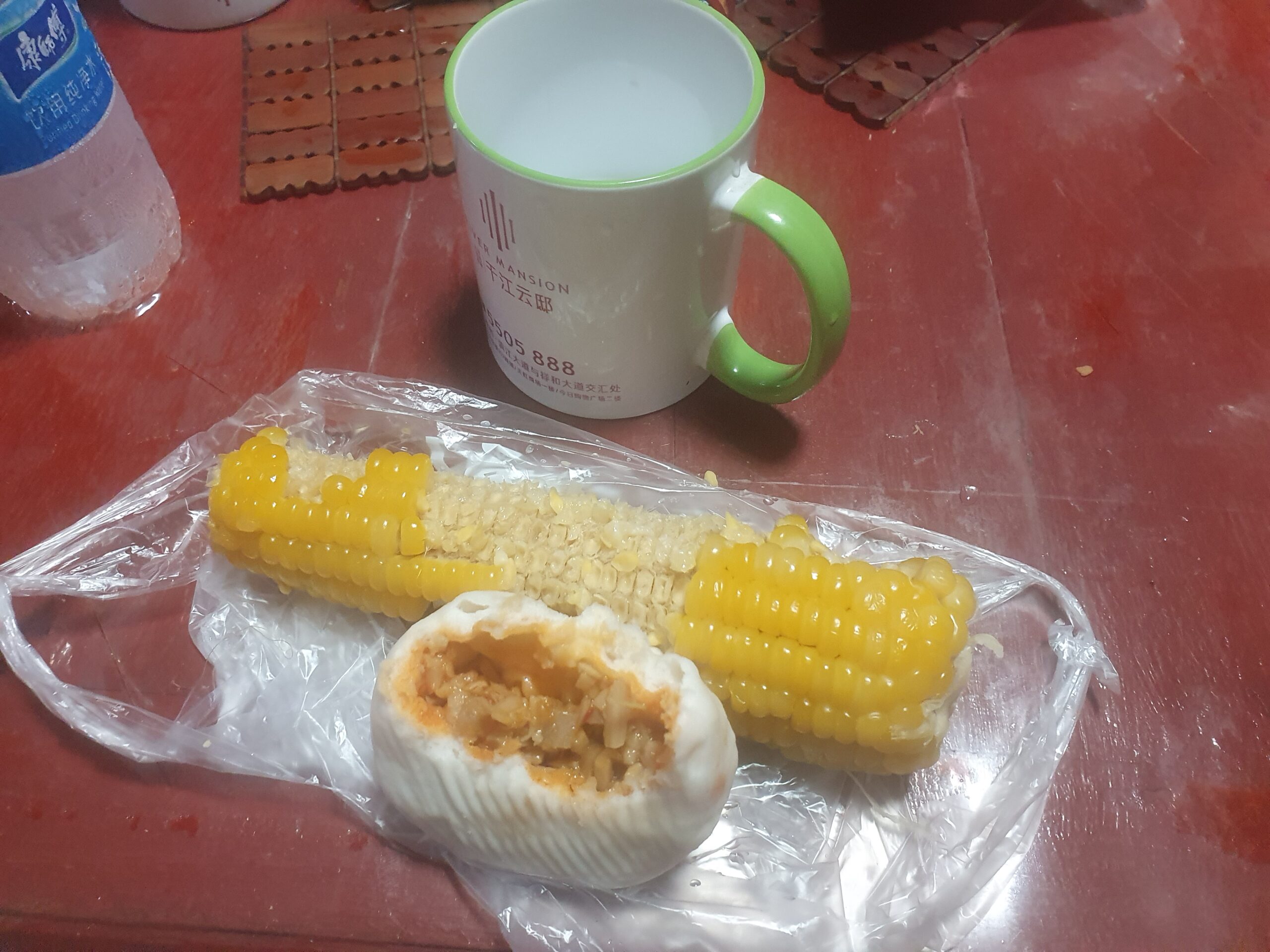
    And lastly we need to talk about snacking, dessert, breakfast, and other things. There is a special breakfast food, which is like cooked food in a sort of soft dumpling, called a 'bāozi' (包子) and roughly pronounced as 'BAO-zuh'. And you can show them this symbol for plant based version: 素包子. It's quite good and usually the vendor will sell chewy corn on a cob to go with it. Though if you are under-sleeping due to the heat, be careful eating too much corn as it can make using the toilet difficult.
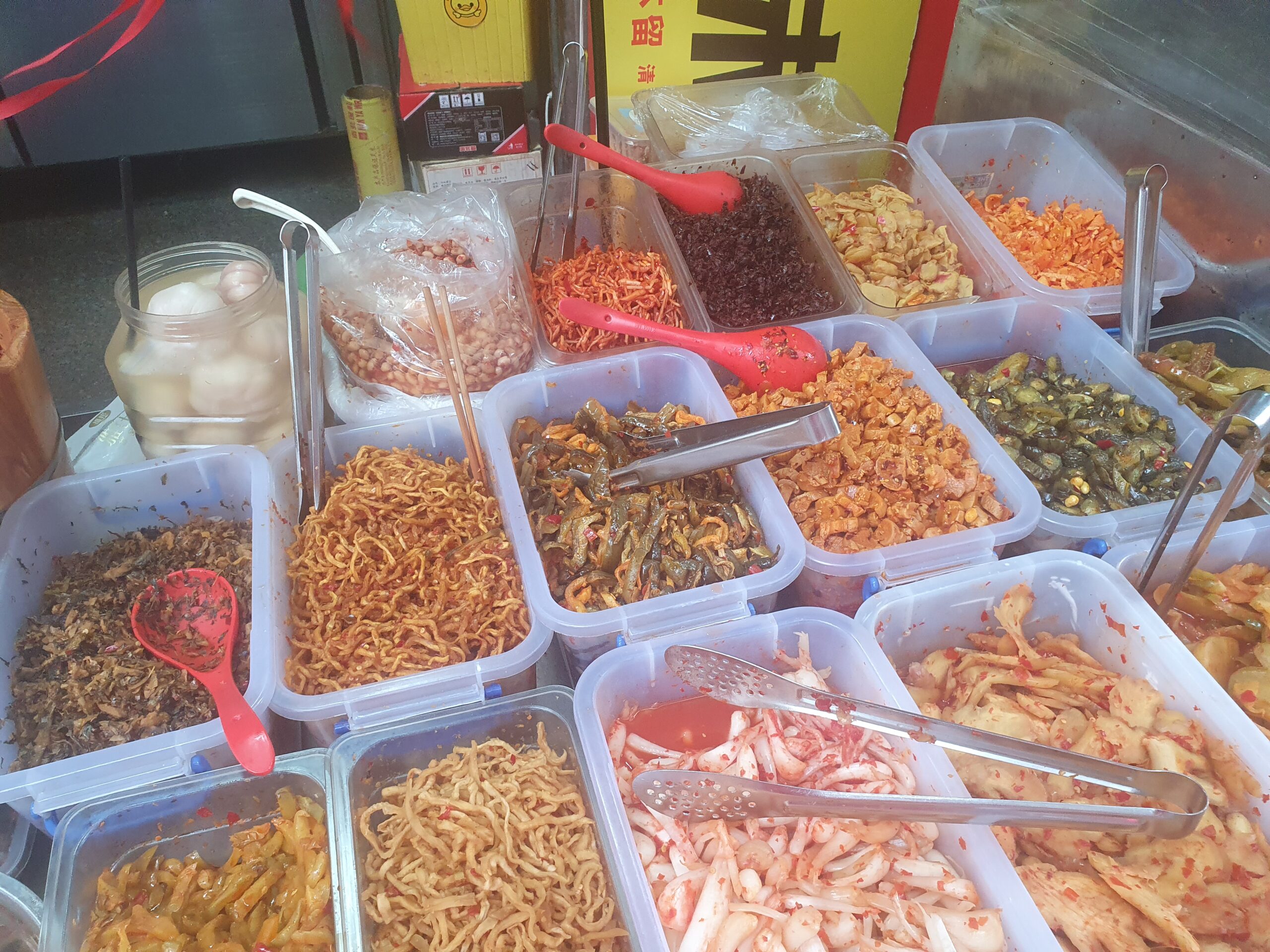
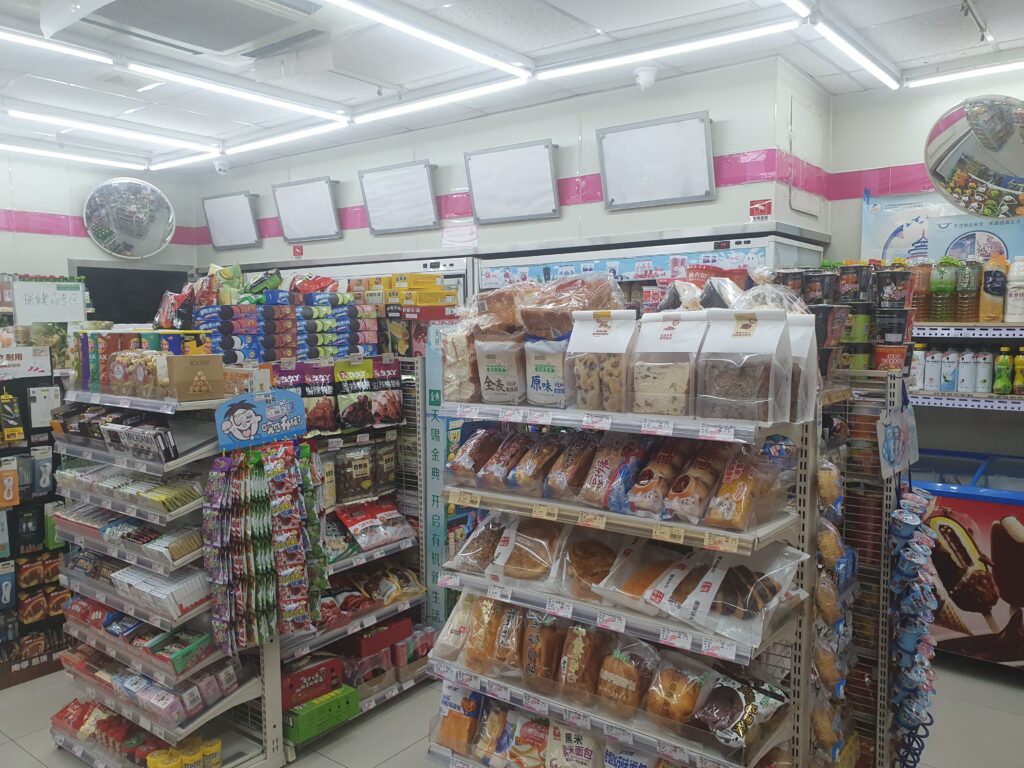
    In some places, there is a small selection of pickled and spiced foods. If you don't enjoy spicy food, or garlic, you are going to have a difficult time in China. Luckily I love both and very much enjoyed these mini pick-and-mix of spiced goods. In the picture provided, that's all plant food. Even the food at the bottom that looks like prawns is actually onions. And if I was going back to China, I would take a glass Tupperware specifically for stocking up on those chillies and pickles when I can to then add to all other meals.

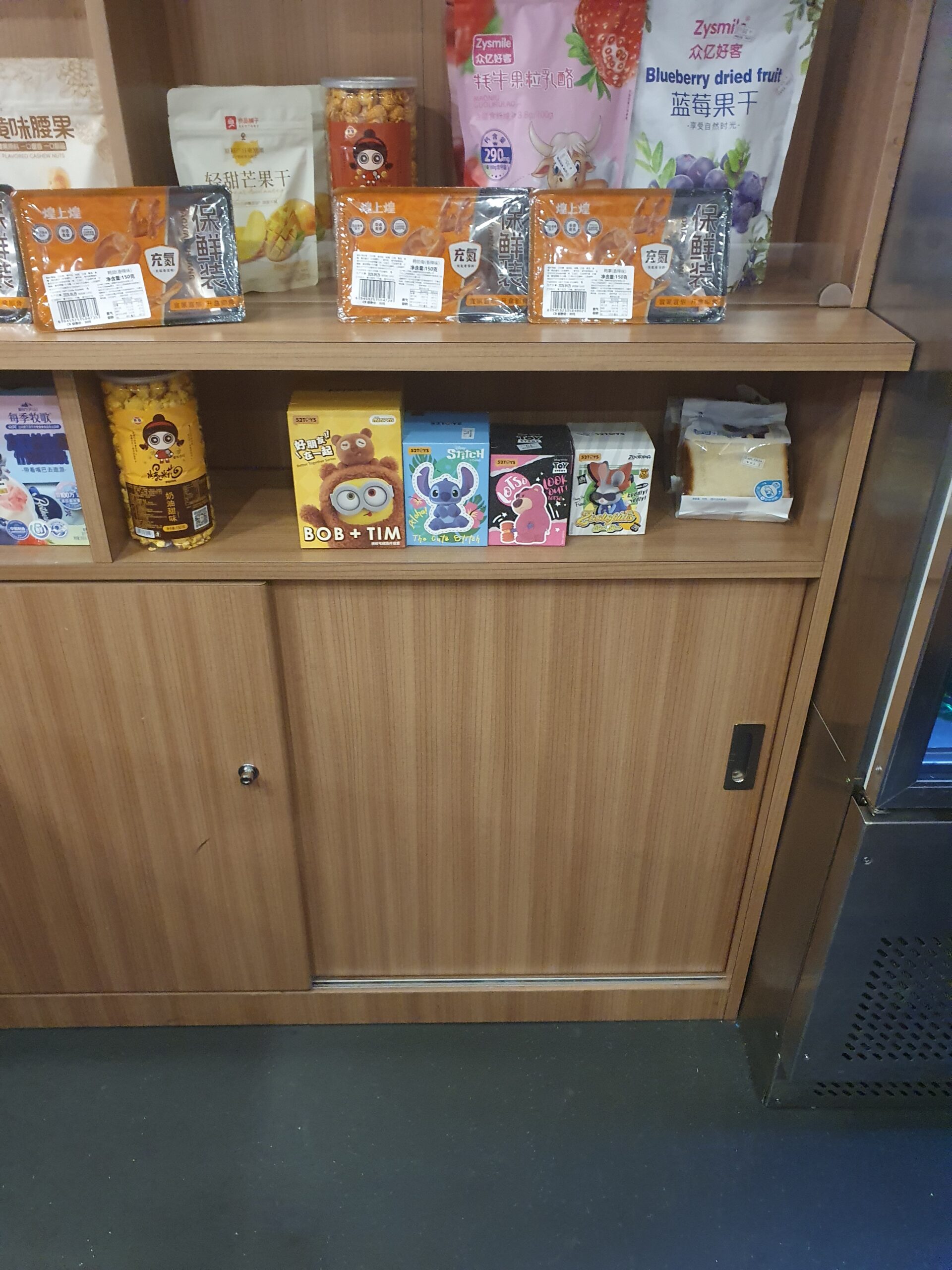
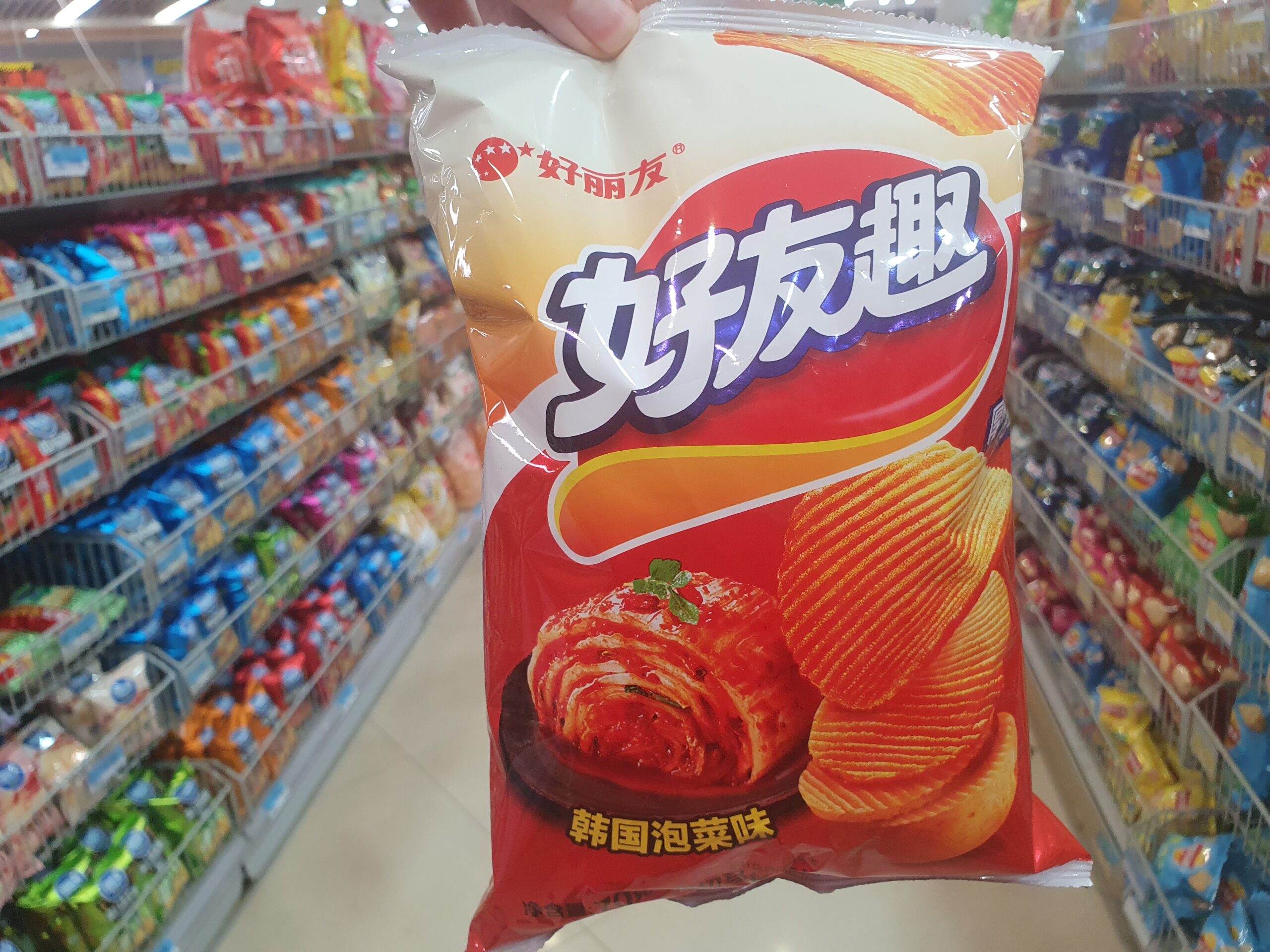
    Another big culture shocker is China's lack of interest in chocolate. And whilst supermarkets did sell chocolate, the only option available as a vegan is dark chocolate and the options are bare. And therefore, I would strongly recommend you bring some cocoa powder with you on your visit, I couldn't see it in the supermarkets I went to. What you can do for your dessert after your din dins, if you drink coffee, is go to a coffee shop called 'Luckin Coffee'. And ask for a Coconut Latte - which has to be ordered through the app on their phone. It's strange because the entire franchise seems to have just stolen the old MSN notification sound, so any western Millennial visiting Luckin Coffee will receive a little unexpected jolt of nostalgia every time the barista gets an order in. The coconut lattes are pretty good, loaded with sugar. And I think would be even better with a teaspoon of cocoa powder, which I will be bringing, along with sneaking in other various chocolate bars to last the holiday. My choice of crisps is Lay's lime flavour, which comes in a sky blue packet, or these crisps shown in the picture that tasted a bit like paprika flavoured.

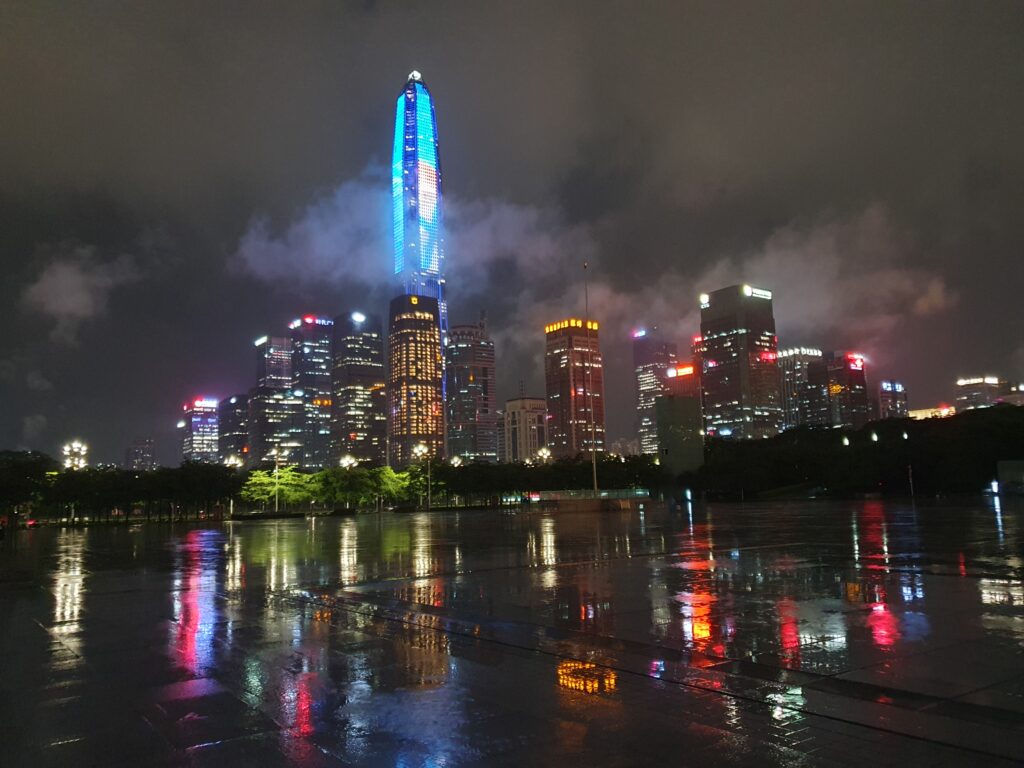
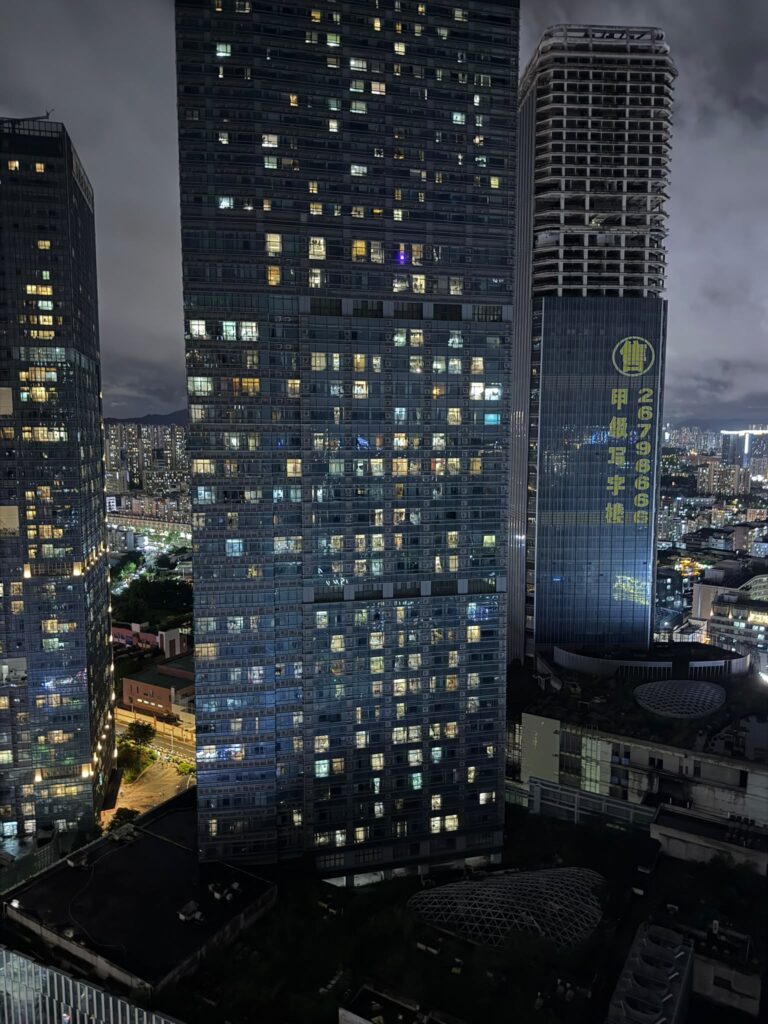
    My last advice for eating food in China, is the Chinese specialise in Chinese food. Pizzas. Chips. Pastas. Burgers. The quality was extremely poor, and I wouldn't eat that, you'd be wasting your appetite. Though one time I did have a small cheeseless pizza delivered whilst getting a road-side hair cut in Shenzhen at 23:00 amongst towering skyscrapers that housed a 1000 apiece, and that felt quite special. And I'm told each apartment in these high rise blocks goes for about £650,000 a piece so it's not cheap living, though I do believe the prices are starting to come down.


    The Vegan Issue

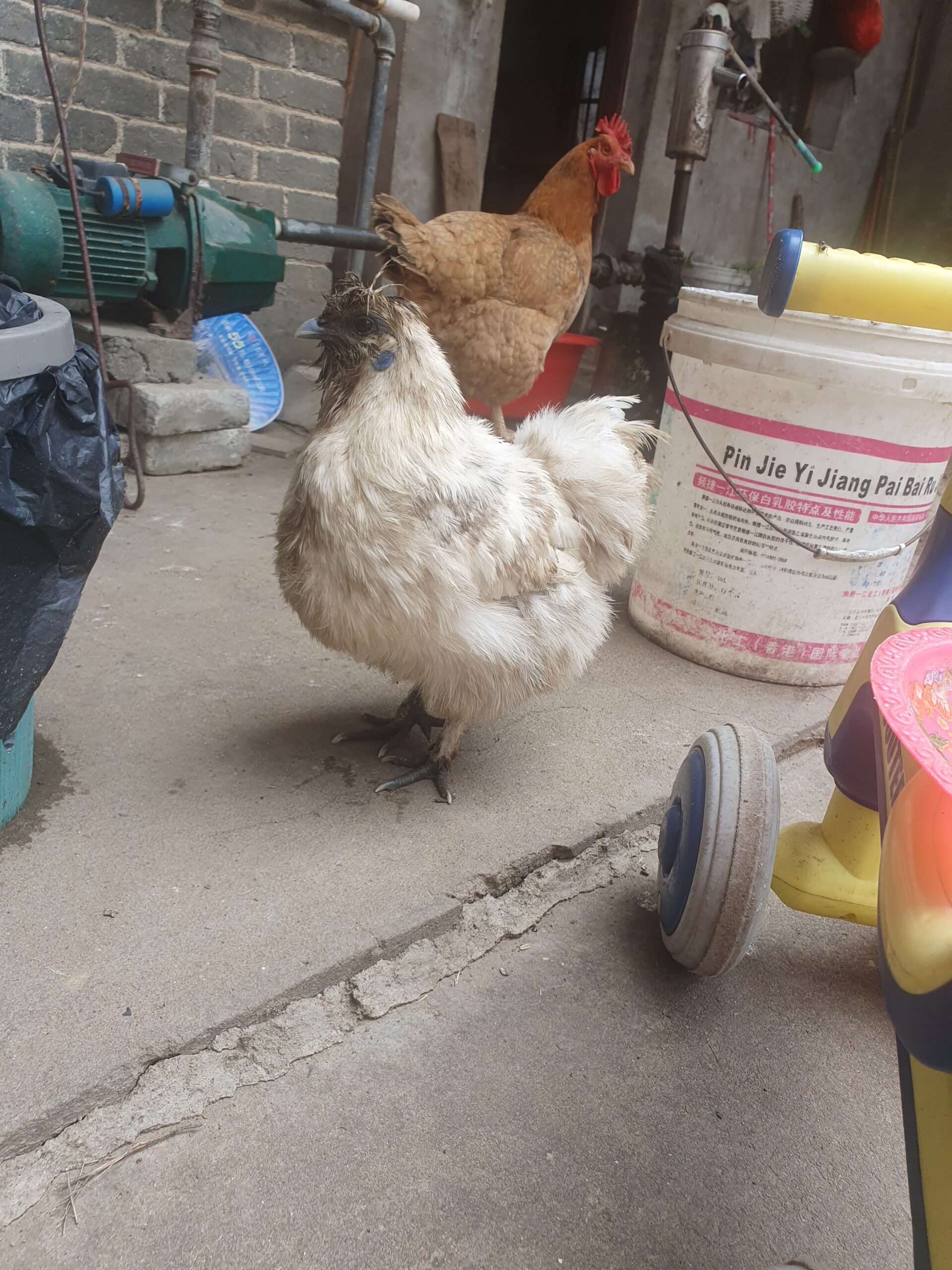
    Animal welfare, from what I observed, is the part of Chinese culture most in need of change — pandas being the striking exception. That's not to hold up Western pet culture as the moral high ground; the doting over cats and dogs while eating everything else is its own kind of inconsistency. But the everyday relationship to animals in China struck me as more detached, and some of the reasons seem cultural rather than callous. Hygiene norms are strict — wet hair is widely thought to invite illness, so a smelly dog in the home is a harder sell — and older superstitions linger, like black animals such as crows reading as bad luck. Layer onto that an education culture that pushes children hard toward study from a young age, and animals can end up filed early as property or utility rather than fellow creatures.

    In terms of insect wildlife, except ants and cockroaches and some snails, I only really saw 2 spiders in total in the whole visit, both in Chengdu. Observing native animals was quite disappointing though it's nice to hear crickets at night and near the centre of Shenzhen during a stormy night, in the sort of swampy woodland channels surrounding one of their main platforms for a light show on the buildings that happen on weekends, but worth double checking if you are visiting. In these swamp parts of the park, I did hear some strange noises that sounded like large toads.

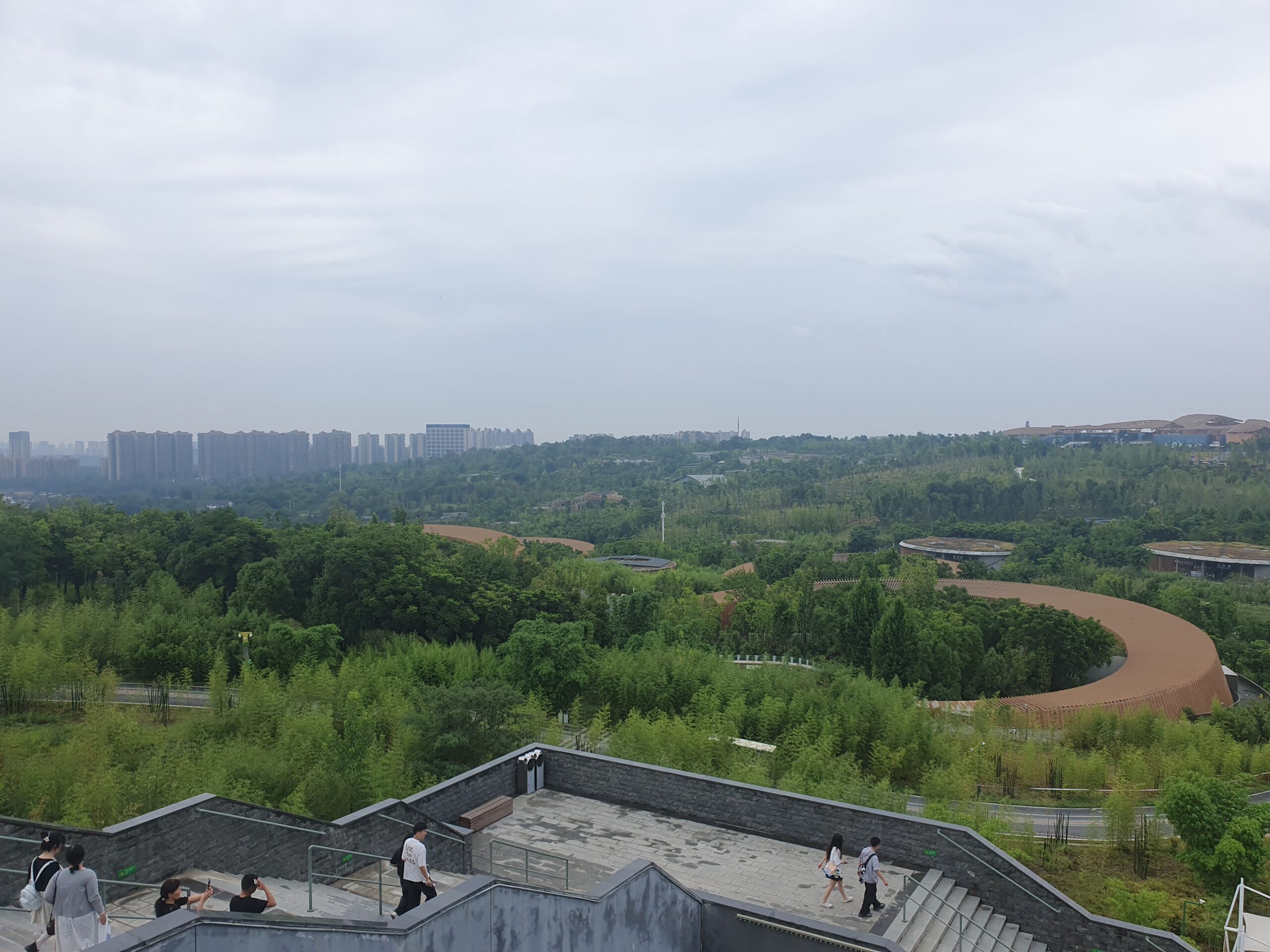
    And on the topic of Pandas, perhaps they are to myself an exception to my own rules though giant pandas can be found in the wild. For you probably are aware pandas are a 'vulnerable' animal, downgraded from being endangered in 2016[15]. But what you may not know is that Pandas aren't located everywhere in China's mountains and are area specific. The place called Chengdu, known as the Panda city, is definitely the capital. And they are Panda mad over there to get the tourism.

    And it is the topic of Pandas we should evaluate as vegans as an exception to the rule of 'zoos' regarding some establishments and parks. The line in question being, does their newly adapted docile and energy conserving behaviour, justify the need for human intervention, which does need to be funded in some way? We're talking about a creature that the animal keepers are able to trade a mother Panda an apple for its young. Pandas tend to live a lot longer in captivity than in the wild. As the Smithsonian's National Zoo puts it: "They estimate that lifespan is about 15-20 years for wild pandas and about 30 years for those in human care."[17] The oldest living Panda recorded was Jia Jia, meaning, 'Good'[18]

    A panda, the Ailuropoda melanoleuca, is a member of the 'Ursidae' bear family. And bears are vicious animals with a digestive system built for meat — short and simple, the gut of a carnivore rather than a dedicated plant-eater. And yet pandas of their own accord have rehabilitated themselves and live primarily off of bamboo, and tend to live just as long as other bears. Captive pandas, do vary from wild pandas, in terms of their gut microbiome which has been studied. Taken from the paper, 'Lessons from bamboo‐eating pandas and their gut microbiome: Gut microbiome flow and applications' states "Antibiotic‐resistant genes (e.g., aminoglycoside, glycylcycline, macrolide, beta‐lactam, puromycin, and bacitracin) are enriched in the captive panda gut microbiome compared with that of the wild pandas (Guo et al., 2019)."[16]

    Yet they are very slow moving creatures, sloth like almost. I saw one taking a drink and it was like it was frozen for 3 minutes. And during the exhibition, I couldn't help but feel it was a bit wrong, in an artificial environment, with a large glass cabinet with onlookers. But without these 'bases', there's a high chance that species would be extinct. But that animal seemed completely oblivious to its onlookers and only concerned with eating. And if the environments they are in, aren't cruel, they're being looked after, and they need human help to increase their numbers due to how poorly they are at reproducing, I didn't take a strong issue with it.
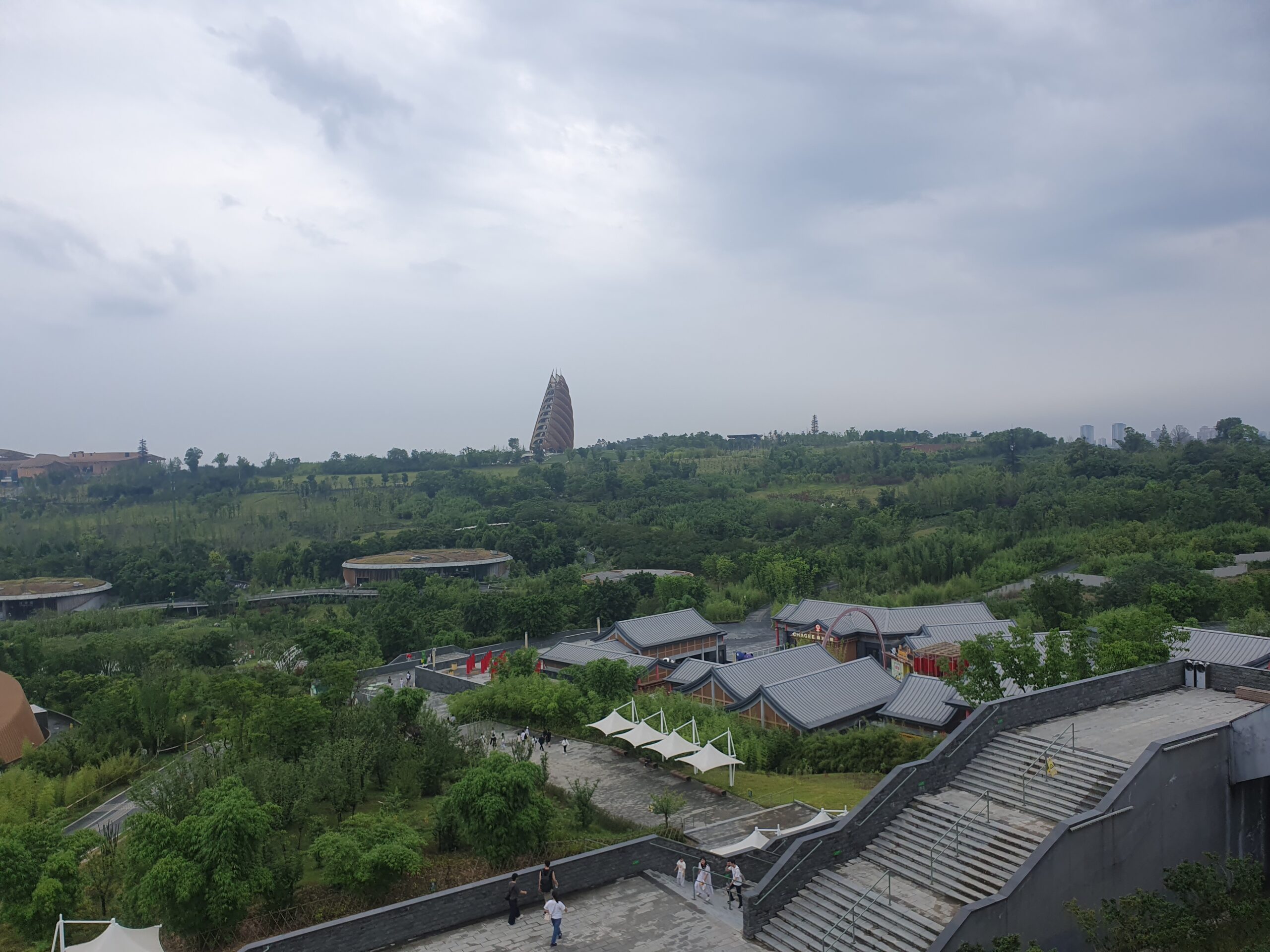

    All in all, I'll probably go back to China and visit more of it, along with bringing a better camera and making sure the lens is clean! Other things that surprised me is like in Shanghai for example, you will look at the faces of the Chinese men. I'd guess about 95% of them are all clean shaven. What's annoying is that despite this, you will be very hard pressed to find a set of razors to have a shave. So my words of advice is bring a shaving razor with you and shave before you leave for your trip. Also it's pointless bringing an aerosol deodorant or buying one in shops. And It's actually quite difficult to come back believe it or not. You are best buying roll on as it's less likely to be confiscated by the security on Subways. And also I wouldn't bother bringing a power bank. Chinese security is super strict on them, and if they don't recognise the brand, it'll probably be confiscated from you. Besides, practically everywhere in China there are these little yellow power banks you can rent if you are running low on juice:

    Before going to China, you're going to want to download 3 apps, and get them set up whilst you've got functioning internet at home.

    The apps are:

    The WhatsApp of China - WeChat also has WeChat Pay, so you can set that up.

    Alipay, the other big payment card option along with WeChat.

    And the map app - Amap / AutoNavi - also doubles up as a method to book taxis at a lower price than hailing a cab. It also lets you check bus and train routes.

    Research of Animal Consumption in China

    Everything above is what I saw on the ground. What follows is the bigger picture behind it — how a country with such deep plant-based roots ended up here, laid out through the research itself.

    In 2005, The China Study by Dr T. Colin Campbell was published, subtitled "the most comprehensive study of nutrition ever conducted." Whether or not it earns that superlative, its scope was undeniably large: the book draws on a survey spanning "65 counties, 130 villages and 6,500 adults and their families."[1]

    It is the dietary difference between rural China, and America that laid the foundations for the book. Dr. Campbell writes: "In America, 15-16% of our total calories comes from protein and upwards of 80% of this amount comes from animal-based foods. But in rural China only 9-10% of total calories comes from protein and only 10% of the protein comes from animal-based foods."[1]


    And then also is explained the significance of such a difference: "What made this project especially remarkable is that, among the many associations that are relevant to diet and disease, so many pointed to the same finding: people who ate the most animal-based foods got the most chronic disease. Even relatively small intakes of animal-based food were associated with adverse effects. People who ate the most plant-based foods were the healthiest and tended to avoid chronic disease. These results could not be ignored."[1]

    China is one of the world's oldest continuous civilisations[2], and for most of that history its diet was predominantly plant-based. We can trace this with surprising directness: by excavating skeletal remains and analysing the carbon and nitrogen isotopes locked in bone collagen, researchers can reconstruct what people actually ate thousands of years ago.

    One study mapping China's prehistoric diets — "The prehistoric roots of Chinese cuisines: Mapping staple food systems of China, 6000 BC–220 AD"[3] — used exactly this isotope evidence. It found regional variation in which plants dominated (millet-type crops in the north, other plant staples in the south), but the through-line is consistent: plants formed the base of the diet. Of one northern site, Xinglonggou, the authors conclude that people "directly consumed millet as a staple food, perhaps on a daily basis."[3] Animal inputs do show up in the nitrogen isotope data at that site — this wasn't a diet with zero animal products — but they sit at the margins of a fundamentally plant-based staple system.

    This dietary heritage is part of what gives The China Study its force: it points to how humanity used to eat before the sickness of dominion and the hunger for the food of the bourgeois swept over the modern world. Which raises a question. Campbell revised and expanded the book in 2016, but it's now two decades on from the original — and China itself has moved sharply in the opposite direction from the one the book celebrated. Its biggest rival across the Pacific set the template for diet-driven disease; China now appears to be closing the gap. And the data bears that out.

    A paper that examines China's agricultural transformation in the last century is titled: 'China in the period of transition from scarcity and extensive undernutrition to emerging nutrition-related noncommunicable diseases, 1949–1992'[4] using data to document nutritional changes and talks of a series of events that took place as these changes underwent.

    The upheaval stretched across more than a century, beginning with the First Opium War against the British Empire in 1839 and running through the wars and occupations of the 20th century — a period in which China fell to being among the poorest nations on earth. The fighting gutted industrial capacity, pulled agricultural labour into conscription, and displaced populations, all of which drained the country's wealth. It was against this backdrop that the land reforms of 1949 set out to stabilise a devastated economy.

    However, this reform's effect only went so far. Along with other contributing factors as the paper writes: "However, the rapid economic growth was not sustained due to natural disasters and political uncertainty. This period of change was marked by experiments, such as the Great Leap Forward in 1958–1962 and the Cultural Revolution in 1965–1976, which precipitated economic crises. "

    Then it goes onto write: "Not until the late 1970s did the current strong economic model emerge to move China rapidly forward. In 1979 China implemented major land, social, and economic reforms. The country’s economy and agricultural productivity changed greatly after this time." [4] So a second reform took place, or a reform of reforms. According to the paper, these reforms did not arise simply from the country's recovery from the aforementioned wars, but followed a period of economic crises associated with natural disasters, political uncertainty, the Great Leap Forward, and the Cultural Revolution. In response, China introduced major land, social, and economic reforms in 1979, moving towards a more market-oriented agricultural system.

    One of the papers cited for shifts in diet, activity, and body composition is: 'Dynamics of the Chinese diet and the role of urbanicity, 1991-2011' of this states in its abstract: "The rapid decline in intake of coarse grains and, later, of refined grains and increases in intake of edible oils and animal-source foods accompanied by major eating and cooking behaviour shifts are leading to what might be characterized as an unhealthy Western type of diet, often based on traditional recipes with major additions and changes. The most popular animal-source food is pork, and consumption of poultry and eggs is increasing. The changes in cooking and eating styles include a decrease in the proportion of food steamed, baked, or boiled, and an increase in snacking and eating away from home. "[5]

    Regarding the reforms that preceded this increase in animal-source foods, the paper 'China in the period of transition'[4] writes: "In 1979 China implemented major land, social, and economic reforms. The country’s economy and agricultural productivity changed greatly after this time" [4] and later follows with these statements: "Consumption of animal-source foods tripled between 1952 and 1992. The lowest intake level occurred in 1962. It increased slowly from 1962 to 1979 and has increased more rapidly since then. Intake of animal-source foods was higher and increased faster in urban areas than in rural areas. It nearly doubled in rural areas and tripled in urban areas over this study period" [4]

    As this dietary shift has taken hold, a growing number of studies have tracked a parallel rise in non-communicable diseases (NCDs) — the chronic conditions, such as heart disease, diabetes and cancer, that aren't passed from person to person the way a virus is. China's rapid change effectively turns the country into a live case study: as the diet has westernised, researchers have been able to watch the disease burden move with it.

    One such study, "Non-communicable disease burden in China, 1990–2023: Evidence from the Global Burden of Disease Study 2023" draws, from that study itself, and covers 31 provinces in Chinese Mainland and found NCDs were the major contributor to China's disease burden in 2023[6]. "Compared to 1990, the mortality rate increased by 239.14% and the DALY rate by 77.04% for neurological disorders. For mental disorders, mortality increased by 382.34% and the DALY rate by 25.82%. For musculoskeletal disorders, the DALY rate increased by 48.17%. " [6] though this study doesn't state animal products are the cause.

    Another study from the same source, but an earlier year, titled: 'The burden of type 2 diabetes attributable to dietary risks in China: Insights from the global burden of disease study 2021'[7] states as their results: "In 2021, the results show that 21.43 % of T2DM-related (Type 2 Diabetes Mellitus) deaths and 23.51 % of DALYs were attributable to dietary risk factors, notably a diet low in whole grains and high in red and processed meats. Over the period from 1990 to 2021, there has been an increasing trend in the EAPCs of death rates and DALYs associated with dietary risks in China, suggesting a substantial impact of dietary factors on the burden of T2DM in the country."[7]

    Another study published in 2016 titled: "Identification of Chinese dietary patterns and their relationships with health outcomes: a systematic review and meta-analysis" states from their results from 130 studies with over 900 000 participants, "Six dietary patterns were identified: traditional whole-grain diet (Traditional WG), traditional non-whole-grain diet (Traditional NWG), plant-based diet (Plant-based), animal food diet (Animal-food), Western energy-dense diet (Western) and other unclassified diets (Unclassified). The Plant-based diet was associated with a reduced risk of CVD and cancer from prospective studies, reduced risk of diabetes, hypertension, cognitive impairment and depressive symptoms from all study designs. "[8] As they also write "The burden of chronic diseases has been increasing rapidly in China. From 1990 to 2010, the age-standardised mortality of diabetes mellitus and ischaemic heart disease increased by 52·3 % and 31·6 %, respectively(Reference He, Li and Yang7,Reference Yang, Wang and Zeng10). "[8]

    Even analyses framed generously toward animal products tend to reach a point where the data forces their hand. Take this study, published on Cambridge University's Cambridge Core: "Nutrition transition and chronic diseases in China (1990–2019): industrially processed and animal calories rather than nutrients and total calories as potential determinants of the health impact"[9]. It builds in several conditions that have to hold before its conclusion follows — the effect being that, so long as certain rules are observed, animal products are permitted to come along for the ride. Worth knowing before reading it: one of the authors, Anthony Fardet, has done work supported by Danone, though he publishes mostly on grains[10], and both Fardet and his co-author Edmond Rock have their names on a separate paper favourable to cow's milk[11]. Funding source and conclusion are known to correlate in nutrition research[12], so it's reasonable to read a paper's framing with its ties in mind — and then judge it on what it actually reports.
    On their China paper, the authors build the analysis around their own framework — the "3Vs" rule. In their words: "This rule is based on three inclusive and interconnected metrics that governs the diet-global health relationship, namely the plant/animal calorie ratio (Rule 1 in French: 'Végétal' for plant, 85 % optimum daily calories), the food degree of processing (Rule 2: 'Vrai' for real foods, 85 % minimum daily calories), and food diversity, if possible organic, local and/or seasonal (Rule 3: 'Varié' for Varied). This simple tool theoretically and potentially suggests that the more a dietary pattern deviates from these rules, the less global health is preserved, for example with excess animal-based foods, and/or excess UPFs and/or an overly monotonous diet."[9]

    The rule leaves the door open for animal products — it counts them as one input among several rather than the problem itself: "For the first part of the 3Vs rule, i.e. 'Végétal/Plant', animal-based foods encompassed white and red meat, dairy products, eggs, and seafood and fishes."[9] But read what the authors concede in the same breath. On their own account, animal and ultra-processed calories track directly with disease: "Indeed, current analyses of developed countries indicate that excess animal and UPF (ultra processed foods) calories are associated with increased risks of chronic diseases, especially overweight, obesity, metabolic syndrome, type 2 diabetes and hepatic steatosis, cardiovascular diseases, renal function decline and total cancers, all-cause mortality, and with the degradation of food system sustainability as well."[9]

    The word doing the heavy lifting is "excess" — it implies a safe dose, a level below which animal products are fine. But look at the direction of their own finding: the associated risk doesn't switch on at some threshold and stay off beneath it. It scales. A framework built to keep animal foods in the diet still ends up documenting exactly why they're a problem.

    The authors are careful to hedge. Under the heading "Adequacy to the 3Vs rule" they write:

    "Therefore, a decrease in total dietary calories, but with more than 15 % of the calorie intake provided by animal-based foods appears to be associated with a higher prevalence of chronic diseases. Correlations obviously do not mean a strict causal link with increased animal-based product consumption."[9] And under "Limitations of the Study": "First, the ecological nature of our study may involve inference fallacies because correlations are not causalities, and chronic diseases are multifactorial."

    It's tempting to read those lines as an escape hatch. They aren't. They're the caveat any ecological study — one that compares whole populations rather than tracking individuals — is required to make, because populations differ in dozens of ways at once. The same applies to The China Study, which rests on the same population-level design. No single observational study can prove that animal foods cause disease; admitting that isn't a weakness, it's the honest floor everyone in this field stands on. What builds the case is convergence — large populations across decades, a dose-response pattern, biological plausibility, and intervention studies all pointing the same way, which is exactly how science established that smoking causes cancer. The one thing worth watching here is the pairing: by keeping "animal and ultra-processed calories" bracketed together throughout, the paper leaves room for a reader to blame the processing alone and wave the animal component through — but the two are reported travelling together, and the direction of the association never reverses.

    The study's own abstract lays out the design in full: "To study the impact of income change—specifically rapid income growth—on diet behaviour over time and by socioeconomic level, we used data from a prospective study of China begun in 1989 (followed up in 1991, 1993 and 1997). The subpopulation used in this study included 5783 subjects aged 20–45 years old from 3129 households. Dietary intakes were measured using a combination of the weighing method and three consecutive 24-h recalls. Detailed income and price data were collected, and predicted household per capita income was used in multivariate longitudinal random-effects models that described the consumption of several food groups and nutrients. Income elasticity was used to measure the changes for the effects of income over time on (a) the probability of consuming any food and (b) the quantity of food consumed."[13]

    And speaking of their findings, they note something we already have learned here: "These aggregate statistics point out some of the most important changes in Chinese diets during the 1990s. While the incidence of high-carbohydrate staple food consumption increased, this was met with a substantial decline in the amount consumed per consumer. Most of the largest declines in the overall consumption of these staples occurred in the lowest income groups. As more people consumed these foods, the amount being consumed declined. A different situation emerged for the relatively high-fat animal foods and edible oils. While there were similar increases in the incidence of consumption of these high-fat foods, the average quantities consumed clearly increased for all income groups. "[13]

    It's also good to highlight this point, "Consumption of traditional foods is decreasing. Chinese traditional foods were characterized by many staple foods (i.e., rice, wheat and wheat products), as available, with a small amount of vegetables and a few animal foods."[13]
    Their results section is where the pattern sharpens — but first, a quick definition, since the findings lean on it. A tertile is a statistical measure that splits a dataset into three equal parts: the lower, middle and upper thirds. With that in hand, here is what they found: "Consumption of animal foods is increasing. Animal foods were luxury foods in China and only a few rich people could regularly consume them before 1988, but more people can afford them now. The proportion of people who ate animal foods increased from 91.9% in 1989 to 97.1% in 1997 in the high-income tertile and from 63.8% to 72.7% in the low-income tertile. The average per capita consumption of animal products increased by about 30% for all three income tertiles. The absolute increases were largest for the high-income tertile; their intake level and the increase were almost twice that of those in the lower income group."[13]
    "The structure of the Chinese diet is changing with improved income, particularly in the low- and middle income groups. The Chinese diet is shifting away from traditional foods—rice, wheat and wheat products— toward high-energy density, high-fat and low-fiber diets. People in the low-income group have the highest decrease in cereal food intakes."[13]

    Then comes the predictable feature, the increase of disease: "Following the nutrition transition, the pattern for death causes is shifting away from infectious diseases toward DR-NCD (diet-related noncommunicable diseases). The specific mortality of hypertension increased from 8.2 to 13.5 per 100,000 between 1984 and 1999, CVD from 153.2 to 193.0, diabetes from 5.1 to 15.4, and cancer from 116.2 to 140.5, respectively. This shift is noteworthy, as it seems to be concurrent with the increase in DR-NCD related to the circulatory system and cancer. Furthermore, the increase in the total mortality since the 1990s should not be overlooked. There was no clear increase in the total mortality before 1990, but an increase of 34.7 per 100,000 thereafter."[13]

    But remember this paper is actually about income class, and how classes affect dietary behaviour, as they write: "The impacts of income changes on dietary behaviour differ over time. For example, in 1997 the quantity of beef and mutton consumption would have increased by 20% if people in the low- and middle-income groups received an extra 10% income, while the consumption would not have changed significantly for the same income groups in 1989."[13]

    And they continue with: "The impacts of income change over time on dietary behavior are also different for the different income levels. For example, the income elasticity for the probability of consuming any poultry increased for all income groups, but the change was much smaller (and insignificant) for those with low income than for those with high income."[13]

    So with the discussion, it then sees: "When people—particularly the poor—receive extra income, the first goal is to improve their diet. However, our results verify diet improvement always means extra edible oil, pork, or other meats. Poor people may also have the potential to be exposed to high-fat, high-energy density junk foods (Reidpath, Burns, Garrard, Mahoney, & Townsend, 2002)."[13]

    "The Chinese diet is shifting away from the traditional, most healthful diet in the world, toward one that most high-income countries are attempting to change, and other countries may be able to bypass. Multivariate analyses of this study show that extra income is associated with a greater increase in high-fat diets, particularly among the poor. An increased income starts to show its potential detrimental effects on the health of a large population in most developing countries."[13] There is something poignant in that: a culture with one of the world's oldest plant-based traditions now moving, with rising income, toward the very diet wealthier nations are trying to undo.

    The study's own discussion, read together, lands the point plainly. Cheap, plentiful supply means "even the poor can afford more fat and animal source foods," and "extra income is associated with a greater increase in high-fat diets, particularly among the poor" — who are also the group "more vulnerable to these effects."[13] Their closing warning is blunt: "Health improvements of the last two decades may be reversed if DR-NCD cannot be controlled."[13] And this was 2004 — two decades before the picture we opened with.

    Which brings us back to the question this section opened with. The plant-based tradition Campbell's book held up is, by the most recent measures, in retreat. A 2023 study of meat and vegetable consumption — "Patterns of meat and vegetable consumption among community-dwelling adults aged 18 years and older in China", drawing on 60,945 participants in a post-COVID context — found that "a large proportion of community-dwelling adults consumed meat exceeding the recommended level, whereas a small proportion consumed vegetables reaching the recommended level in regional China in 2023."[14] In other words: two decades of data, ending in the present, all pointing the same way.

    Closing - Vegan in China

    The beautiful folk of China are a peaceful, hard-working, scooter loving people - with atrocious animal rights records. You'd think if hotels had delivery robots, streets and airports and train stations have cleaning robots, and even in Shenzhen - though I didn't see any - there are police drones and droids that they would be quite advanced in other aspects of living. But when it comes to diet, they're very much behind in a lot of ways, and they can't exactly be stuck in their old ways in these newly adopted habits, can they?
    I have to question why it was Chinese culture strayed so far into eating animal products from its predominantly plant-based roots? The concern for other species, morality of animal welfare and health implications in animal consumption is practically non-existent. Is it the highly competitive work environment in China? Or I wonder if it has anything related to the one child policy and favouring of men that has then led to finding out the sex of a baby before birth to be illegal? Could it be the inescapable mutation of war and famine of China's recent history and the disregard for life war brings? Maybe the sheer amount of demand for meat has enabled aggressive factory farming methods that have become normalised? Is there a circle of life message encoded into the yin and yang of Taoism or the reincarnation of Buddhism? Or perhaps it's the oldest driver of all: the aspiration to eat like those above you. China had its emperors and its dynasties until barely over a century ago, and steep hierarchies tend to pull those at the bottom toward imitating the appetites at the top — the same pattern you can trace in almost any society with a wide gap between its rungs. Either way, based on how this country eats, they're heading for real problems in the future. It's quite disappointing.

    Research references on China's dietary transition, nutrition, and giant pandas.
    3
    The prehistoric roots of Chinese cuisines: Mapping staple food systems of China, 6000 BC–220 AD | PLOS One
    Liu X, Reid REB. The prehistoric roots of Chinese cuisines: Mapping staple food systems of China, 6000 BC-220 AD. PLoS One. 2020 Nov 4;15(11):e0240930. doi: 10.1371/journal.pone.0240930. PMID: 33147297; PMCID: PMC7641357.
    4
    China in the period of transition from scarcity and extensive undernutrition to emerging nutrition-related noncommunicable diseases, 1949–1992 — PMC
    Du SF, Wang HJ, Zhang B, Zhai FY, Popkin BM. China in the period of transition from scarcity and extensive undernutrition to emerging nutrition-related non-communicable diseases, 1949-1992. Obes Rev. 2014 Jan;15 Suppl 1(0 1):8-15. doi: 10.1111/obr.12122. PMID: 24341754; PMCID: PMC3869002.
    5
    Dynamics of the Chinese diet and the role of urbanicity, 1991-2011 — PubMed
    Zhai FY, Du SF, Wang ZH, Zhang JG, Du WW, Popkin BM. Dynamics of the Chinese diet and the role of urbanicity, 1991-2011. Obes Rev. 2014 Jan;15 Suppl 1(0 1):16-26. doi: 10.1111/obr.12124. PMID: 24341755; PMCID: PMC3868998.
    6
    Non-communicable disease burden in China, 1990–2023: Evidence from the Global Burden of Disease Study 2023 — PMC
    Zhang T, Jiang H, Xu X, Zhao Z, Zhou M. Non-communicable disease burden in China, 1990-2023: Evidence from the Global Burden of Disease Study 2023. Chin Med J (Engl). 2026 Jan 5;139(1):48-57. doi: 10.1097/CM9.0000000000003898. Epub 2025 Nov 7. PMID: 41199464; PMCID: PMC12767929.
    7
    The burden of type 2 diabetes attributable to dietary risks in China: Insights from the global burden of disease study 2021 — ScienceDirect
    Zhong F, Chen X, Li J. The burden of type 2 diabetes attributable to dietary risks in China: Insights from the global burden of disease study 2021. Public Health. 2024 Dec;237:122-129. doi: 10.1016/j.puhe.2024.09.026. Epub 2024 Oct 4. PMID: 39368403.
    8
    Identification of Chinese dietary patterns and their relationships with health outcomes: a systematic review and meta-analysis | Public Health Nutrition
    Hu XF, Zhang R, Chan HM. Identification of Chinese dietary patterns and their relationships with health outcomes: a systematic review and meta-analysis. Public Health Nutr. 2024 Oct 14;27(1):e209. doi: 10.1017/S1368980024001927. PMID: 39397510; PMCID: PMC11604330.
    9
    Nutrition transition and chronic diseases in China (1990–2019): industrially processed and animal calories rather than nutrients and total calories as potential determinants of the health impact | Public Health Nutrition
    Fardet A, Aubrun K, Rock E. Nutrition transition and chronic diseases in China (1990-2019): industrially processed and animal calories rather than nutrients and total calories as potential determinants of the health impact. Public Health Nutr. 2021 Nov;24(16):5561-5575. doi: 10.1017/S1368980021003311. Epub 2021 Aug 11. PMID: 34376266; PMCID: PMC10195552.
    11
    In vitro and in vivo antioxidant potential of milks, yoghurts, fermented milks and cheeses: a narrative review of evidence — PubMed
    Fardet A, Rock E. In vitro and in vivo antioxidant potential of milks, yoghurts, fermented milks and cheeses: a narrative review of evidence. Nutr Res Rev. 2018 Jun;31(1):52-70. doi: 10.1017/S0954422417000191. Epub 2017 Oct 2. PMID: 28965518.
    12
    Relationship between funding source and conclusion among nutrition-related scientific articles — PubMed
    Lesser LI, Ebbeling CB, Goozner M, Wypij D, Ludwig DS. Relationship between funding source and conclusion among nutrition-related scientific articles. PLoS Med. 2007 Jan;4(1):e5. doi: 10.1371/journal.pmed.0040005. PMID: 17214504; PMCID: PMC1764435.
    13
    Rapid income growth adversely affects diet quality in China — particularly for the poor! — PubMed
    Du S, Mroz TA, Zhai F, Popkin BM. Rapid income growth adversely affects diet quality in China--particularly for the poor! Soc Sci Med. 2004 Oct;59(7):1505-15. doi: 10.1016/j.socscimed.2004.01.021. PMID: 15246178.
    14
    Patterns of meat and vegetable consumption among community-dwelling adults aged 18 years and older in China — PMC
    Deng X, Cheng H, Wang W, Hong Y, Yuan X, Xu H, Xu Y, Ao G, Xu J, Bian Y, Ye Q. Patterns of meat and vegetable consumption among community-dwelling adults aged 18 years and older in China. Front Nutr. 2025 Nov 3;12:1706487. doi: 10.3389/fnut.2025.1706487. PMID: 41256918; PMCID: PMC12620413.
    16
    Lessons from bamboo-eating pandas and their gut microbiome: Gut microbiome flow and applications — PMC
    Zhang Z, Hu T, Lu G, Zhu L. Lessons from bamboo-eating pandas and their gut microbiome: Gut microbiome flow and applications. Evol Appl. 2020 Jan 13;13(4):615-619. doi: 10.1111/eva.12915. PMID: 32211055; PMCID: PMC7086052.
  • The Future of PokéROMs

    The Future of PokéROMs

    A full featured article discussing what makes a Pokémon game, and the conceptual directions of how Pokémon Rom hacks may themselves act as Pokémon do  and Evolve.
      

    Widget best viewed on computer

    The Culture of Pokémon Gaming

    From Pokémon’s meteoric success before the millennium to today, a subculture has emerged, not much younger than the franchise itself, referred to as the ‘ROM hack community’. ROM hacking games are not exclusive to Pokémon titles, but custom versions and alterations are very popular in the genre we could call PokéROMs. 

    In PokéROMs, enthusiasts and programmers alike tell their own complex stories — or versions of stories — from the Pokémon world, presented as if they were official titles. They create new experiences, plots, adventures and monsters, erase longstanding flaws and redesign competitive balancing — all in a format players are accustomed to. Today, there are over 151 ROM hacks (probably) to choose from. 

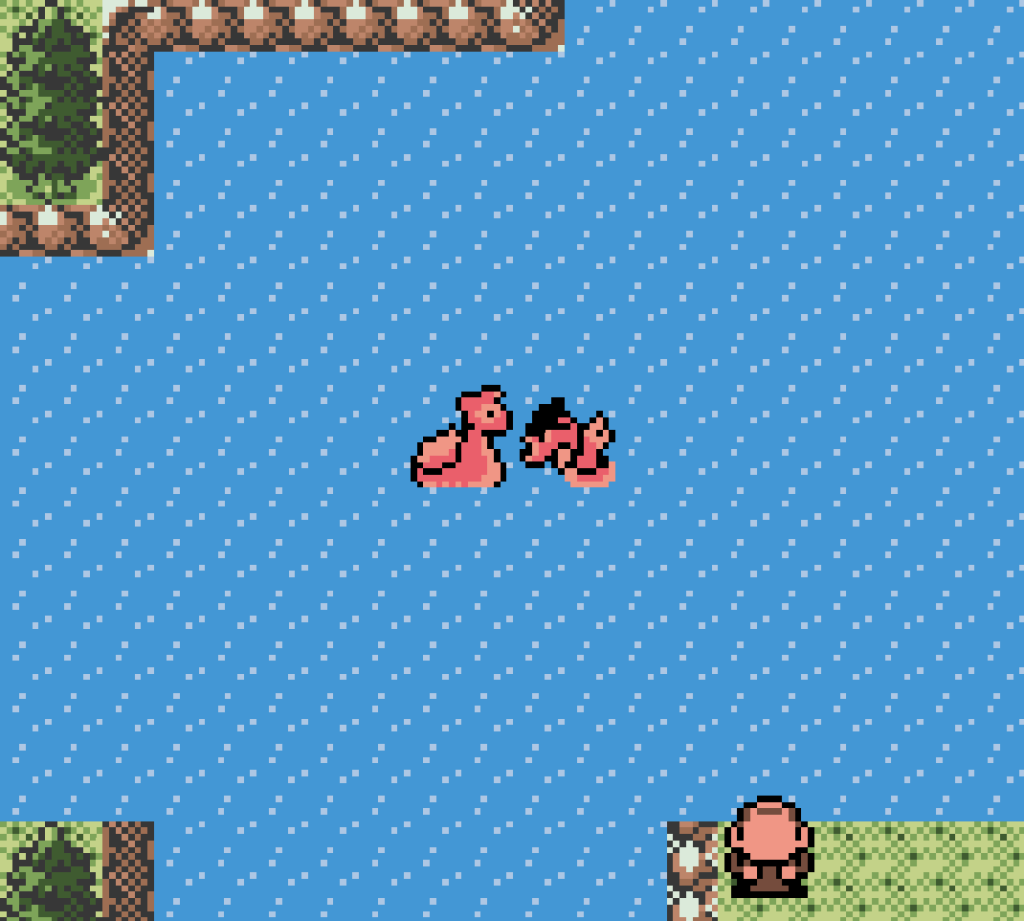
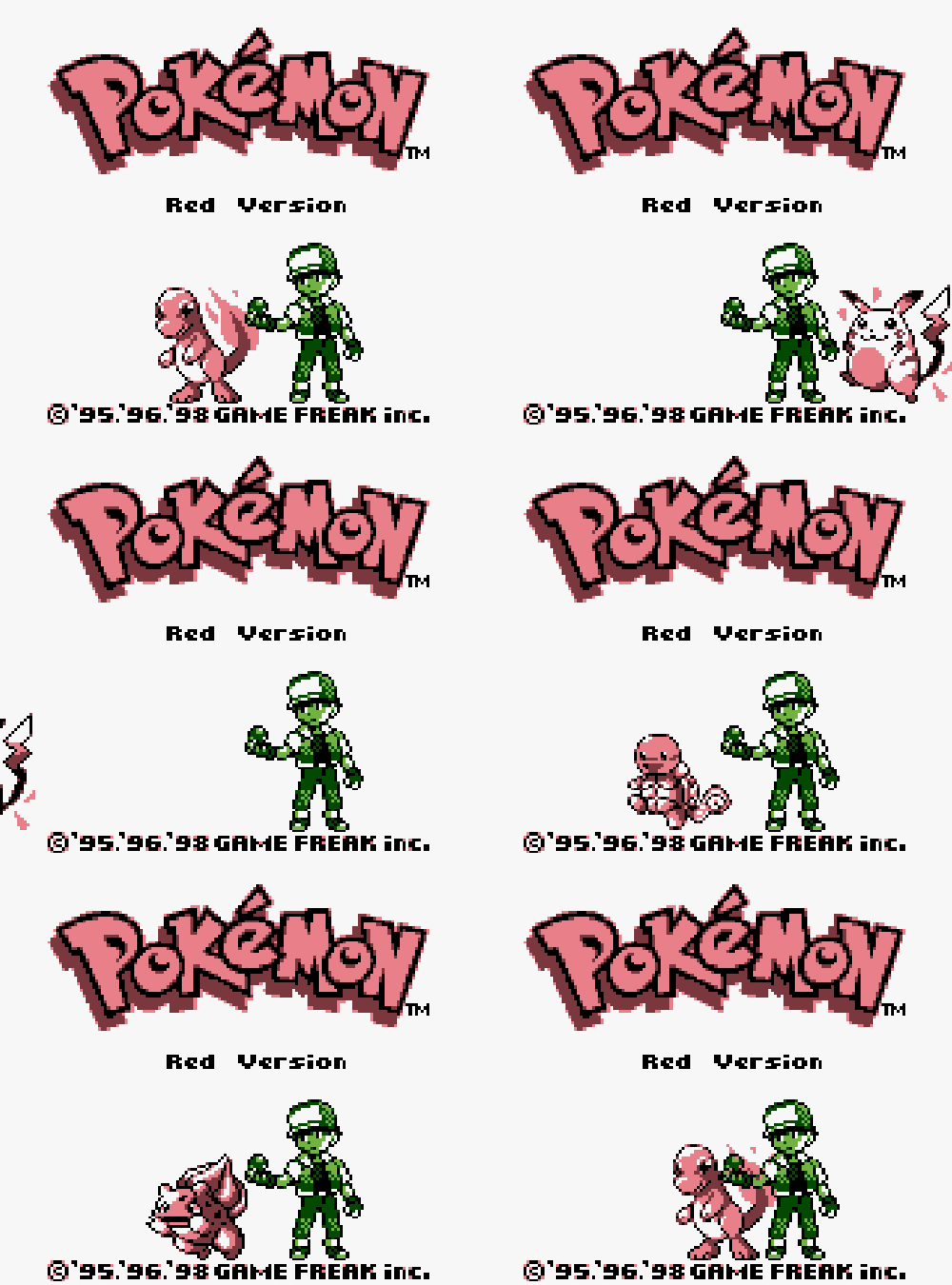
    The ROM hacks themselves are much like Pokémon’s highly successful game formula — a formula that has had a permanent and influential impact on the gaming industry in its own right. Pokémon likely was the first video game to introduce the concept of ‘shinies’ that later became a part of their trading card game as shiny cards. To many, shiny Pokémon were introduced as the ‘Red Gyarados’ of Lake Rage, in their second instalment, the Gold, Silver and Crystal versions.  

    The ‘shiny Pokémon’ is a rare variant but its difference is purely aesthetic. Shiny Pokémon has proven very popular with fans. There is even a type of live streaming called ‘shiny hunting’ that focuses solely on restarting the game or a Pokémon encounter hundreds of times, hoping the probability triggers to reveal a different coloured creature. 

    The popularity of shiny Pokémon may have paved the way for monetising freemium cosmetics flogging, which uses similar rare, special sparkly visual rewards driven by how sought-after they become.

    The game’s competitive element sees a developed web of naturally apparent strengths and weaknesses. The most famous is the rock-paper-scissors relationship of fire, grass and water — but unlike the hand game that decides who goes first outright, this relationship doesn’t guarantee absolute victory. Pokémon was among the first to implement this kind of system  —  a foundation that has since become common in games modelling real-world dynamics and turn-based strategy.

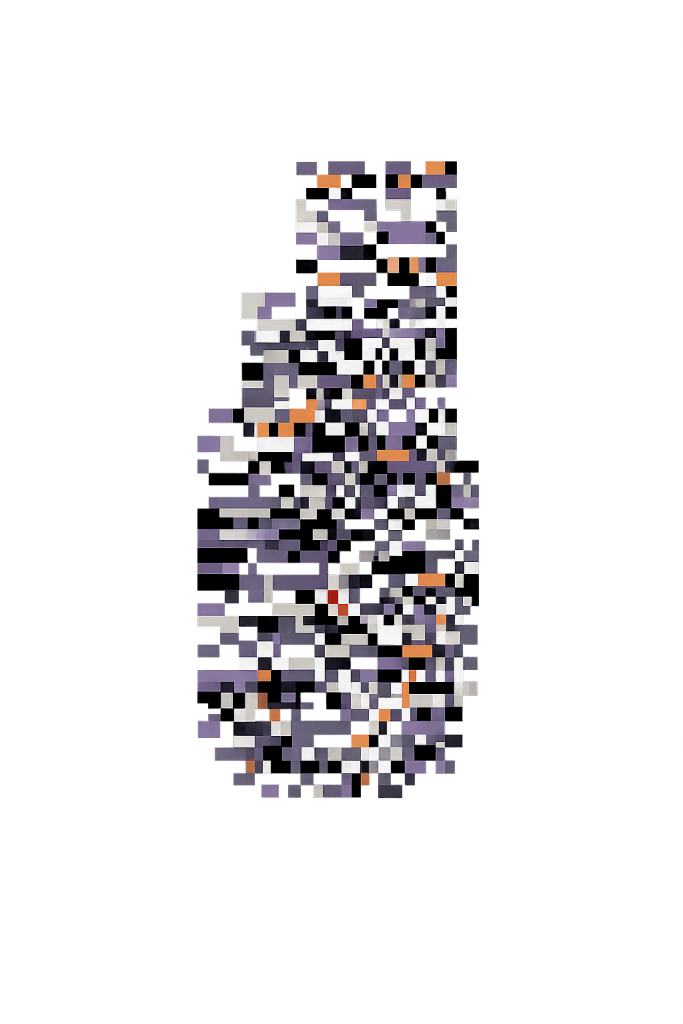
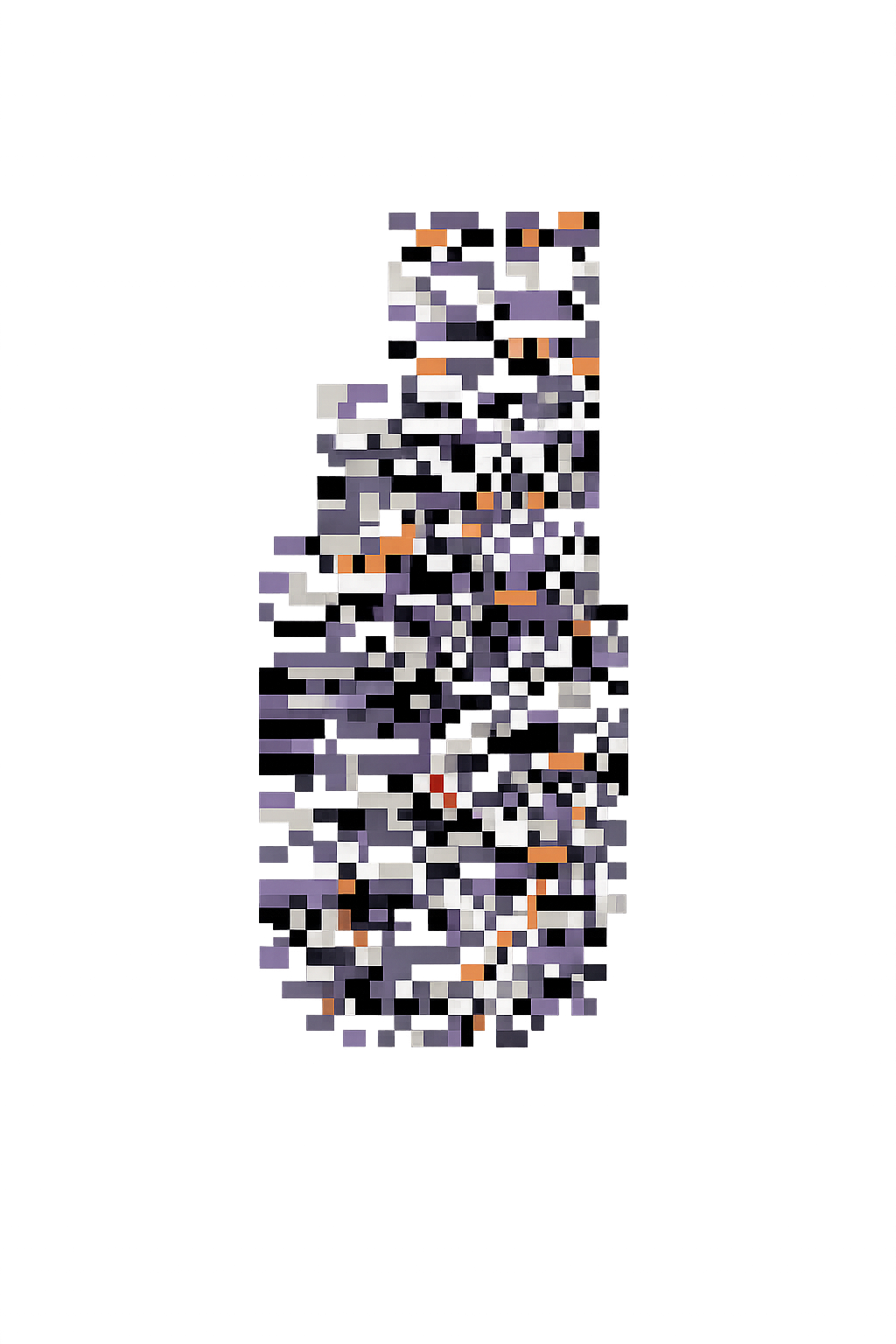
    The original Red, Blue and Green versions contain arguably the most famous glitch in gaming history. That is the MissingNo. glitch — short for ‘Missing Number’. It occurs when the game doesn’t know the Pokémon to generate in an encounter, because there was no Pokémon was assigned to that area. MissingNo. then acts as the default.

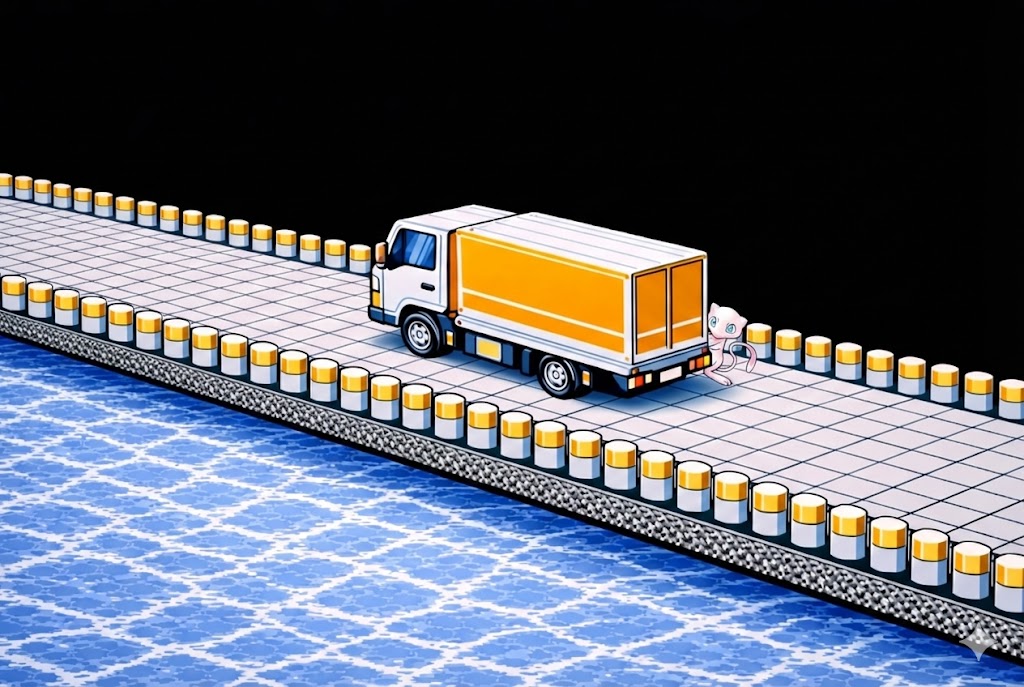
    This mysterious accident gained something of a following — enough to draw the attention of American sociologist William Sims Bainbridge, who observed how fans reacted to it. Not to mention the famous ‘Mew Under the Truck’ rumour — a pre-internet myth that spread through playgrounds worldwide, leaving many players disappointed. 

    As you may be aware, Pokémon games don’t come with a difficulty setting. Instead the player essentially ‘self-moderates’ their own difficulty, by choosing which monsters they use and how much assistance they receive for victory. But for some, that isn’t enough. And instead implement artificial handicap rules they enforce themselves in a sort of ‘self-governed’ playstyle. 

    One popular such rule is the ‘Nuzlocke challenge‘, thought of by Nick Franco — who wrote comics for “Pokémon: Hard-Mode” in 2010 as used ‘Nuzlocke’ as his screen name. This includes a ruling of considering a Pokémon as dead and therefore void of use when it faints in battle, instead of using the game’s free veterinary healthcare system to revive their beasts after a dogfight.

    Another variation of playthrough would of course be speedrunning, a culture that emerges amongst any hardcore video-game fanbase. Pokémon is no exception. In fact the game is so well understood that dedicated players have discovered how to hack it through ordinary gameplay  — in a very particular way. This is done by a technique called ‘Arbitrary Code Execution’ (ACE). This involves something like naming certain variables — like your in-game name — certain characters, and the game’s CPU reads those characters not as letters but as instructions — running whatever tiny program the player has spelt out, character by character, in their own name. This can then achieve warping, maxing your Pokémon team’s level, or stocking the mart with a certain item. 

    This kind of hack has been popularised by speedrunners like ‘Shenanagans’, who presented a Pokémon Glitch Exhibition at Awesome Games Done Quick 2016 — a charity speedrunning marathon that, in that year alone, raised over $1,200,000 for the Prevent Cancer Foundation. The broader scene features other prolific names like Werster, who competes across a wide variety of Pokémon titles, and ‘MrWint’, a TAS (Tool-Assisted Speedrun) specialist behind multiple Gen 1 records. As of writing, the French speedrunner Grogir holds the Pokémon Red ‘Any%’ world record at 1m 17s 577ms — where ‘Any%’ means completing the game by any means necessary, glitches included.

    That is but one method of deliberate fast play. Another more sociable practice could be called ‘Racing’, where friends gather and start the game at the exact same time, and are only allowed to play whilst the others are also playing. Their objective is not simply to complete the game, for in this competition, working through the game only serves to develop the player’s strength. The ultimate objective here is that, after the agreed time limit, players must immediately stop. If they can’t stop — say, mid-battle — they must finish the battle, then use an escape rope or teleport to the nearest Poké Centre to ready up. Like a real-life rival mode, the competition can be tense — especially if there are more than two players involved, fighting for points in a league, where team balancing becomes tricky. Since such competitions can last a few days, it’s advisable that all competing players physically lock their game away. You never know who will cheat, but the in-game timers should always be checked. 

    These out-with conditions, especially those of Nuzlocke runs, have helped shape the PokéROM community into something of an autonomous character. And such a character could just shape how ideas expand and manifest in this community in the future. 

    Secret Recipe

    But aside from the creature collecting element — that nobody legally owns by the way — what makes a Pokémon game? What is the appeal of their recipe beyond the head start they had with no real competition in the open-world games of their time? ✓

    When a new Pokémon game comes out, fans become excited. They love seeing the new monsters. The new region to explore. Additions to the lore and introductions of beautiful, stylish characters to draw. And additions and improvements to the game. What battle mechanics will be added this time? What ‘gimmick’ are we in for? Be it mid-combat temporary ‘Mega-Evolutions’ or the super juiced — once per battle — ‘Z-Move’? Or what of ‘Gigantamaxing’? There’s always something new to try. But these aren’t the only aspects that generate the cravings fans have for more Pokémon.

    A Pokémon game’s structure is well known but varies from game to game. Starting a journey as a kid and leaving home. Meeting a professor to give you a monster. Working through badges that act as keys until fighting four strong trainers at the end and then a fifth extra strong trainer that was some influential character throughout the story. Oh yeah and at some point come across some organisation branded as evil with some ideology and plan — normally involving a ‘legendary’ extra powerful Pokémon or some special class — to bring about a change to the world, that the police force don’t address. 

    Stories in games unfold as stories do — through triggered events. And the characters, they show so much interest in you, unlike life, where stagnation occurs. Such escapes allow a breath of fresh air. In a world where the bar is so incredibly low that a 10-year-old can become champion of that region in less than a year. But you don’t think about these things. You see a blank canvas and jobs to work through as you incrementally progress, discovering the next thing and collecting as you go.  

    And there is another variable baked in. The ‘rival’ component. Someone who starts on the same adventure, at the same time, and with the same advantages. And you just can’t let them beat you. You don’t want to be left behind, even though they’re always a step ahead — so confident, as if knowing something we all once wished we had more of. It all brings a masculine-spirited competitive drive as an in-game community forms and dramas unravel. 

    You can imbue yourself with a false sense of accomplishment as the level of your creatures increases and the contents of your belongings grow. Set paths unfold onto greater things, giving a shared sense of purpose. To feel like the things that you do matter.

    The franchise loves to reference how much the player has grown on their — keyword — ‘journey’ since the game started. Even in the anime adaptation of the original game, the protagonist Red introduces himself as ‘I’m Red, I’m on a journey’. Like what does that even mean???

    This reference to personal growth may seem like a big deal for a kid playing the game, who probably isn’t reading the story anyway and is just mashing the A button trying to get all the coolest shit. But this message of personal development is strongly wired into the core of the game series.

    In this fictional world, there are such things called ‘Gyms’, protected by Gym Leaders and their wacky sense of fashion you can’t buy in clothes shops. These Gyms present difficult challenges that act as life goals and offer token commemorations called badges for defeating the Gym Leader. These badges also act as qualifiers, working towards a grand final tournament. And with victory, these challenges earn you status as you ‘grow as a person’ working your way through the society’s hierarchy — like a rite of passage that is based on skill and effort.

    And as the player seeks to collect all the gym badges, they’re simultaneously embarking on a noble quest in pursuit of science on behalf of a renowned professor. This professor just happens to take an interest in you, researching these bizarre powerful species that change and that humans tame. For as you receive the information logging device known as the Pokédex that helps you as a trainer identify the Pokémon, the scientist gets free field research data. It’s as if the professor was sponsoring the trainer’s primary main objective: collecting all the Pokémon through capture devices in a world where victory yields financial reward. 

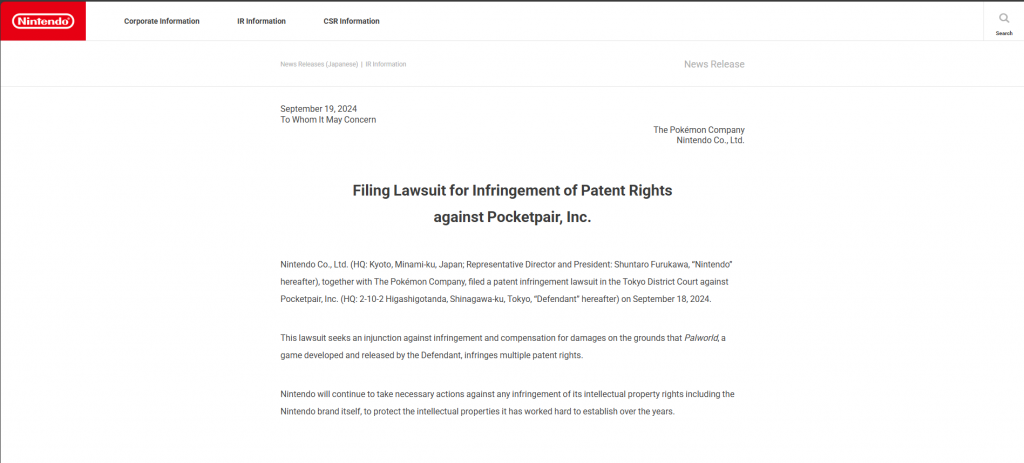
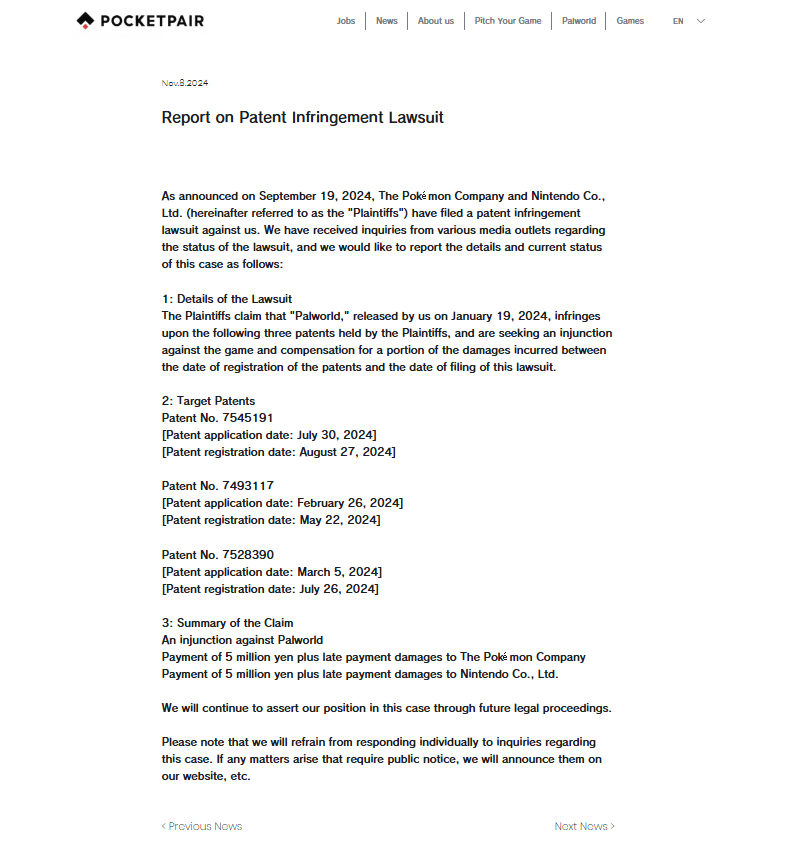
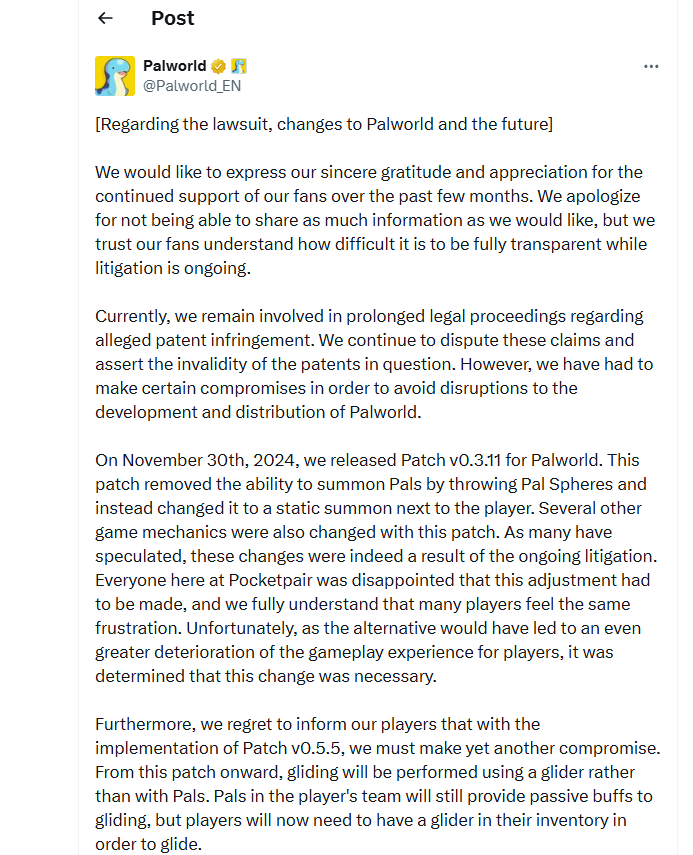
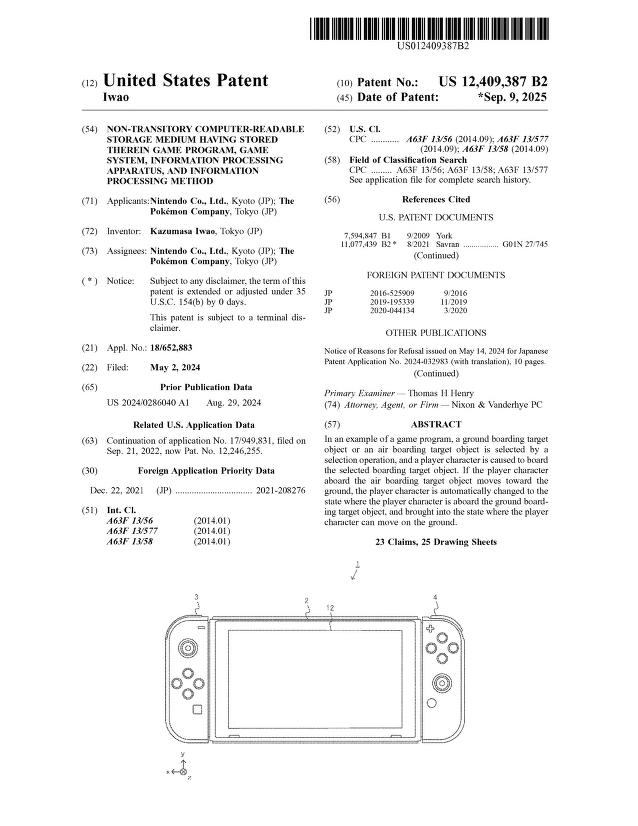
    During this adventure — or rather, journey — the way the budding trainer interacts with Pokémon also increases the player’s enjoyment via neurological stimuli. This injection is delivered directly into the reward centres by ‘encounter rates’ and catching probability. For it’s not just tapping into the human desire to hoard and feed our materialistic tendencies by collecting cool stuff that hooks you in. Finally finding the rare monsters that make you feel special, nearly making them faint as you weaken them to catch them. And of course, the gambler’s rush of ‘nearly’ as the Pokéball wiggles — an intellectual property Nintendo legally protects. Or, as Nintendo’s patent JP7545191B1 calls it: ‘an indicator indicating the likelihood of making a positive judgment on the successful capture’.

    These creatures you collect and like the look of aren’t just for show — they let you feel represented as your own character in this imaginary world. Of them, you select special candidates that become your ‘team’ based on their attributes. That selection becomes your strategy. With their strengths, weaknesses and special powers, each one then enables you to have a personal experience during the game’s playthrough in a way that you choose. 

    And what’s more as these creatures transform and grow stronger — supported by the dialogue of the story — a real sense of team-based camaraderie emerges. After catching them, you train them up to become your combat-ready Tamagotchis, your weaponised Furbies, ready to back you up in any situation. But they aren’t just your wild attack-dogs. They’re your ‘friends’ — a component for which the imagination element of this whole formula does a lot of heavy lifting. It could even be comparable to the inner human child’s appreciation of animals — or at least a publicly accepted representation of it, despite our modern industrialised contradictions — to have grown up with the family dog or the house cat. They’re childhood friends, even — who you care for and feel sad about when they are defeated. This adds to the emotional intensity and rush of a battle. 

    Lastly, there is a perfectionism aspect to cater to the more experienced and devoted players and keep them busy. Naturally, what one might expect through a title that espouses evolution and Darwinian competition is the development of the game’s built-in digital eugenics system. From here, the goal isn’t to create a master-race of blonde-haired, blue-eyed show dogs like people do with animal ‘breeds’, but to tweak the perfect fighting force for competitive battles. Some even gain real-world clout and web traffic by distributing these perfect specimens.

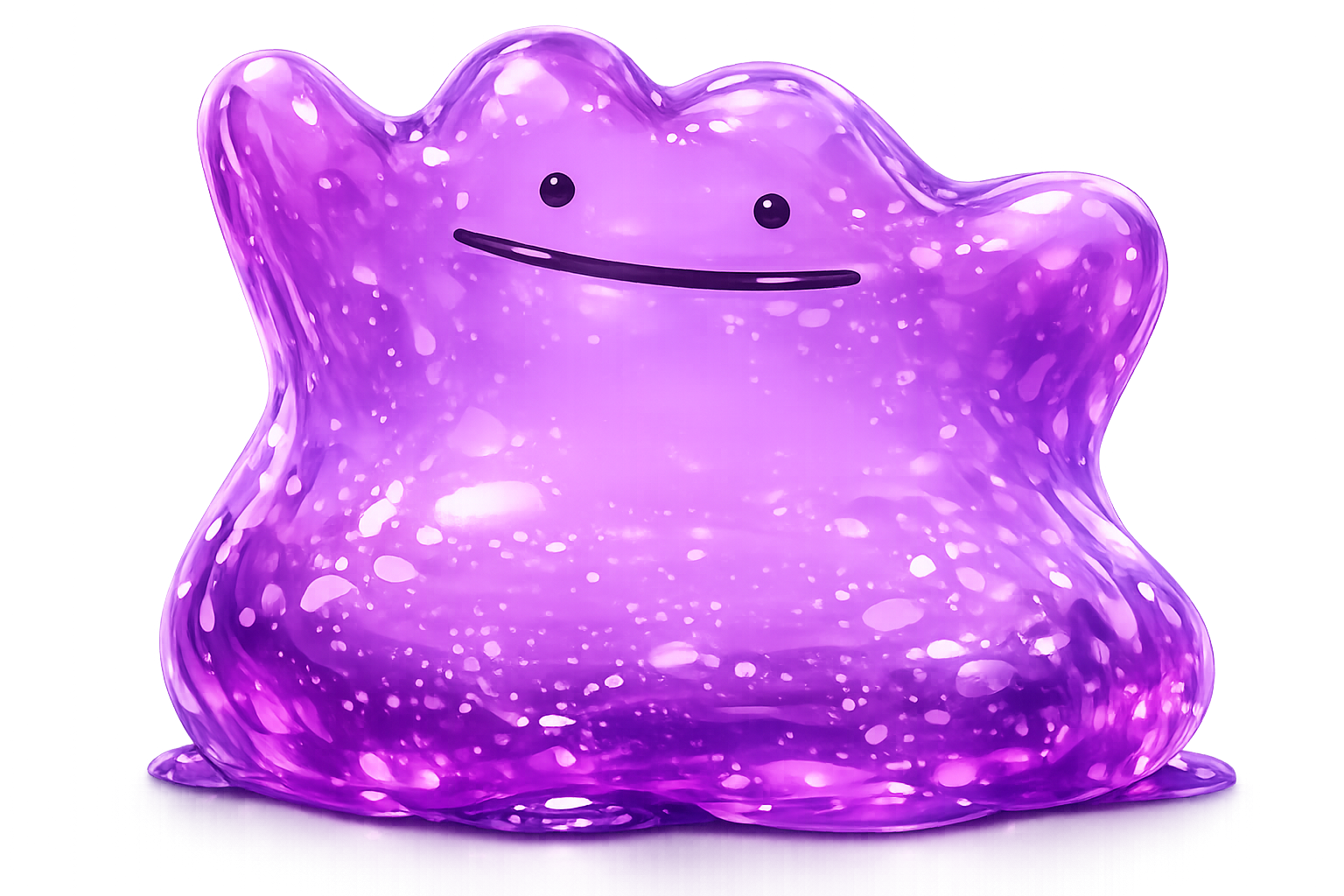
    It could take hundreds of attempts — waiting for the egg to hatch and checking the creature’s capabilities only to release it back into the wild if it fails to measure up. Giving their monsters the perfect combat stats — be it speed, attack, defence, etc. — or helping them learn techniques only learned through what’s supposed to represent reproduction. This is commonly performed by the transformative gender-fluid slime creature known as Ditto in the innocent environment known as ‘Day Care’.

    These ingredients seem to be what makes up the highly successful Pokémon formula that has fans coming back after three decades beyond people simply ‘growing up with it’ — that’s another cash cow altogether. But it does then feed off a certain character-set of someone who is perhaps lacking these qualities in their life, and supplies a superficial illusive substitute for how they perceive themselves or their life circumstances. Like a kind of cope, to feel like an individual, even a somebody they worked to become in this sandboxed, imaginary, but utopic reality.

    PokéROM developers use the Pokémon game formula when designing their titles. Here is a showcase of popular PokéROM titles that involve a Gameboy / Gameboy Advance format in their cover art:

    Pokemon ROM Hacks Carousel

    The Tools of PokéROMs

     “Skip ahead if you’re not interested in the tools side.” 

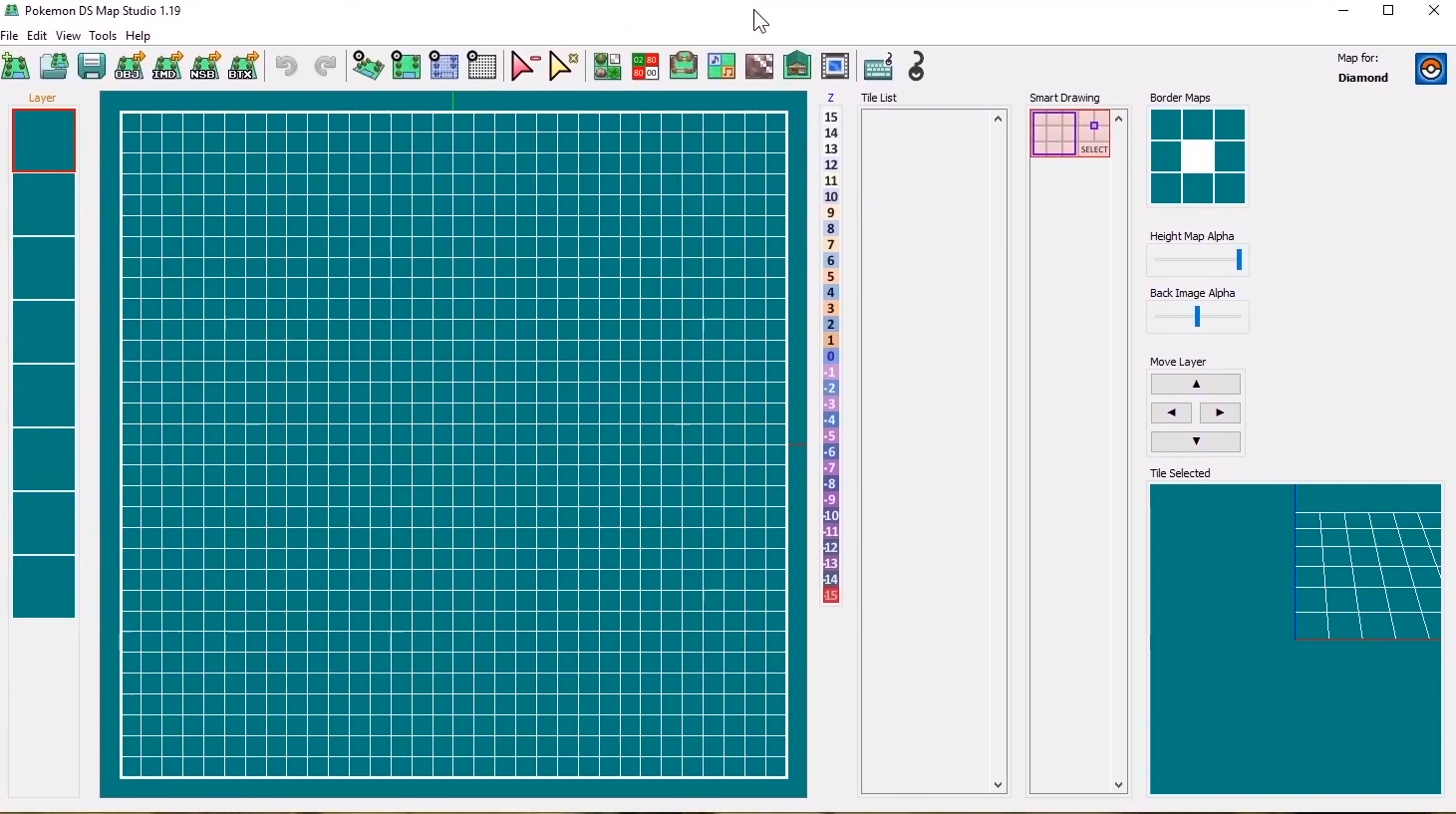
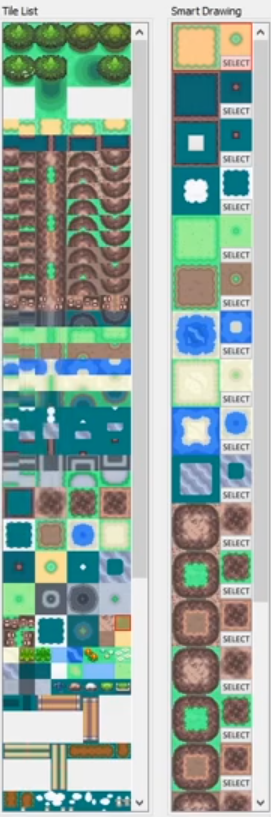
    PokéROMs don’t all just start out as a Notepad file. They are built on structural layer upon layer where frameworks and engines and script libraries all combine to provide the platform for the creator’s story. Tools have been created to enable designers and developers to better their craft — even helping create scripting languages specifically for Pokémon’s game engine. Traditional click-and-drag map makers with toolbox interfaces do exist for creating Game Boy-esque Pokémon environments such as Pokémon DS Map Studio (current GitHub), available for the Gen 4 and 5 Pokémon DS games. Sometimes the starting point is a downloadable game itself, purchased from Steam. 

    DS ROM Editor — view 1
    DS ROM Editor — view 2

    RPG Maker XP is such an example found on Steam. It is capable of making games similar to Pokémon. It runs scripts, triggers events, has map tiles and battle mechanics. However, on top of that, to make it like Pokémon, in particular the GBA style, other packages are required to be installed, like a kind of framework. 

    An example of a framework for RPG Maker is Pokémon Essentials, a collection of gameplay-altering original code designed for use in an RPG Maker XP game by Maruno17. Games are built on top of a fork of the Pokémon Essentials repository so that when updating, the fangame can update with improvements. Features include improved battle AI that can use more items such as revives, and won’t use moves that will fail. It has improved debugging functionality. It makes game translations easier. It features components like Super Shininess, which has a different sparkle animation, with a rarity of 1/65536! And it also features random generators that are good for making dungeons. Even little features have been considered, like being able to use the rare candy at maximum level if it means it can trigger evolution, or adding higher intelligence to ‘Legendary’, ‘Mythical’ and ‘UltraBeast’ status monsters. More information can be found at: Essential Docs

    Frameworks can be built on Pokémon Essentials itself. PokéVerse, by KishoreMuruganantham, is one example — an open-source Pokémon development kit built on Ruby and Pokémon Essentials, providing a platform for Pokémon data and mechanics for fans, developers and researchers.  

    Another example is the open-source Pokémon fangame framework ‘Pokémon SDK’ — Software Development Kit (PSDK). Pokémon SDK currently works with RPG Maker XP and requires it. It promises no lags or display problems, game text exports for ease of use when translating, and boasts simplified means of creation.PSDK was created by Nuri Yuri and others. Pokémon Studio, initiated by ‘Aerun’, is a companion tool providing a GUI for the PSDK. With Pokémon Studio, you can create your own moves, ‘fakemon’, abilities & items. 

     We wouldn’t actually call these things hacks, as in ROM hacks. An example of that would be pokeemerald-expansion, which modifies the actual game engine. Built on top of pret’s pokeemerald decompilation project, it’s a GBA ROM ‘hack base’ — a kind of code-based foundation. From its own documentation: ‘pokeemerald-expansion supports multiplayer functionality with other games built on pokeemerald-expansion. It is not compatible with official Pokémon games.’ It offers hundreds of features as well as quality-of-life enhancements — an upgraded battle engine with the battle gimmicks (Mega Evolution, Z-Moves), battle types like multi battles and Sky Battles, a large variety of items, and improved features throughout. They ask that if you use pokeemerald-expansion, you credit RHH (ROM Hacking Hideout). 

    MMOs

    It’s not just virtual cartridges that are available; there are also Pokémon-orientated massively multiplayer online experiences — namely PokéForce and PokéMMO. 

     PokéForce, formerly known as PokéRPG, is a fan-made project. The Discord, as of writing, has 17,946 members. Their GitHub, acting as their main website, reads: “PokéForce is a semi-open source Pokémon MMORPG that is currently in the early stages of development. Utilizing modern code practices, this project aims to bring an unparalleled Pokémon online experience. Be prepared to battle other trainers, complete quests, participate in world-events, procedurally generated dungeons, farm crops and more!” It seems to have started around 2022. There isn’t much official documentation on the project.

    Then there is PokéMMO, which on its website reads: “Welcome to a new era of online monster battles. Stop playing by yourself and start playing with everyone else.” PokéMMO features Kanto, Sevii Islands, Johto, Hoenn, Sinnoh and Unova. It appears to have started around 2012. Their forum features an events thread covering the day’s activity on the server, and they also run various features — at Christmas 2025, for example, they altered the shiny rate and featured special ‘sightings’ of rare Pokémon in different regions, alongside character customisations they call ‘Vanity’. They also allow players to contribute to the project for virtual currency. 

    Will ROM players embrace AI?  

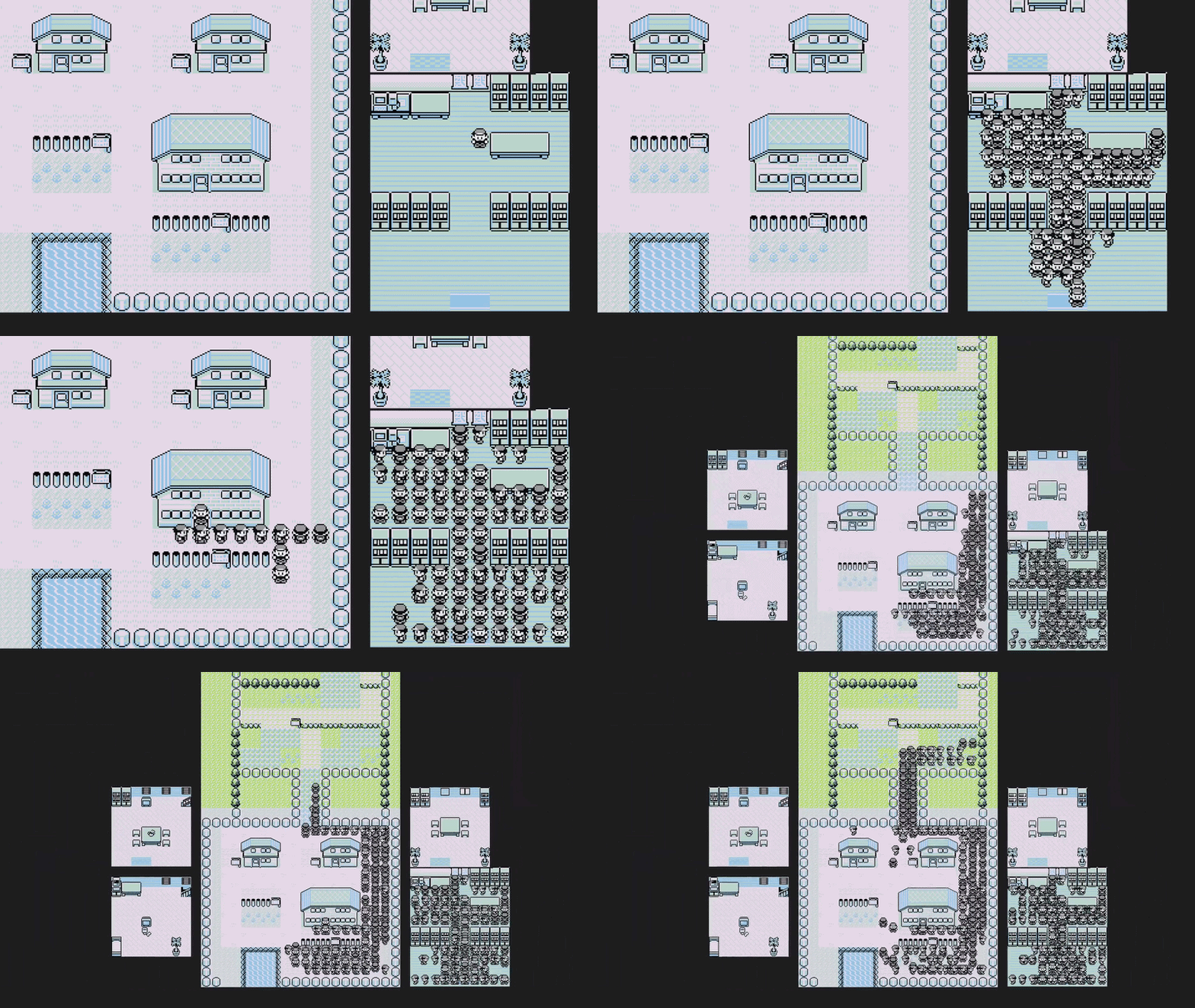
    An AI agent learning to play Pokémon through reinforcement learning Training an AI model to play Pokémon

    GIFs adapted from “Training AI to Play Pokémon with Reinforcement Learning” by Peter Whidden. Watch the original video on YouTube →

    An AI agent learning to play Pokémon through reinforcement learning Training an AI model to play Pokémon Click anywhere to close

    Inspired by someone called Joel Z, Pokémon’s classic titles are sometimes the theatrical stage of the latest AI in competition as they question and plot their every step in the game, bearing in mind they were not built specifically for doing this, unlike a Chess program. Though they are equipped with an ‘agent harness‘ “designed to give them full agentic freedom”, Joel Z insists that these harnesses are not cheating. These live-streamed displays are not simply to show off the models. In an announcement on 24 February 2025, Anthropic said: “Together, Claude’s extended thinking and agent training help it do better on many standard evaluations like OSWorld. But they also give it a major boost on some other, perhaps more unexpected, tasks.” 

    But in this race to Victory Road, it wasn’t Claude 3.7 Sonnet that took 78 hours to get through Mt. Moon alone. It was actually Google’s Gemini 2.5 that was crowned Champion of spring 2025 with a playtime of 813 hours. But Gemini was later dethroned by GPT-5, which only took 6,470 steps in 7 days to finish the game compared to GPT-o3’s 18,184 steps. As for Claude, rumour has it the model is still wandering the caves of Mt. Moon to this day. This fun little gimmick could be the start of a tradition of more intelligent AI exhibitions competing to play more Pokémon titles. And as they themselves evolve as Pokémon do, they may grow to play more than one title at a time — and not just as single players either. 

    Will the ROM community embrace AI as it develops and integrate it into the games they build? Unlikely. The Pokémon fanbase has, for a very long time, co-existed with a skill-based community that has very staunchly and publicly rejected manifestations of artificial intelligence. For as long as Pokémon has existed, fans have been imagining new adventures, creating their own ‘fakemon’ — or ‘spriting’ — and portraying romantic relationships of the series characters — known as shipping — through their drawings to share in conversations. Illustrators have always played a central role in fan fiction. 

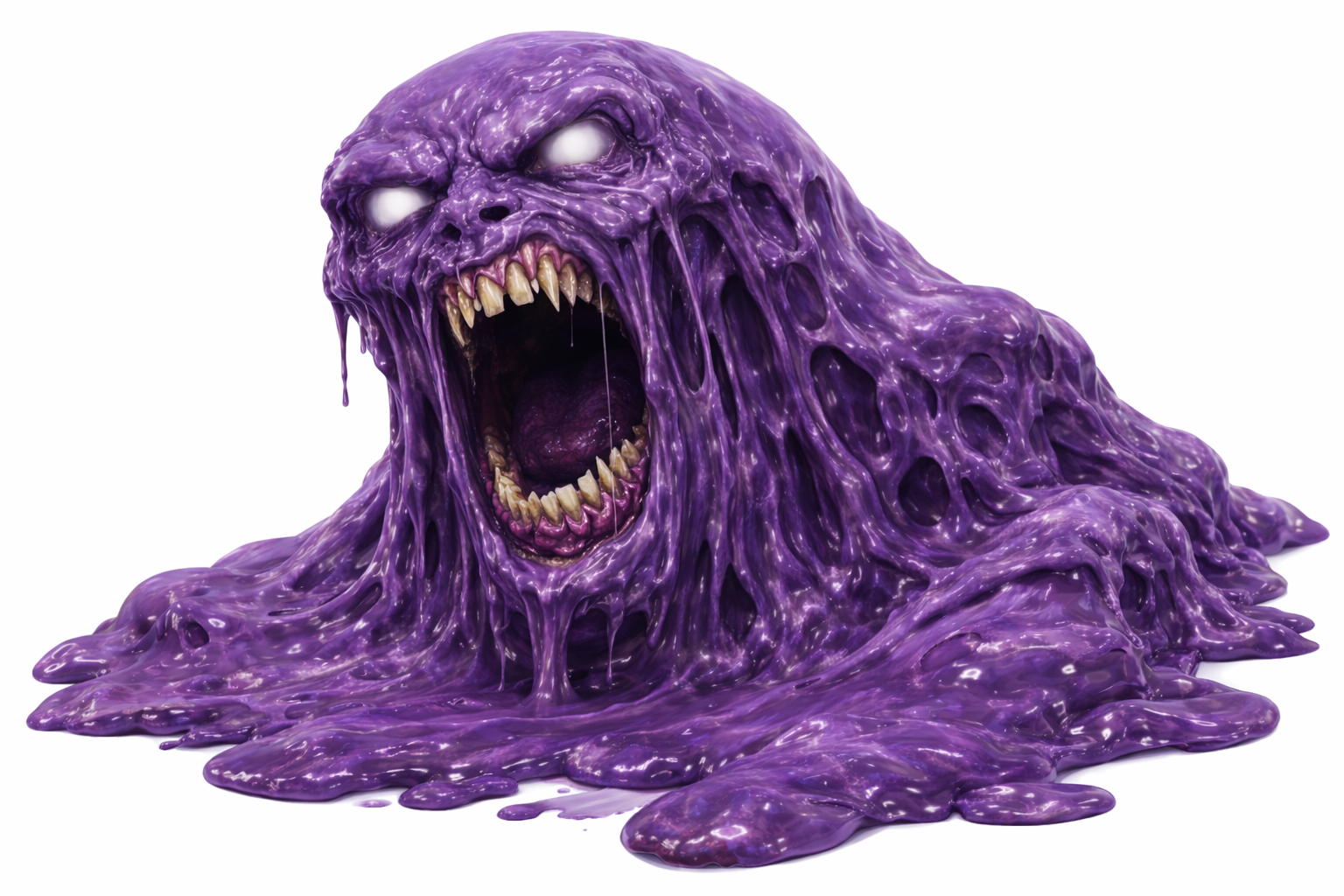
    When AI was first being used to create pictures and people could publish their own creations, the disfigured, blurry and barely recognisable monsters actually received some encouraging responses if not commenting on how nightmarish they looked, but there was little disdain. And then came dedicated services for that very feature — ‘Nokemon‘, for instance — where posts showing AI-generated creations could be upvoted and garner 20 or 30 upvotes. 

    That was before AI-generated content had improved enough to pose any threat of replacement. But now with similar or arguably better-detailed replications, the public response has shifted to something more political, where things become slightly more, heated. Take this offering — by clicking on the Pokéball widget — from one 'AI-ROM creator' who decided to share their misplaced content, and see the reception it was met with. 

    Open Reddit Portal
    r/PokemonROMhacks
    Posted by u/8ik8ik8ik • 1y ago

    I Generated a Pokémon ROM Hack Where All Pokémon Are AI-Generated

    I wanted to share this project I've been working on. I made a ROM hack where I replaced every single Pokémon with AI-generated ones.

    What I did:

    • Used SDXL with a custom LoRA trained on Pokémon sprites to generate all images
    • AI-generated & randomized all stats, moves, and abilities
    • Created new Pokédex entries for all Pokémon
    • Removed the badge boost system (I personally find it annoying lol)
    • Created multiple Python scripts that first generate all the data needed (including sprites), then insert everything into the decompiled FireRed ROM
    ROM Hack Preview

    Quick disclaimer: This is just a fun experiment! The real champs are the ROM hack creators who put in the hard work to create things by hand. AI generation is neat, but it's nothing compared to the skill and dedication of traditional ROM hack developers.

    20
    BigSexyDaniel • 1y ago

    It sucks.

    45
    [deleted] • 1y ago

    im just here to see the comments lol

    17
    ItsDeflyLupus • 1y ago

    Get your popcorn ready lmao

    42
    Cuprite1024 • 1y ago

    But why? Surely you know how this is gonna go, right?

    49
    [deleted] • 1y ago

    Cool man it sucks

    45
    [deleted] • 1y ago

    I hate AI. Nobody wants to play a game that was made half assed and by a computer. OP you are better than this

    -4
    8ik8ik8ik OP • 1y ago

    Nobody has to play this - just showing a possibility using a tool. It could in the future be something similar to randomized Pokémon runs that many people enjoy!

    29
    DavidJCobb • 1y ago

    > just showing a possibility using a tool

    *digging random hazards and garbage out of Pandora's box* "oh, im not expecting you to use this; i just want to show you what's possible uwu"

    > This is just a fun experiment! The real champs are the ROM hack creators who put in the hard work to create things by hand. AI generation is neat, but it's nothing compared to the skill and dedication of traditional ROM hack developers.

    I, too, have fun when using a plagiarism machine to encroach on the creative endeavors of the people whose craftsmanship I claim to admire.

    -3
    8ik8ik8ik OP • 1y ago

    I'm not sure what you are getting at with your first sentence. This project isn't pretending to be something it's not or trying to replace handcrafted ROM hacks. Its just showing the possibilities that it has right now. AI tools are being used across many fields as starting points and learning tools. Being interested in those possibilities doesn't mean I don't genuinely respect traditional creators. Appreciating traditional craftsmanship and exploring new technologies aren't mutually exclusive.

    -13
    weebitofaban • 1y ago

    You're not particularly bright. Tons of people will play this. You can have criticisms, but you shouldn't be delusional.

    12
    [deleted] • 1y ago

    “You’re not particularly bright” brother I’m a teacher at a behavior school. Yeah people will play it no doubt doesn’t take my og statement away

    21
    Deneb_Stargazer • 1y ago

    [Comment Image]

    16
    SharkGuy01 • 1y ago

    Sloptastic!

    21
    DanielMcFamiel • 1y ago

    Booooo!

    25
    Kingfin128 • 1y ago

    You smell bro

    29
    Geariko17 • 1y ago

    The only reason im not reporting this is because the subreddit doesn't have a gen Ai rule. It should.

    0
    tretality • 1y ago

    “I don’t like it so there should be a rule against it” is such a dangerous sentiment. I’m anti-AI as well, but this is a subreddit for modding a game that none of us own the rights to. If you don’t like it, just move on to another thread.

    12
    RyuCaster • 1y ago

    Looks just as awful as I thought after reading the title lol

    12
    Wingolf • 1y ago

    What's the point of this? The descriptions and names are nonsense, the sprites are barely parse-able. If you couldn't be bothered to design it, why would anyone bother to play it? If the "designs" you are showing are the best ones you have, this is a waste of server space.

    18
    cd1014 • 1y ago

    Funnily enough, I would have asked if it was Ai generated without being told! It's awful, and you wasted our time

    2
    DrUltimaMan • 1y ago

    Will this be advertised as a true rom hack? A lot of people will rightfully take some issues with that and probably not play it. If however it is advertised as a proof of concept to demonstrate how creatively bankrupt an AI rom hack would be, a project that is intended to be offensly bad, then some might play it out of morbid curiosity. I know that sounds mean, but I think that is really the optimal approach to getting this off the ground.

    0
    rainasu • 1y ago

    I've not bothered to download it, so this is purely based off the images you posted. They've got a couple issues that need to either be ironed out or more likely they need a human's touch to fix. The names and flavor text are really generic, which isn't surprising considering the state of LLMs. Sorry if you did those manually, but they reek of bland generated text that doesn't really say anything, plus the names are extremely repetitive which is common with generated text.

    The sprites obviously have lots of flaws that would need to be fixed, like off shading and their eyes, but they aren't terrible starting off points in my opinion. I don't think any of those are good 3 stage evolutions though. For all 3 of them, the first two stages look way too similar. It's more like they're mini-mega evolutions or paradox versions than proper evolutions.

    Leragon screams ghost to me more than dragon, so compare its evolutions to the evolutions of Gastly, Misdreavus, Shuppet, Duskull, Litwick, and Phantump. It's a night and day difference, real Pokemon change their form quite a bit when evolving, while Leragon and its evolutions look more like Misdreavus and Flutter Mane. I do kinda like the look of Leragon though.

    2
    8ik8ik8ik OP • 1y ago

    Yeah they've got issues for sure. Currently the Pokédex text is generated before the images. For improvement, I'd have the AI see the image first to create more fitting descriptions rather than generic ones. For evolutions, I kept them similar on purpose with slight size increases to make them cohesive. Earlier versions had evolutions you couldn't even tell were related. It definitely needs a human touch like you said. The AI is still subpar with real thought-out designs, but it could eventually be a good starting point for creators!

    -2
    hiphoptopus • 1y ago

    Would be more interesting without a fixed dex, and Pokemon are randomly seeded with each save file

    -1
    8ik8ik8ik OP • 1y ago

    Yeah, that would be cool! It would probably need a pretty large game rewrite to implement though. I think what would be nice is to have like 20 patches ready and being able to do a randomized nuzlock and on death switch rom/patch

    3
    [deleted] • 1y ago

    [Comment removed by moderator]

    -10
    [deleted] • 1y ago

    [Comment removed by moderator]

    2
    Cuprite1024 • 1y ago

    AI Minecraft is at least funny. This doesn't even have that.

    0
    8ik8ik8ik OP • 1y ago

    Thanks! Yeah, I know AI stuff can be divisive :') , but I just made this for fun. Appreciate you seeing the potential in it.

    Not to mention the sheer overexposure of market production of such content has caused something of a nuisance for everyone questioning what is and isn't AI. So much so that some communities outright ban it. On some platforms, there's even a whole category dedicated to AI-Generated Pokémon called 'Okaymon', to filter it out of other people's hand-drawn submissions.

    AI usage is seen as lazy, and a sign of bugs and problems to come. Large swaths of Pokémon communities reject it outright. Bulbagarden has on their rules, "any and all AI-generated media (which includes, but is not limited to: art, writing, and music) is not allowed anywhere on our site."  Pokecommunity.com considers it a 'major offence' along with uploading pornography and racism. Or on the Subreddit r/Pokemon: "OC rules further apply to AI generated content. This is not to devalue or discredit the artistic work of formulating AI prompts, but the policy to remove AI-generated content was decided by the fact that AI generators draw from other artists' and writers' work without permission." The Fakemon Subreddit under their low-quality post rule reads: "Low effort posts include but are not limited to: Low effort drawings (i.e. stick figure-like drawing), simple modifications of existing Pokémon, reposts, AI-generated art, other automatically generated images (i.e. Infinite Fusion), low effort shitposting, etc." And interestingly, on the r/PokemonRomhacks Subreddit's rule 9, also as a low-quality fluff post: "Concept art or AI-generated content does not count as quality content."

    Sometimes it's not rejected if the quality exceeds a certain threshold, such as the Nat Geo trend. But overall, there is strong pushback against AI. ROM communities in general tend to take an anti-corporate stance. They are a counterculture to corporate control and a statement of moral protest. They want to rip away from being spoon-fed trademarks and capitalist permissions by classic Nintendo's shameless money-grabbing, nostalgia-flogging greed machine of reheated packages. But they still want to capture the essence of that previously discussed winning formula.

    There's a dichotomy with AI, though. For whilst any user of it — like everyone now 'guilty' of using Google and the like — is contributing to a corporation that is massively gaining and using power, raising the looming threat of automation replacement, AI also presents the option to liberate oneself from the dependency on intelligence itself, which other firms gatekeep. For example, it can help users navigate the legality of starting a certain business, or do number crunching to go with it that they would otherwise be financially blocked from doing — positioning AI in a particular light regarding what it could come to represent.

    Could the reputation of AI at least change in the ROM community? It can be difficult to see that outcome through the fierce opposition. But perhaps the programmers — as in the people who do the heavy lifting in game creation — will find AI harder to ignore as it progresses to wand-waving capability.

    Through observations of Pokémon ROM criticism, reminders that the coders are unpaid hobbyists frequent the comment responses. And so there may be an internal clash here hinged on the reception and gratitude of the consumer accustomed to the products of a billion-dollar franchise. Bear in mind, programmers as a group have a history of 'borrowing', or 'making it their own' like how AI is 'trained'. This could cause some clashing issues with the absolute permissions policing upheld by the artists. Programmers must now deliberately take the long way around during debugging, all just to protect a safe space and prevent offending an identity.

    From an efficiency and supply and demand perspective, it's a no-brainer, again, should AI continue to progress in intelligence as it has done. But what could that outcome — the development of what may become known as AIROMS — symbolise and represent? The consequences of such a fork in the road for this community look to be a social challenge other groups will share, and a challenge to creative ownership of a kind we haven't faced before.

    Idea concepts

    In the social fantasy game Dungeons and Dragons, players are given a character sheet on which to imagine and design their character on. That character is given a level — earned through experience, or 'exp' as a Pokémon player might abbreviate it. A potential exploit of this is to say, what is stopping someone from just rewriting their character's level and declaring them to have gone on more quests? And the answer, for most games which we can assume can be hacked or cheated, is absolutely nothing. But a better question would be, who would do that? Or, who are they actually cheating?? What's the point? It's just like buying the colouring books already coloured in.

    True to the autonomous culture that has built up over decades in this community, inner-communities will form as a method of filtering out cheaters. This method is composed of floodgates of rules, as opposed to heavy-handed moderation. Community qualifiers then have the final say on who is granted access. Qualifiers could be rules of entry, or rules of conduct within the community itself. For example, players may be awarded houses or buildings inaccessible in the original games — now edited into a personal secret base, just like the customisable Secret Bases of Gen III(Ruby/Sapphire/Emerald), built into treehouses, caves, and the like. 

    What ROM players want is to continue having the PokéROM experience — but for it to mean more, for their experience to be more grand, and for their previous experiences to be present, rather than in a different saved file. That is essentially the future of Pokémon ROMs. Where each individual ROM game that was once its own separate adventure is now essentially a side quest in a merged world — and should the player choose, one that is MMO-styled. The ironed-out conditions cover things like which Pokémon should and shouldn't appear, and what story or level adjustment are needed for adventure ordering.

    But such ironing would be subjected to translation barriers as preference interpretations and conflicts emerge as to how exactly a story should be told and then integrated so that many can enjoy it simultaneously. Though one reason for Pokémon's success is the players' imagination, which carries the story. As they imagine themselves, and only themselves as part of the experience the game unfolds for them as it fills in the gaps of what would and wouldn't happen, even in a fantasy world.

    The future of Pokémon ROMs is plug-in data, meaning Pokémon ROMs will be considerably stripped down in the future in terms of file size and workload. This is because the user will already be coming into the game with pre-made libraries — what we'll call the Compatibility Reader — that communicate with the ROM and install packages that generate the game's experience. The Compatibility Reader is designed by the user on a separate platform and serves the purpose of adding in various ROM data, and of communicating with other Compatibility Readers to patch up differences for linking.

    One such example of this is 'generationally-based transmigration graphics'. That allows you to play any ROM in whatever art or generation style — even those styles that are only invented through art concepts, like realistic equivalents, such as the art of 'Arvalis', who has been drawing and publishing lifelike Pokémon since 2012. The player can also carry information to insert into the game's placeholders — GIFs, 3D models or various sprites collected from their previous games (including animations of moves), your own designed Pokédex that you coded yourself, favourite OSTs depending on the battle, and other data.

    So really, the future of ROM games is just setting the terrain, monster codes and story characters. Many of the components of traditional Pokémon games, like the UI, will be carried over as part of the player's emulator. They will be coming into a ROM game with pre-set interpreters and also have the ability to plug into the game, and change events and dialogue based on the data held within it. The other aspects of the game, such as the monsters and moves, are still conditions that would need to be set but can be carried over by the player's Compatibility Reader from a downloaded library.

    Online tools and profiles exist to help players track what they call their 'Living Dex', as they try to complete the Pokédex, which is the ultimate objective of the game. Some, like the 'Living PokéDex Tracker', help you keep track of what variation or gender you've caught.


    The future of ROMs is for players to carry their 'Trainer_data' that plugs into the ROM. This consists of three primary components. The first is their trainer card, which features badge victories accounted for from each previous game, along with various other merits that might have been applied — 'Achievements' from Xbox or 'Trophies' from PlayStation if you like, created and upvoted by whichever community you are in. The whole thing is tailored to the user's preferred UI plugin.

    That is their own Player ID. The second is a customisable avatar, should playing as the main character not be a necessity — unlike other games where it usually is, as a game concept should be. These achievements should actually be doors — if the option is toggled — that allow players to meet each other in-game only. This enables dedicated players to naturally match-make in-game only, where both have qualified to a level — proven by the awards they've earned, and shaping how communities form in the world server they elevate to. 

    The next pieces of transferable data are then naturally going to be the Pokémon, the boxes they are stored in, along with one's Pokédex, which will collect entries from each game, along with that game's data such as the description, and add them to the index. These Pokémon would not simply be stored in a box, but in a player's own kind of lobby. This would be the ROM equivalent of the Pokémon Bank and Pokémon Home — both cloud-based storage solutions for Pokémon that have the purpose also of transitioning between games. With the Pokémon Bank, you take your Gen 3 monsters (via the Poké Transporter) right up to the recent title through Pokémon Home. Pokémon Home itself is available for Switch and mobile platforms. Both act very similarly to the PC available in-game that the Pokémon are sent to.

    There would be their own farm-type place, acting as their own offline Poké Bank — which, true to the Pokémon Universe, enables fans to enact all their inner eugenic desires regarding breeding with their own 'Oak' type professor in the hometown lobby they designed themselves. The lobby can be shared and also stores items. The virtual monsters will not simply reside in a box, or be 'stuffed in their Pokéballs'. They will instead be on a farm area that the player themselves designed, and that can be visited at any point, in-game with any ROM installed. The Compatibility Reader also has the option to offer server-side variants, providing a level of security. So you can roam someone else's hometown and space as agreed upon in the community you are playing in. 

    Separate from the data the player carries, each ROM World is configured by an 'Overall Rulings' layer — multiplayer-integrated — defining how the world is set up. This is done through the player's 'Compatibility Reader' — a key that, if conditions are true as to how they want to play ROM games, enables those conditions to become shared with others. We'll evaluate what those conditions could be, and how they change ROM games and the players that interact with them — including the obvious required safety barriers for playing with strangers online.

    These become not just the way you play the game, but what's inside the game regarding what is banned — like guns for example, and death — which may be permitted in other rulesets and communities. For example, if fakemon are permitted, what are the conditions of these monsters? Or what of the art style? Will there be 'Moemorphism' or 'glitch Pokémon' permitted? Or will visually AI-generated monsters be visible only through the individual user's filter? Perhaps even no instance of AI, including evidence of randomly generated planes. So where one player sees the original art style, an interpreter would show a less cartoon-styled version. Or how the worlds are shaped and linked.  

    Or to make stories seem relevant for a shared experience. A hosting server may set and reset a world with timed events that is the story. Or stories fit for multiple players rather than a single-player experience, where in the story, one child is essentially able to storm an underground illegal organisation. Some Compatibility Readers may change the nature of the Pokémon games' 'Master Rules' to not be founded upon what Pokémon's origins had to work with. 4 moves? Level 100 cap? 1 held item? Or instead, create a more realistic concept resembling the anime, which could involve cooldowns and multi-attacks for a simultaneous multiplayer experience rather than turn-based combat. 

    Another example of how the Master Rules could be differentiated per group is the ruling on levels. Or modify the traditional turn-based element entirely. Or include a skill-declining feature, where out-of-shape monsters become rusty with their skills. Or an aging mechanic, exploring the digital pet aspect of the game rather than playing as the story intended. Or maybe enable Pokémon battles featuring a herd, and they can run away at any time — but you can also catch up to them. This realism may even transcend Pokémon logic regarding the accuracy of Alakazam's 5000 IQ. Or what if Pokémon learn to talk like Meowth, with AI agents and chatbots adding a more companion-like element of the game. 

    This may include implementing Gen 2's cell phone feature as constant NPCs, installed with chatbots that call you — perhaps from different games acting as agents. And maybe you'll then see them in other games. Or are they native to Castelia City, and on holiday in Alola catching the rays depending on the randomised seasonal weather? Or from Dewford Town in Hoenn, but doing a bit of shopping in Celadon City and staying in a hotel — actually moving around between activities, rather than just appearing in a room wandering aimlessly for X amount of time.

    Day Night Transition
    Celadon Day Celadon Night

    You'd be bumping into characters from different games with their own tasks — not originally set in that game, but a rendition accepted by the player playing. How this would work in a more open-world, public setting would be challenging. Players will download databases for NPCs — or grow them 'agentically' as you play the game, collecting and training Pokémon within the constraints of the in-game timer, while the bot itself plays through the game. That would have subrule sets to follow, such as NPC trainers to get stronger every season. 

    The Rival, for example, could be a continued version of the character 'Blue' — from Gen 1 if that was when you started your Trainer Card. And that rival is imported into different games — if you accepted that option at the beginning when designing your experience. The rival aspect could do multiple unexpected things — join the bad guys, die, or team up with other rivals that come with the game you're playing. That's unless the rival has already taken on that position through an unpredictable character filter that directs the game's outcome. Or, should the player choose to, actually play as the rival themselves — against what's supposed to be the designated human player's experience in a custom plug-in — so as to go behind the scenes of the game, being that step ahead. You'd be meeting players at the 'point in time' that's supposed to happen as per that story's arc — as if a form of interdimensional time travel that itself could be a ROM of ROMs.

    And lastly, also worth thinking about: how previous adventures may still have a knock-on effect. How stories told for that player influence the community and world design the player has opted for themselves. How these characters would have changed their relationships or what happens after. Destructive consequences for losing a battle in the villain arc — such as parts of a town destroyed. Or should you win, have the villains jailed and then somewhat collectable as you rack up each bad guy from different stories and whatever chaos they may plot should they be given agency and escape.

    If the community wants to have competitiveness amongst human players in it, and have that competition made in the spirit of Pokémon — as opposed to just hacked, maxed-out stat codes — then in-game money and items could be on the line for forfeits if a trainer loses a match. Or even forfeiting shiny probability modifiers as the infamous Shiny Charm is changed and edited to be consumable and more accessible. Even if it's just setting up increasing or decreasing in the probability by 0.01% that can be the stakes in a battle. Then Compatibility Readers would need to be installed into whatever ROM, along with the player's game, verifying the legitimacy of their gameplay — to see if information checks out with the player's stats in-game, and the information about the Pokémon caught that the players carry on with them.

    There would be then communal servers — like IRC servers, in a way — as a non-subscription option, installed through an anti-cheat-like moderator program in the emulator that handles player coordinates and offers a streaming option. If someone wants to spectate a fight, that would be hosted off the main server. This anti-cheat module is a data collection tool and feedback device that comes as part of the data you plug-in. Therefore, reinforcement systems would need to be added into the ROMs themselves, that show legit encounters or hatchings. Any anomalies that wouldn't normally appear in the game would trigger a disqualifier, automatically preventing you from accessing such a community or virtual world. This protects certain gated communities that want an open-world ROM experience without cheaters and strict moderators. Your emulator carries not just the ROM, but your own plugin data files, that perceive how the ROM is run. A bit like spyware double-checking consistency only related to what happens in the game — in other words, how you have played the game becomes your passport. This is to then say ROMs in the future will come with different files than they have now, as the ROMs of the future will have many more placeholders in them.

    Sometimes modifications aren't about cheating. Sometimes they are about tailoring to a specific experience for that player, like creating your team from the start. Someone can use PKMDS: Pokémon Save Editor, which allows them to make changes to a game's progress, like a Pokémon's stats, items or location. However, if an online environment wanted a more standard ruleset, then that modification would be breaking their rules. And they would need to find a way around that, perhaps a starter Pokémon professor located around the world.

    Of course though, cheaters will always find a way around — though it's an added level of security for a ROM-based competitive scene. This Compatibility Reader will also help communities monitor legit speedrunning times, along with helping build in a Nuzlocke enabler or race mode that automatically teleports competing players to a Pokémon Centre after the agreed time, when it's time to suit up for their battle. So the code handles that element and it's not so 'DIY' and manually managed, but instead a more interconnected autonomous experience. A race could be amongst players in the game. Or it could be a community of players itself, in a realistic Pokémon world where only one of certain monsters exists — and who catches it, and how they catch it, becomes a competition in itself as they race to fill their 'Dex. They could even organise a grand tournament amongst communities of winners, with prizes of 'land' or edit rights in their servers.

    Post Game Ennui and Reflection

    The natural trajectory in ROM terms is a unified, seamless virtual world — both of previous custom titles and newly created regions that may not be entirely of human design. This includes popularising random map generators, or the ability to copy maps and generate pixelated equivalents that are automatically added into an environment. This isn't augmented reality, but a simulated reality experience.

    When this happens, a starting player's workload to progress through the game becomes exponentially larger than in traditional ROM play. There would be so much to work through — maybe even an intimidating degree of gameplay — that someone wouldn't even know where to start, and would feel put off by the sheer scale. And that's after another truckload of pre-existing monster forms gets dumped on them. But that could be the least of the community's worries.

    Anyone playing any game, or even watching any film, should ask themselves: what are my motivations here? As they observe something, they are — without knowing — revolving around the question: why should I emotionally invest in whatever X is? To gamers, such a question haunts what is known as the 'Post Main Quest', or simply, 'Post Game'. To Pokémon players, this malaise would commonly hit after 'The Elite Four' — where it is commonplace for players to find their motivation waning as they lose that spark of curiosity to explore, and that dedication to progress.

    And it is not just players who complete the game — or even the quarry of any cheater, including those using a fast-forward function to skip through the boring parts, liberating themselves from the rules of the game above all else — that inevitably reach the same wall they cannot cheat: the question, what am I even doing? It is also someone spoilt for choice, meandering aimlessly in the dreaded 'paradox of choice' — without direction, without the virtue of limitation that ignites personal investment. It is a haunting prospect and challenge for multiple communities, and the PokéROM gaming community's attempt to unify players will be no exception.

    What am I learning? What does it all mean — me and these… pictures, as I press buttons to increase numbers I try to make represent something inside, the reason I'm drawn inward in the first place? What am I doing? Could I be doing something else I'd find more meaningful?

  • The Wrath of Nintendo

    The Wrath of Nintendo

    Nintendo since the 80s has been a household name. From arcade machines, to home entertainment systems, to portable games consoles. They even had mass success with a gaming machine that had an exercise component to it would you have believed it? Nintendo’s success has been meteoric, but could not be achieved without their loveable characters. From their main front man, a plumber called Mario, to the hero Link from the Legend of Zelda, or the cute and cuddly Pikachu.  

    Toyo Keizai, a Tokyo-based book/magazine publisher that specialises in business, politics and economics, wrote on the 5th of February, 2024 of the top richest companies ranked in Japan with Nintendo leading at 1,718.6 billion yen just ahead of Shin-Etsu Chemical Industry’s 1,570.8 billion yen.  And as of writing, Nintendo sits at number 21 in all of Japan with Nintendo being the 343rd most valuable company in the world according to their data at companiesmarketcap.com. In case you were wondering as a side tidbit, Japan currently sees Toyota at the top with a market cap of 274.18 billion. Top of the world, sees NVIDIA, with a market cap of 4.260 trillion.  

    Nintendo’s marketing of their designs has helped them sell 883.77 million units of hardware sales, and 6095.74 million units of software sales which add up to about 6.98 billion units sold! As sourced from Nintendo’s Dedicated Video Game Sales Units as of December 31, 2025.

    Nintendo Full Sales Tap or click to expand

    And that’s just for their video game-based sales – including the Success of  Pokémon – amongst other forms of commercialism in their revenue portfolio like merchandise, films like the wildly successful Super Mario Bros movie released on the 5th of April 2023 and grossed over $1.36 billion worldwide, and they even have theme parks.

    Though as we’re soon to address, Nintendo embarks upon an alternative form of wealth advancement as they have historically garnered themselves a different reputation aside from being creators of entertainment, or at least, virtual entertainment. One that is more, protectively litigious in nature but still quite the spectacle nonetheless as we will examine some of their recent legal escapades, and see how far they’ll go to protect their intellectual property.   

    Nintendo have a spree of courtroom victories and we’re starting off with somewhat of a copy-and-paste easy win that features not only characters from the original series, but also features inspirations from Western entertainment.

    A lawsuit, filed in December 2021 against several Chinese companies accused of intellectual property theft and copyright infringement for the mobile game Pocket Monster Reissue which had won them the sum of $15 million. This is against the game’s approximately $42 million in its opening year as reported by the South China Morning Post. Against the game’s productions costs, it could be companies may be willing to ‘take the red card’ for the sake of millions of pounds in profits.

    This kind of ‘sue-baiting’ can be seen in an up-and-coming title: ‘Pickmon’ as we enter a land of lost civilisations, and the wondrous creatures of Pickmon. The latest contender in the creature capture genre bearing some striking similarities. With Link Lookalike of Zelda – Breath of the Wild and carrying similarities not just of Pokémon, and also Palworld of which we’ll review later. But it isn’t balls the monsters are caught in, it’s cards. ‘Specialised cards’ to be exact, used to tame various Pickmon and ‘turn them into your most trusted allies!’ Along with building industrial empires, and farming. From their X post they describe themselves as ‘#PickMon is a completely new multiplayer, open-world survival crafting monster-collecting game!’ Though as of yet, there really isn’t much released about the game. From their YouTube channel currently at 291 subscribers after the launch of their trailer though a large portion of their views are from a trailer uploaded to IGN at 85K in 12 days. As of the 6th of March 2026, they liked and replied to some comments. One commenter noted “Incredible, there isn’t a single creative idea in this. It feels like chat GPT spat it out wholesale.” To which they replied, “Actually, no. We spent 10 years developing this game ourselves.” Other commenters noted they ‘respect the audacity’ and another wrote that this project was a ‘summoning ritual of Nintendo lawyers’. Their planned release date on Steam along with future releases planned for PlayStation and Nintendo Switch are still to be announced. Pickmon on Steam.

    As for conflicts past, Nintendo’s legal conquest expands into the realm of ROMs (read-only memory) that copy their game, in the form of a DMCA (Digital Millennium Copyright Act) takedown. It’s a formal notice sent by a copyright owner or their representative to an online service provider requesting the removal of content due to infringement.  And one such recipient is the ROM site ‘ROM Universe’.

    In Nintendo of America Inc. v. Matthew Storman (2:19-cv-07818)  “Defendant Matthew Storman and persons of unknown identity (“Defendants”) own and operate the website www.romuniverse.com (the “Website”) built largely on brazen and mass scale infringement of Nintendo’s intellectual property rights.” According to the Website, as of the date of filing this Complaint, hundreds of thousands of copies of Nintendo games have been illegally downloaded through the Website including nearly 300,000 downloads of copies of pirated Nintendo Switch games and more than 500,000 copies of pirated Nintendo 3DS games.” The courts concluded, DATED: May 26, 2021. “IV. CONCLUSION Accordingly, the Court: (1) GRANTS Plaintiff’s Motion for Summary Judgment as to Plaintiff’s copyright infringement, unfair competition and Lanham Act claims, and awards Plaintiff $1,715,000 in statutory damages under the Copyright Act and $400,000 in statutory damages under the Lanham Act for a total of $2,115,000 in statutory damages; ” 

    But Nintendo’s rampage doesn’t stop there. Modding sites have also been dealt some additional burn damage. According to both Nintendo Life and Nintendo Reporters, Nintendo have issued multiple DMCA takedowns targeting mods hosted on GameBanana. A site member by the name of Waikuterua reported  over 60 DMCA takedowns, with 40 directed at their own mods. 

    Why stop at the distributors? Why not go for the very engine, the very platform that enables these dastardly thieves? Well Nintendo did just that.

    According to the official court document, Yuzu agreed to pay Nintendo $2.4 million as the court document writes:  “Plaintiff Nintendo of America Inc. (“Plaintiff” or “Nintendo”) and Tropic Haze LLC (“Defendant” or “Tropic Haze”), by and through their undersigned counsel, hereby consent to judgment in favor of Nintendo, and jointly move the Court to enter monetary relief in the sum of US$2,400,000.00 in favor of Nintendo and against Defendant.” 

    .


    For context, according to Statista with a survey time of May 2023 to June 2025: “Released on May 12, 2023, The Legend of Zelda: Tears of the Kingdom is the highly anticipated follow-up to the 2017 critical hit The Legend of Zelda: Breath of the Wild. An exclusive release for Nintendo’s Switch console, the action-adventure game sold 10 million units worldwide in its first 3 days, 2.24 million of which were sold in the game’s domestic market Japan. Total lifetime sales of Zelda: TotK stood at 21.93 million as of June 2025.” How much do those games sell for? In the UK, around £60? What is it they say? Too much money isn’t enough money? I wonder how much of their programmers at Nintendo that actually made the game that sold so much saw of those profits that were stolen damaging poor Nintendo from the big bad emulator company? Well that company is no more, as announced on their Discord ‘Yuzu and Yuzu’s support of Citra are being discontinued, effectively immediately’.  

    The shockwaves – as if radiation – of Nintendo’s slamming iron fist have sent shuddering fear through those that would dare dread on Mushroom Kingdom territory. So much so that sometimes projects are put on hold or entirely scrapped because of this. This was true for not a ROM platform, but a stand-alone game itself, that does feature some familiar Pokémon but mostly has its own designs, or fakemon, as they’re called.

     Pokémon Uranium by JV and InvoluntaryTwitch that took 9 years to create, set in the new Tandor region launched on Windows PC on August 6th 2016 showcasing 150 new Pokémon, which were original Pokémon mutated due to radiation exposure. However, after a very successful launch and a large amount of downloads, shortly after release on August 15th 2016, in a statement on their website, they thanked the fans, and then had declared their game will no longer be accessible from their website due to you-know-who serving the you-know-what.  

    However, it was later revived by the community between September 21, 2016 and October 29, 2018, and had its most recent update, about 2021.

    Palworld: Success & Lawsuit

    Palworld was released in early access on Jan 19 2024, and, even up until early 2026, isn’t officially fully released and in its first week sold millions. As of Jan 21 2024, @Palworld_EN wrote that on Steam alone they had exceeded 1 million breaking records that left the developers stumped.

    Then shortly over a year later noting – the date at Feb 18 2025 – wrote again that they at that point had 32 million players.

    This has caught the attention of Nintendo and on September 18, 2024, Nintendo filed a lawsuit against Palworld.

    News Release : Sep. 19, 2024 “Filing Lawsuit for Infringement of Patent Rights against Pocketpair, Inc.”

    The claim is that Palworld is an infringement against patents Nintendo Co., Ltd and The Pokémon Company have. The 3 patents in question are Patent 7528390, Patent 7493117, Patent 7545191 that were made after Palworld’s release, but are derived from earlier patents.

    Report on Patent Infringement Lawsuit | 株式会社ポケットペア

    These go into mechanics about the capture element of the game in how the monster transfers ownership and success rate indicators, smoothly switching between ridable objects, and success-rate and aiming mechanics. One of these patents, JP7528390, was amended adding more wording but without the core concept during the actual litigation. This patent in particular relates to the concept of the riding of objects.  But parts of this overall lawsuit (2024-031879) have been rejected by the Japanese Patent Office ultimately due to lacking originality and even cited Pokémon GO.

    As a result of the lawsuit, Palworld have had to make changes to parts of their game as noted in a statement saying: “On November 30th, 2024, we released Patch v0.3.11 for Palworld. This patch removed the ability to summon Pals by throwing Pal Spheres and instead changed it to a static summon next to the player. Several other game mechanics were also changed with this patch. As many have speculated, these changes were indeed a result of the ongoing litigation. Everyone here at Pocketpair was disappointed that this adjustment had to be made, and we fully understand that many players feel the same frustration. Unfortunately, as the alternative would have led to an even greater deterioration of the gameplay experience for players, it was determined that this change was necessary.” And also have to ride a glider rather than on the monster’s back like in everything else involving resemblance of manipulating unintelligent creatures. The legal battle is ongoing as of January 2026 and has halted Palworld’s development according to a statement Palworld 1.0, Pocketpair and The Future – YouTube

    What makes the Palworld lawsuit matter to all gamers and also to outside of the gaming industry is what it’s becoming. Corporate greed should of course, be anticipated in capitalism and especially a late stage such as the one we find ourselves in that then makes an argument for the morality of virtual theft. The naivety of movements like ‘Stop Killing Games‘ are noble in gesture and commendable in their momentum but ultimately derived of false consciousness. The  Pokémon Company, and Nintendo Co., Ltd share ownership of patents covering various mechanics in  Pokémon.  They like all good capitalists are trying to pre-emptively brook all opposition with government reinforcement, and not just images of characters. But in this case actual game mechanics. Staking their claim to the ownership of the creature collector genre in general. To say, actually I own the philosophy of that function and however it enacts in this manner. That action and outcome, is mine, if performed by others and I am deserving of the value it creates and the knock-on consequences to how ideas are sold.

    In the granted US patent 12,409,387 on the 9th of September, 2025 and an abstract that reads: In an example of a game program, a ground boarding target object or an air boarding target object is selected by a selection operation, and a player character is caused to board the selected boarding target object. If the player character aboard the air boarding target object moves toward the ground, the player character is automatically changed to the state where the player character is aboard the ground boarding target object, and brought into the state where the player character can move on the ground. ( Patent No.: US 12,409,387 B2 : USPTO : Free Download, Borrow, and Streaming : Internet Archive )

    It should be apparent to everyone how desirable it is for owners of intellectual property to be able to expand the reach of their grab and this case is then influential to subsequent lawsuits and will be a tell in how developed we – or particularly the U.S., which has enabled the first step – as to how this outcome unfolds. 

    .

    Nintendo made a change to their Account User Agreement that states “Without limitation, you agree that you may not (a) publish, copy, modify, reverse engineer, lease, rent, decompile, disassemble, distribute, offer for sale, or create derivative works of any portion of the Nintendo Account Services;” and then later says: ” in each case, without Nintendo’s written consent or express authorization, or unless otherwise expressly permitted by applicable law. You acknowledge that if you fail to comply with the foregoing restrictions Nintendo may render the Nintendo Account Services and/or the applicable Nintendo device permanently unusable in whole or in part.” So you aren’t actually buying private property.  

    Nintendo’s Sword of Private Property Justice notably swung in the case of the appropriately named, Gary Bowser, a member of Team Xecuter, a hacker group that makes mod chips and jailbreaking software for game consoles. Gary was indicted in 2020.  

    On October 2, 2020, a press release from the United States Attorney’s Office titled ‘Two members of notorious videogame piracy group “Team Xecuter” in custody’. “MAX LOUARN, 48, a French national of Avignon, France, YUANNING CHEN, 35, a Chinese national of Shenzhen, China, and GARY BOWSER, 51, a Canadian national of Santo Domingo, Dominican Republic, were charged in a federal indictment unsealed today.” 

    According to court documentation filed 02/03/22:  “Not only did the group distribute these “circumvention devices,” it also pirated and distributed video games created for those consoles. ” “Gary Bowser was the public face of Team Xecuter.  In that capacity, he marketed the group’s products, posted news releases about new and updated products, worked with retailers who distributed the group’s products, and fielded inquiries from customers. ” “For the reasons set forth below, the United States respectfully recommends that the Court impose a sentence of 60 months, three years of supervised release, and apportioned restitution in the amount of $4.5 million.” 


    But it doesn’t stop there. According to Case 2:21-cv-00519-RSL Document 23 Filed 12/06/21 stating that Gary the defendant consents to judgement in favour of Nintendo to enter monetary relief in the sum of US$10,000,000.  

    As of February 10, 2022, a press release from the United States Attorney’s office states “Seattle – The public face of a notorious video game piracy group was sentenced today to 40 months in prison for two federal felonies, announced U.S. Attorney Nick Brown. ” And quoted a sentencing memo: “When video games are illegally copied and when circumvention devices become readily available, the video game industry—and the broader economy—experience a negative ripple effect…. This leads, at a minimum, to fewer incentives to create, and a less vibrant game scene.” Hmm… Debatable.  

    What are you in for? Murder. What about you? Rape. And you Gary, what you in for? I made copies of Mario Kart. You disgust me Gary. But according to the Guardian, Gary’s involvement was only that of a middleman: “I started becoming a middleman in between the people doing the development work, and the people actually owning the mod chips, playing the games,” he says. “I would get feedback from the testers, and then I would send it to the developers … I can handle people, and that’s why I ended up getting more involved.” 

    After his prison release on March 28, 2023, Gary was put into quarantine before being released and has been making his payments to Nintendo – 25 to 30 per cent of his gross monthly income – that he’s likely to do for the rest of his life.

    You can learn more about Gary’s history here or can see him after his release, interviewed on the BeyondTrust podcast.


    In a world where privacy is rapidly decreasing, the consumer’s desire for distracting entertainment has created a machine that, despite the copious amount of wealth siphoned, will swing their sword not just against those they deem pirates that distribute their recipe without their tax, but also the scallywags that don’t pay up.

    Whilst it makes for great memes and headlines watching Nintendo maraud the digital landscape for any form of resemblance, the beneficiaries of consumer power, that’s you and me by the way, might do best to be cautious of this monster we’ve generationally created. Especially if they are willing to throw a man in a locked cage, for ‘stealing’ something that doesn’t physically exist. I don’t think it would be wise to simply dismiss that as do the crime, do the time.

    If given the opportunity, in our society as governments and capitalists alike continue to encroach on citizen online privacy, based on their actions, would Nintendo hesitate to sue all those that play knockoffs of their games as they move to copyright aspects inside a game? You think they would draw a line and say no to all forms of retelling and emulation alike must pay financial homage to Nintendo? ‘No, they’re a noble company that helped make my childhood with their colourful characters or something’ you may decry. If their unprecedented global success doesn’t muzzle their policing, I very much doubt any kind of consumer that doesn’t exclusively hand-feed from the reach of their property means anything whatsoever, should they have their way.

    There is a whole Wikipedia page dedicated to Nintendo’s conquests dating back to NES’s release.

  • The Success of Pokémon

    The Success of Pokémon

    Here we look at the global phenomenon known as Pokémon. From the games to the TV series, from religious and scientific impact, to crime and how it has influenced people, we attempt to understand what a massive success it’s been during its explosive release to the present and the time in-between.

    Popularity and Cultural Impact

    Pokémon – created by bug collector Satoshi Tajiri – has a cultural impact that practically is unparalleled. To say they took the world by storm would still be an understatement, nor is it overreaction to compare South Park’s satirical ‘Chinpokomon’ to an attempt at mind control as older generations were baffled by just how crazy kids went over cute fighting monsters with powers.

    It was everywhere. The sides of buses and at bus stops. Toys, TV adverts, pencil cases, t-shirts, crisp packets. Happy meals and fast food toys that presented choking hazards. Magazine covers, you name it, you couldn’t escape it. ‘Pokémania’ as it was identified at the time, swept the nation to the point in one experiment, children were better at identifying Pokémon than wildlife.

    Scientists found in an experiment involving 109 primary school kids, aged between 4-11, that by the age of 8 they could name 78% of the first 150 Pokémon and the same age group could only identify half of the animals and plants in pictures shown to them, of things like a deer or a beetle. In another article for Science.org from 29/03/2002, asked if ‘Ecomon’ was the way to help establish children’s links to nature, as they noted conservationists are doing less than the creators of Pokémon at inspiring interest in their subject, in an article also about identifying wildlife and Pokémon .

    Kids’ interest in Pokémon was so popular, it’s said that it inspired the first computer virus aimed at children known as the ‘Pikachu Virus’ that lured in victims by saying: “Great Friend! Pikachu from Pokémon Theme have some friendly words to say. Visit Pikachu at http://www.pikachu.com. See you.”

    Some pastors tried to declare Pokémon was devil worshipping, claiming things like Poliwhirl’s spiral represents male fertility and hypnosis, and Mewtwo’s 3 fingers mean ‘hail Satan’.

    It wasn’t just Christian groups that were cautious of Pokémon. Islamic groups criticised and banned Pokémon on the basis of it being ‘suspiciously Jewish’. Authorities in Saudi Arabia stated in spring 2001, that they would confiscate and destroy evidence of the Pokémon franchise. And would be removed from shops, and banned it as it encouraged gambling as well as carrying symbols not of the Muslim faith.

    It was also stated that characters appear based on Charles Darwin’s theory of evolution. And that Sheikh Abdul Aziz when talking about the cards, stated that most of the cards “figure six-pointed stars, a symbol of international Zionism and the state of Israel

    However after seeing what it’s actually about, the Vatican gave its blessing of the video game series, stating it was full of inventive imagination. They said it didn’t have any harmful moral side effects and that it was based on ties of intense friendship.

    Said Sat2000, a satellite TV station ran by the Vatican. (Pokémon movie earns Papal blessing | New York Post).

    And from religious interaction to scientific involvement. Pokémon has a small impact on the naming or nicknaming of some species. A species of orb-weaver spider – Platythomisus octomaculatus – nicknamed the Pikachu Spider, and its venom is considered medically insignificant posing no serious health risks. There are also beetles, named after Pokémon in Australia, named Binburrum articuno, Binburrum zapdos, Binburrum moltres. Also a bee species was found in the Andes of Chile and named after Charizard. And not just sentient beings are being named. But even proteins and genomes. In science, such things exist as the ‘Pokémon Gene’, and a protein named after Pikachu. “The proto-oncogene Pokémon is typically over expressed in cancers, and the protein Pikachurin is associated with ribbon synapses in the retina.

    Platythomisus octomaculatus

    Pokémon 30

    A large milestone was reached on the 27th of February 2026 for Pokémon that lead to an array of large announcements. Running up to this, re-releasing Pokémon FireRed Version and Pokémon LeafGreen Version on the Switch 2 and having Pokémon featured as Super Bowl LX commercial as it began celebrating Pokémon 30 – 30 years of Pokémon. The event saw a teaser for the next big release titles of their main series and generation 10: Pokémon Winds and Pokémon Waves. They also announced Pokémon Champions , additions to their trading card game, extra content for Pokémon Legends: Z-A, a new spin off game called Pokémon Pokopia which we cover later, along with other releases from both Nintendo, and other franchises, like Pokémon Lego sets.

    The new Winds & Waves series looks tropical and promising, as it seems to improve on graphics based on this graphics difference observed by a fan.

    And fans enjoy comparing the new starters, and also praise the artwork of artists that make predictions on what these starters will evolve into. These are predictions by hottersoda

    TCG

    Pokemon TCG Holo Card Carousel

    (Holographic effect inspired by the CSS card techniques of Simon Goellner (@simeydotme). Original concept adapted and recoloured with custom assets.)

    The original cards and the overall trading card game are a very big deal as well. Fans love seeing the old art works on the cards and getting an injection of nostalgia or seeing the latest and the odds and reactions of what cards are drawn from packs.

    Pokémon trading cards have created a whole entertainment sector that involves not just showing how the game is played, but also pack opening challenges and even charity events. In a 24 hour live stream, Streamers from across Europe unwrapped over 20,000 cards to break The Guinness World Record for the longest unboxing livestream. They had then donated their cards in protectors to children's charities across Europe.

    Shortly after Pokémon cards were introduced to children, it did not take long for school boards across the country in the United Kingdom and other countries to unify and ban them. Despite some outlets describing Pokémon as having 'effortless learning' such as the Los Angeles Times as it said children learn negotiation skills.

    About this time of schools banning Pokémon cards, Pokémon related crimes were becoming more common. In Swindon, Wiltshire, two boys held another boy at knifepoint on a railway footbridge, and stole his cards estimated to be worth £200. Other times children were smashing through shop windows trying to get the Pokémon cards. Though today shop lifting and ransacking of Pokémon cards is still an issue collectors and vendors face and fear. Trove in Bournemouth, posted on social media late at night on March 4th, 2026, thieves had broken in and stolen £30,000 worth of trading cards amongst other stock.

    The banning of Pokémon cards, not just because of school fights, and not just because of the 'kiddy lotto' collecting the cards as whatever cards inside the packs are not certain, but also as financial relief for the parents that are under pressure to feed their children's habit. In one instance during a radio phone-in, even had an 8 year old boy trying to swap his 10 month old sister for a holographic Vaporeon card.

    The Pokémon trading card game has evolved from being a game to an investment. With certain Subreddits dedicated like r/PokeInvesting that as of writing sees 465K weekly visitors, and 14K weekly contributions, dedicated to making money from the cards. The card industry frequents popular online discussion in the form of rejecting scalpers. Scalping is a controversial free market sales strategy of artificial scarcity by buying the market from the seller and then selling at a higher price - sometimes by 200% - for the hobby which then becomes pricing kids out. Sometimes these scalpers will even fight each other on the shop floor. This behavior had caught the attention of other popular content creators like that of the dark humour cartoonist, Meat Canyon. And so much so that some are choosing to invest in Pokémon cards over stocks. Articles popping up related to investing in Pokémon cards, like 'Why I Chose Pokémon Cards Over Stocks As My Next Investment - Business Insider'. And 'A Pokémon card sold for £12m last month - is it now time to classify the hobby as a serious investment?'

    And it could be then that Pokémon cards have become what 'NFT's' couldn't be. A kind of currency, based on a picture?

    Primeape Shine Effect
    Primeape Non See-Through Primeape Angry Eyes

    Another huge trading card based world record was broken in terms of card value recently. Logan Paul's Pikachu Illustrator card, a PSA graded mint condition 10, one of only 39 copies, designed by Atsuko Nishida, the original designer of Pikachu. Along with this card was a $75,000 diamond necklace worn during Logan Paul's WWE debut at WrestleMania 38 in 2022. The card was awarded to winners of a 1998 illustration contest held by CoroCoro Comic in Japan - originally made in the late 1990's that set a world record at the time of Paul's purchase, for $5.275 million in July 2021, sold at Goldin Auctions during a 42 day auction to venture capitalist AJ Scaramucci son of financier and former White House communications director Anthony Scaramucci for $16,492,000 (that includes 'buyer's premium') as the auction closed on Monday 16th February. Logan had described his profits as 'absolutely insane'.

    The card reads:

    
    Title:
    ポケモンイラストレーター
    “Pokémon Illustrator”
    
    Main text:
    ポケモンカードゲームイラストコンテストにおいて、あなたのイラストは、優秀であることが認められました。
    そこで、あなたをポケモンカード公式認定イラストレーターと認め、その栄誉をたたえます。
    
    Translation:
    “In the Pokémon Card Game Illustration Contest, your artwork has been recognized as outstanding.
    Therefore, we officially recognize you as a certified Pokémon Card illustrator and honor your achievement.”
    
    Illustration credit:
    Illus. Atsuko Nishida

    (Translated by GPT 5.2)

    Illustrator Pikachu

    Promo CoroCoro Comic · 1998

    Illustrator Pikachu

    Hover for holographic effect

    (Holographic effect inspired by the CSS card techniques of Simon Goellner (@simeydotme). Original concept adapted and recoloured with custom assets.)

    Films and Animated TV Series

    The first Pokémon film: Mewtwo Strikes Back, featured the powerful genetically engineered Mewtwo that questions its existence to then invite strong trainers to a private island, with the intention of cloning their Pokémon and then having the clones fight against the original forms to see who is stronger to answer his questions. Its conclusion is: "I see now that the circumstances of one's birth are irrelevant. It is what you do with the gift of life that determines who you are." A strong message about appreciating life and rejecting biological determinism.

    Pokémon: The First Movie broke box office records in the US earning more than $52 million in its first five days, as the most successful opening for a cartoon. And at the time, became the biggest Wednesday opening for an animated film in history that includes beating The Lion King. As the film was coming into cinemas, the switchboard at Warner Brothers had been overloaded with 70,000 calls a minute, of people trying to book cinema tickets. As for its live action movie:The film Detective Pikachu had a world wide gross of $433,305,346, from their budget $150,000,000. The film went onto become the highest-grossing video game movie of all time, at the time July 2019. A record it had kept, until February of 2025, when that title was claimed by Sonic 3.

    As of 25 April 2025, the Pokémon: The Series, held The Guinness World Record for The longest-running anime series based on a videogame. It first aired in Japan on 1 April 1997. Though the show had its fair share of controversies.

    Nationwide seizure effects on the air date of December 16, 1997 in episode 38 of Season 1 named Dennō Senshi Porygon and creating the suspicious result named 'Pokémon Contagion'.

    An outbreak involving more than 12,000 Japanese children who had various signs and symptoms of illness after watching the famous Porygon episode that was not dubbed or aired in the west. "In all, millions watched the program. In one city, Toyohashi, more than 70% of the 24,000 elementary school students and 35% of the 13,000 junior high school students watched the program, for a total of more than 21,000 viewers in Toyohashi alone." "At 6:51 PM, the flashing lights of Pikachu's "attack" appeared on television screens. By 7:30 PM, according to Japan's Fire-Defense Agency, 618 children had been taken to hospitals complaining of various symptoms. News of the illnesses spread rapidly throughout Japan and became the subject of media reports later that evening. During the coverage, several stations replayed the flashing sequence, whereupon even more children fell ill and sought medical attention. The number affected by this "second wave" is unknown. Reported symptoms included convulsions, altered levels of consciousness, headaches, breathlessness, nausea, vomiting, blurred vision, and general malaise." Over 600 people, most of whom were children, taken to hospital for flashing lights induced epileptic seizures.

    Other such attention has been caught by groups like Peta (People for the Ethical Treatment of Animals) that frequent criticism and also comparisons using Pokémon claiming things like "The amount of time that Pokémon spend stuffed in Pokéballs is akin to how elephants are chained up in train carts along with parody games based on Pokémon.

    Despite how over reacting Peta appears to be with their attempts to reopen the 'do video games cause violence' debate by saying they're comparable is quite dated. On the contrary, instilled in the animated Pokémon series are some messages that are vegan philosophically orientated. Take this example from Professor Oak. Claiming that if we cared and had respect for Pokémon like all living beings, we'd have peace:

    TV Frame

    Click to Power On

    The main anime series starring Ash Ketchum ran for a few days short of 26 years, started with 'Pokémon - I Choose You!' that aired on the 1st of April 1997 and finished on episode 1,232 titled: 'The Rainbow and the Pokémon Master!' airing in Japan on the 24th of March 2023. A newer Pokémon anime now airs, Pokémon Horizons: The Series starting from the 14th of April, 2023. Other shows and shorts are made, including Pokémon Generations in the run up to the release of their Sun and Moon titles along with Pokémon Origins that retells the original game series of Red fulfilling Professor Oak's lifelong dream of completing Pokédex in just over a day.


    Pokémon Go

    With the launch of Pokémon GO - released on the 6th of July 2016 and so coming up for 10 years - and with the craze of augmented reality, Pokemon's relevance in society was increased further, and wasn't just seen as something to be played on a Nintendo device, and even had a politician mentioning to encourage voters to vote in America. In another case, busy inner-city areas were shut down in some parts of the world, when word got out that a collection of pixels were granted temporary GPS co-ordinates leading fans to rush to whatever location that could even cause a small stampede in 2016.

    The impact of Pokémon Go opened a lot of discussion, as it was really the first major successful augmented reality game. It was hailed as a success not just as a game, but the fact it got people out of the house doing light exercising. But with this new style of gaming came new challenges as problems to address arose.

    Studies done on Pokémon Go players indicate a positive result. One such, called 'Impact of Pokémon Go on Physical Activity: A Systematic Review and Meta-Analysis' Concluding 'Playing Pokémon Go was associated with a statistically significant but clinically modest increase in the number of daily steps taken among game players.'

    And for other papers, like this review paper titled: 'Effects of Pokémon GO on Physical Activity and Psychological and Social Outcomes: A Systematic Review' wrote not only did it increase the amount of walking, but also "improved mood and social interaction, and some aspects of cognitive ability, including memory, attention, and concentration."

    But other bodies claimed Pokémon Go was handled poorly in terms how big a game was and what it encouraged, against this new genre of gaming and the risks that became apparent.
    It was released with the charity NSPCC - National Society for the Prevention of Cruelty to Children -expressed disapproval for its release in the UK without any safety warnings. “It’s deeply troubling that the app’s owners have ignored many warning signals and well documented child safety concerns”

    Another such article, titled 'Pokémon Go and augmented virtual reality games: a cautionary commentary for parents and pediatricians' writes of negative effects, including negative effects include increased risk of injury, abduction, trespassing, violence, and cost. With News.com.au reporting an alarming one in 20 schoolchildren have almost been hit by a car while playing Pokémon Go.

    It's not just the distraction of AR against surrounding environmental dangers that are involved. There are also aspects inside the game that cause interaction. Some of that has been used for other ideals. A Church used Pokémon Go to spread the word of The Lord and Savior as the church on the map is used as a 'gym' in Pokémon Go and thusly put a sign up to say 'Jesus Cares About Pokemon Gamers'.

    But other times Pokémon Go had caused people to be somewhat of a nuisance. From light hearted incidents like police having to ask players to stop trying to catch Sandshrew in Darwin police station as The Northern Territory Police, Fire and Emergency Services wrote on Facebook: “For those budding Pokémon Trainers out there using Pokémon Go - whilst the Darwin Police Station may feature as a Pokéstop, please be advised that you don't actually have to step inside in order to gain the Pokéballs.” Whilst other places such as Auschwitz had to remind players it's 'disrespectful' to play Pokémon Go at the former Nazi death camp.

    It's a dangerous chance to lure in unsuspecting distracted children. Armed criminals have even used 'PokéStops' to target game players who were not paying attention to their surroundings. Other such results include having to remind people to look where they are going as to not fall, and not to use apps whilst driving.


    As for its financial success. Even just Pokémon Go itself has generated billions in revenue. For starts, when the app first came out, bugs made it difficult to throw Pokéballs accurately, and about that time the developer's CEO John Hanke had his Twitter account hacked by the hacking group Our Mine. Despite these issues, the company estimated the AR app had earned more than $200 million in worldwide net revenue on the App Store and Google Play during its first month of release.

    [ Pokémon GO revenue worldwide 2025| Statista ]. According to Business of Apps citing both Niantic, the company that developed and released Pokémon Go and Sensor Tower, that analyses performance metrics of mobile apps ( Pokémon Go Revenue and Usage Statistics (2026) - Business of Apps ) writes that whilst profits have declined in recent years. The revenue from the launch near, and the pandemic year of 2020 has exceeded over 1 billion.

    Statistic: Annual revenue of Pokémon GO worldwide from 2016 to 2025 YTD (in million U.S. dollars) | Statista
    Find more statistics at Statista

    ---------------------------------

    Niantic, the previous owners of the Pokémon Go game, were purchased by Scopely Inc. They have announced on their website May 29, 2025. And said this in a statement. "Scopely Inc. (“Scopely”), the #1 mobile games company in the United States and a wholly-owned entity of Savvy Games Group (“Savvy”), announced today the successful completion of its acquisition of the games business of Niantic, Inc. (“Niantic”) for $3.5 billion. The deal brings category-leading games “Pokémon GO,” “Pikmin Bloom,” “Monster Hunter Now”". The games collected data from the players, is now being used for training robotics.

    GAME SERIES

    As of March 2025, the Pokémon Company has sold nearly 500 million units of their game series.   For their latest game as of this article, Pokémon Legends: Z-A, released in Oct 16 2025 sold nearly 6 million copies in its first week,according to a statement by the Pokémon Company.

    Statistic: Lifetime unit sales generated by the Pokémon franchise worldwide as of March 2025 (in millions) | Statista
    Find more statistics at Statista

    The physical game cartridges fetch a pretty penny. With someone expecting to spend even hundreds for an authentic set. Something they've already probably bought in their youth and are questioning why they should repurchase it, just for an object, to carry software, that can be downloaded directly.

    Sometimes going for double for a second hand copy of a cartridge game.

    On their website, they have declared their figures to have sold over 75 billion cards. And also with this, showing their video game figures to have sold over 489 million units of their Pokémon-related software.

    Leaks, whilst not the most credible of sources, Game Freak have confirmed to have suffered a data breach losing an estimated 2600 pieces of personal data and these leaks do show a unifying trend when it comes to Pokémon's modern budget for their games. From one source, Centro Leaks report:

    Pokémon Games Final Budgets (in ¥JPY): - SWSH: 2,498 million - SWSH DLC: 386 million - PLA: 2,175 million - SV: 3,298 million - SV DLC: 1,423 million (way over budget as it was planned to cost 500 million) - PLZA (estimate): 2,000 million - WIWA (early estimate): 3,000 million


    Their Pokémon Legends Arceus as of a tweet from Nintendo of America on February 4th, 2022 stated they had 6.5 million 'explorers'. The game released on 28th of Jan 2022. So that's an opening week statement.

    According to a statement of one of their latest titles: Z-A sold 5.8 million copies in the first week.

    Also according to their website, their titles,

    Pokémon Scarlet / Pokémon Violet 27.61 million pcs.

    Pokémon Sword / Pokémon Shield 26.96 million pcs.

    And for their 3DS titles. Pokémon X / Pokémon Y sold 16.78 million pieces. Pokémon Sun / Pokémon Moon sold 16.33 million pieces. And Pokémon Omega Ruby / Pokémon Alpha Sapphire sold 14.67 million pieces.

    Stats for some of their other titles don't appear to be on their website, like their remade Shining Pearl and Brilliant Diamond or the 'Let's Go' Pikachu and Eevee games.

    Though their highest grossing game is their original series. According to The Guinness World Records, Pokémon Red and Blue are the highest selling Game Boy game, selling an estimated 31.37 million copies worldwide as of March 2018.

    Pokemon Pokopia

    During the celebrations of Pokémon 30 - 30 years of Pokémon, came Pokémon Pokopia that had its worldwide release on March 5, 2026. It was conceived and directed by Pokémon Scarlet and Violet director Shigeru Ohmori and Developed by Game Freak and Omega Force of Koei Tecmo, then published by The Pokémon Company. Hailed as an Animal Crossing / Minecraft Pokésim. The player plays as the shape shifting Pokémon Ditto, as it becomes humanoid and learns new skills to rebuild Kanto from a mysterious aftermath of destruction. Ditto is identifiable for its silly blank looking face, a concept previously featured in the animated series episode 37. Ditto's Mysterious Mansion as the slime creature cannot perfectly copy another monster's face, and instead retains its own basic face.

    Ditto Wobble Morph
    Ditto - Normal Form Ditto - HD Jelly Form

    The game itself has received all round great reviews, from fans and critics alike. OpenCritic, a 'review aggregator' for video games that collects review data from hundreds of online publications sees Pokopia with gleaming high scores.


    Alana Hagues Deputy Editor, Nintendo Life Said: "Pokémon Pokopia is the freshest Pokémon experience in a long time, bursting at the seams with charm and content that rewards both curiosity and creativity." And in Rebekah Valentine's verdict in her review written for IGN, wrote: "Pokémon Pokopia is a real treat: an enjoyable building and town simulator that capitalizes on the charming personalities of its monsters in a way that appeals to both the creative and collector alike"

    Another media review index, Meta Critic, that calls itself 'The Gold Standard in Critical Analysis' also shows high amounts of player positive feedback.

    The game has performed nicely, with 2.2 million units on its first 4 days on sale. And sees Nintendo's stock value replenish itself according to Bloomberg.

    This leads it up to being one of the most successful spin off Pokémon games of all time.

    This is despite a potential problem highlighted by Nintendo Life that a tweet from Chris Dring of 'The Game Business' stating that the game's release suffered some supply issues:

    Pokémon Pokopia is on sale for the hefty price of £59.99.

    Pokémon TCG Pocket

    The Rise of TCG Pocket

    October 2024 — present · Click any event to expand

      Shown by a video of their TCG Pocket app. Success statistics can be found on The Official Pokémon YouTube channel titled: Pokémon TCG Pocket: First Anniversary 🎊 | Official Trailer. Their statistics from the app. 18+ billion number of packs opened, I assume they give packs for free for playing the game. Number of Showcases, 490 million. 96 million trades. 12 billion battles. 150 million downloads, is a crucial stat. 111 billion cards collected. 6 billion Thanks sent. And waow can I just say as someone who hasn't played this APP game, have they mastered that 'opening a pack of trading cards' sensation, and capturing the gleam and shine of the structured artwork.


      Final words

      You can see how the popularity of Pokémon has changed from its launch compared to today. The franchise has grown and built upon itself, recently celebrating 30 years of Pocket Monsters with the arrival of more adventures announced. It is a monumental series that has become 'the highest grossing media franchise of all time' and doesn't show signs of slowing, nor do the fans tire of it. But judging by the level of success and how the fans appreciate the brand, it looks like Nintendo are set for another 30 years of Pokémon, at least.

      AI Summary Terminal
      // Pokémon franchise financial estimations // Drawn from this article, researched by Ben // Additional data researched by Claude Opus 4.6 // Ready. Press button below to begin.

      Pikachu spider from Mantisden.co.uk

      Featured GIF - 1JPS - 1jps GIFs on GIPHY - Be Animated


    • Prızeless Artifacts and All That Glïtters

      Prızeless Artifacts and All That Glïtters

      Art’s Evitable Undoing of Commodification.

      Can art become less authentic to itself, based not only on how it was created, but why it was created? How does one’s reason interfere? Must someone have artistic intentions to bless something as art as if spells cast? And can one’s intent misdirect the art they produce as a visor stained?

      The forms art are appreciated as can carry its conceptualisation.  One could be deliberate. Creating what is meant to be art, purely for it to be perceived as art and revered so. Conversely then another could be accidental beauty through the chaotic unpredictability of creation and destruction randomly melded.


      Another form could be sentimental art. That might be a drawing from your child. Or something symbolic and commemorative towards a memorable time? Or could even just be a clipping of a plant from outside stuck in a pot on the dinner table and help brighten the place up a bit by your lovely wife. That it is then art, to be valued on a personal level that is.

      Is there such a thing as ‘artistic value’? What special class is this? And if so, in what way can it elevate? For much of sentimental art, way may not necessarily be something someone would pay money for, for a number of factors that, many are entirely unbeknownst to why they would reach to their pocket.

      The purchasing of art is a complex phenomenon. Art could be without context, without the ego of reputation, just be like any other ‘thing’ likely to be discarded, ignored and so disregarded. And whilst this may not be common should it fall into set categorisation, it’s something on the table.

      It could be in some cases, only when knowledge comes out that surrounds such a piece that can whip others into a frenzy, does that contagious curiosity come to loiter. And so the objective of any artist naturally would of course be to mine this complicit storytelling hot air, whilst pretending like they have no idea what’s going on…

      Does Art Manifest Negative Outcomes?

      An example would be the development of style.  Some might glorify such a thing. Finesse. To have originality. To be able to show yourself into your art notably though it’s a trend of yourself. Which is partially what art’s all about, that self-expression. But, in a way, it’s an egotistical thing. It’s to have something identifiable to you. It means a pattern, that associates with your identity and therefore, not as someone else’s.

      It becomes branded, claimed as your own and not to be claimed by someone else blocking them from expressing in that form without association even when there is no inspiration, it lingers. The same is true in humour, or inventing. You need to be first to something, race to stick your flag into the New World of that idea, and it becomes your trademark as you ‘make a name for yourself’. 

      Other resembling expressions become copycats and nulled as if ‘stealing ideas’. These things that don’t even actually exist become something wrongly removed. And from there to whom enabled, can open exclusive portals of wealth amongst the globalised masses and can solidify their life in this occupation. You, doing what you love, and might even be the one to retire early and can provide well for your children and that avenue for others, a little more closed as a massively widened gap appears.

      Since you become known as that, the pioneer. The tool of style allows one to gain social advantage amongst the group. Perhaps it’s cultural entrained from our monetary systems or perhaps it’s human nature, the difficulty in appreciating those between being a beginner and accomplished. But it’s a form of elevation as the spotlight only becomes populated by a small few compared to all the rest that try, as everyone else lives in their shadow. How long does it last?

      It is naturally gravitational for art true to itself to be praised, and adored as it lures in desire. And if it is so desired, it will then not be long for it to soon be acquired. And at a price.

      It does though make me wonder, does materialism in art – despite how compulsory it is to capture something for the sake of the art – envenom it? Or was it always to be? For what is art without materialism? Emotion? A situation? Passing clouds? Biology? Conservation? At the cost of more like.

      How intertwined is this inside what art is? And how does it come to change art itself? Art’s inescapability of materialism comes tied with the desire to keep for one’s self. Capture in time and hold onto the past so dearly and afraid to let go. The desire to glare at what’s most precious. The desire to hoard collections and so to boast something that grants the illusion of your own significance amongst the collective like a flex of wealth.

      All enabled and secretly transpired throughout the group through this supposed virtue? This supreme grace of beauty as if beauty never corrupted? And who would we blame in that case this time, the corruptor or corruptive? Such is as we may have already become. And what else can we see becometh.

      Considering The Artist

      But what of the mortality of the artist themselves? Should we expect them to be begrudged with mediocre 9-5 jobs like the rest of us? Or find innovative ways to escape that normality in pursuit of a life doing what they love and for provision? Which may mean applying monetisation surplus not so boastful but with margins proud. Is it even avoidable?

      Surely you’ve come across the dilemma in your life at some point, it works as such: You have your passions, but you need money to live. If you make money from your passions, does your passion become about the money? To slowly slip. It’s like introducing qualifications into learning. Practical, but are you now learning for the purpose of learning, or are you now learning for the grade? For motivations become influenced.

      I wouldn’t hold it against someone for wanting that personal betterment especially when the other option is to be wage walled. But at the same time, is there evidence of parading their voluminous amounts of free time, dallying in what’s basically the experimentation of amusement. Is it evidence of the wealth they seek?

      But if not, how would they even find the time to perplex? Especially with mindsets so common? Ridden with subconscious dread of inequality such as how adult human beings are when treated as an underling. Though I haven’t really seen that become into art, I wonder if it’s a secret they’re keeping?  And art itself is just a big stadium. Or is it a loop they are out of, as to be born into? 

      MONITARY INTENTIONS INFLUENCE THE OUTCOME.

      But what would be an even more important question is that of the purification. Do financial intentions sully the meaning and direction of what the art is meant to be? Does the gatekeeping of price, deny the civility of what art imbues? Maybe it’s so this granted is the grand struggle of art’s transformation itself, as if as a being, evolving through our culture and appreciation of it. A sign of its health if you will.

      How can the culture of art represented by the society combined with the need to make a living influence art as an artform? Introducing the docile trance of celebrity idolisation, is evidence of those that ‘made it’? And how we wish so hopefully it could be ourselves and blindly follow whatever by-product.

      Welcome to stupid art. There’s your few lashes of the brush. There’s your suggested ideas. There’s your little famous artist squiggle at the bottom right there. That’ll be the price of a small house please. The art politics in the recognition of a masterpiece that people are pressured into adoring the genius and the silliness that can follow maintaining being held highly and balancing upon a pedestal.
      If art does signify intelligence, progression – the development of a society – wouldn’t a sign of its prosperity be a plethora? And portrayal of its wealth held upon access to its landscape? And if we could agree on that as a truth, how could we then fault the work of industry? Holding back all that prosperity. But that’s partially why we have museums isn’t it, but enter then into what it takes to get into such places not as an admirer or employee. And here we are…

      My Own View on Art and Money

      I can see the paradoxical contradiction, and obviously it would depend. But I don’t think the want of making money ubiquitously impurifies artistic intention but of course it most certainly can. Nor would I morally arm twist someone directly with question of no-true Scotsman fallacies of what it means for their trade though I can’t imagine word getting out making art for a spare bit of cash works well with the buyers.
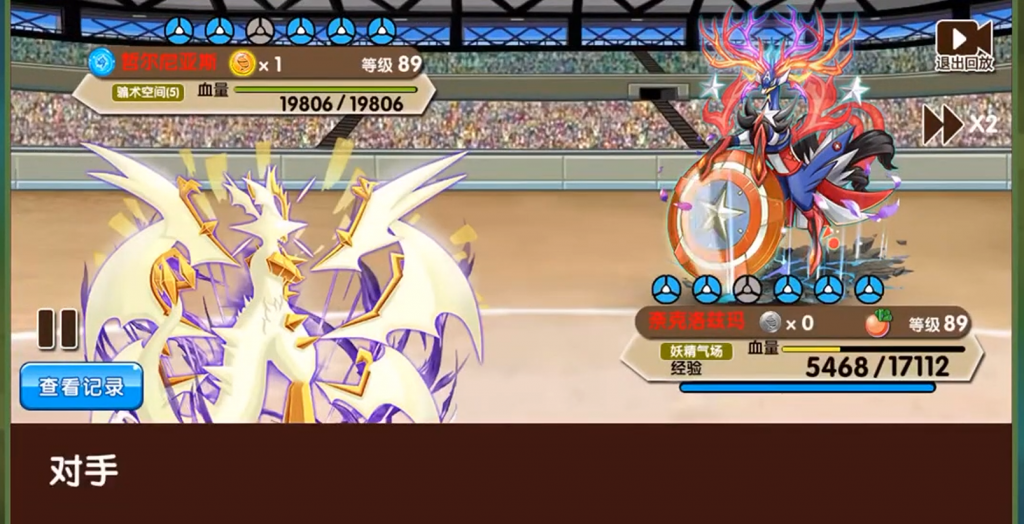
      Having said that, in my own experience, the worst offenders of finger pointing is done by those without hands full. Never really actually had to try and make it on their own themselves, putting themselves out there. For if they had, there would be a restraining humbleness from what it takes to actually succeed. A threshold of approval to sacrifice for and have a bit more of a bite on their tongue because of that. And without is so easy as it is to not even try as if they don’t even need to.
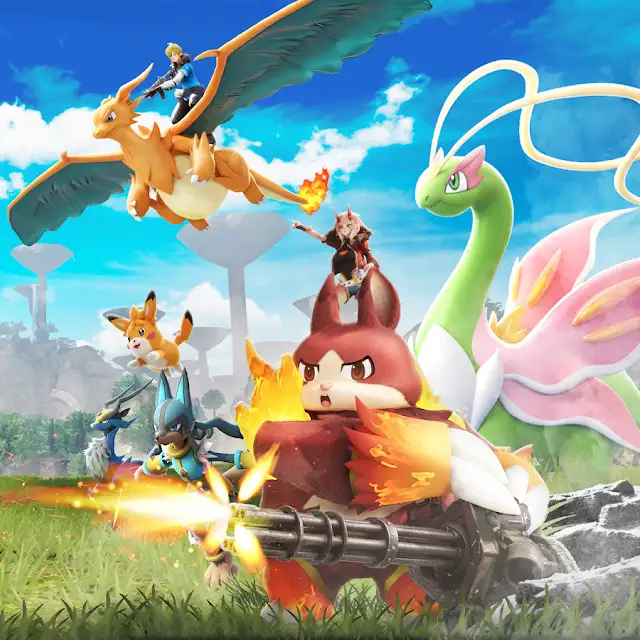
      There’s a certain waring of motivation that comes with age, hastened by the need for money, that then supplements the motivation to do. Drug like is it, that to need it for your new normal. Finding it extra difficult to work for free. Though we should be asking at that point is if it should be work?

      On the contrary, I’ve found being motivated by money results in a bit more dedication. Especially in the realm of art incorporating the creative defuse mind that tends to… wonder off… And to live in a protective little bubble you think you’re so great in, as your own ego flourishes and protects, hearing what you want to hear preventing personal growth.

      And this idea of the opposite. Doing it for the love and passion and nothing more, never really have I seen that purely outshine and I would question the legitimacy of someone that says that. But having fun and expressing yourself is most definitely key to fun that unlocks motivation, which is one of the most valuable tools of all. That, along with the lead of hope for some kind of particular outcome. There’s no reason that couldn’t be supplementary.

      Whilst common place is it for those that chase wealth to find themselves miserable, and instead on your deathbed it’s all about personal connections that matter yaddy yaddy yadda we’re all very wise. I myself have come to see the art in the covetous dragon. The storytelling in the attainment of wealth comes patently the most tragic downfall of greed as a metaphor leaking through persona. Adds a bit more colour wouldn’t you say? And that colour would be…

      What to me seems conclusive, is that the terrain in which art grows from, and then exists in, can be different and that could then be cautionary to this whole discussion, changing it entirely. A trend would reveal art playing an advisory role of disunity and deterioration of wealth. Art isn’t always going to be appropriate to how a culture is socially progressing naturally, for new avenues are under researched. But it would help pay attention.

      The perception of those that receive the art matter, and what matters to them is what kind of state their life is in. Would you expect an economic class should the society possess many, hard done and going without to spend their time pondering at paintings? Such a privilege is more, reserved. If anything they are more likely to question how did the artist keep themselves afloat to begin with? Where did they find the time between housework, work, and sleep? To take such a risk, were there hands not tied from the start? Which would be the wrong questions.
      To enable more of an artistic world, to enter into a realm of beauty and intelligence that art can provide, one must first not be so burdened by their mortality. Distracted by painful restrictions.
      For whilst it can be common place for an artist’s suffrage to be magnificently exemplified, little can be expected from a culture burdened with poverty and disease other than to fight for their survival. And it is so that what art appears to do, is emerge from a more, enabling, environment. I wouldn’t then ask how pecuniary motives of depreciate art separately, I should instead be concerned by if the ratio of how many can afford.

      Then these questions can be properly answered.

    • Articulated Re-Percussions of Response Ability

      Articulated Re-Percussions of Response Ability

      Questioning the Conclusions of Art’s Purpose

      Is art impactful? Is it powerful? Is it received? That is, does one receive what art gives? And if so, how does that conflict with this next question: Does art have a message to send? It’s message could be what it represents, but what is that?  Like a nice scenery or soft tone to calm the mind is it? Some emotion to spare? Or are we just seeing what shapes the body can bend in or is there something more suggestive under the surface here? What of art for change? Art-Activism if you like.

      Does that message pertain rules that when broken come to deny suitability? But the plot thickens – messages could be received not otherwise sent through misinterpretation or is there something else at work? And further, what if those interpretations had rulings themselves? Hmmm let us evaluate:  

      What should art be to do what art does?

      Asking should art be powerful sounds like an oxymoron. Like should it stand out? Should it be defining? Should it be prominent? Elevating? Or on a plane of ordinary and civilian? Could be, but might not perform then as other art would that fits more of a criteria of excellence. By which a message could become an extra dimension into the art, to add to its complexity but turn equally increase the probability of spoilage if not applied successfully. And ‘pedestrianism’ could even be a threatening stalking line as dusk sets on good days old, with elevation claiming the fruit below as picked.  

      What would the message be anyway? Something simple? Something ‘every day’? Something… Mundane…??? Would the message be a question like, ‘how is the weather?’

      Or applying unsightly unnecessary and undoing blandness? Would the message be ironic? A deliberate message, obvious, and self-explanatory? Or for art to be itself, would it be compelled to improve and seek attention as attention changes?  

      So calls do something meaningful? A proclivity even. Impactful as if to put your foot down as a stamp in time and reject what’s normalised by being abrupt. To showcase conversations unspoken were the silence can be deafening.  What is revolutionary in every sense, intelligence? Or as important as the art itself should be, as intended by the artist? An outstanding statement standing out. To be against. To be bold, wrought with power.

      Which should we then know would enter into controversy.  

      To be offensive, and whatever web makes that entanglement. Though successful execution of being offensive of course requires power of some kind. Anything threat that is weak is laughably pathetic unless of course there is trickery intended. But at the same time, what is offensive is reflective upon the defensive fortitude of the group assaulted. Should what is weak be found like discipline lacking that’s juvenile, so easily should they be agitated in response though perhaps also to devise a ploy as the games get underway.  

      One side knows full well the manipulative power of shaming, and the desire not to offend and keep peace all together. Gatekeeping beauty by normalising their own lack of.  It’s an unspoken truth on this battlefield. Shaming those that appreciate a certain standard that cannot or will not be attained, portrayed on portrait. And will then twist the arm of victimisation as a strategy to their favour, pushing boundaries and mining group advantage under the guise of valuing sympathy. Saying what is offensive and shaming those that disagree as an exiled placeholder.

      It’s all as it’s ever been, one-upmanship competitive infighting for group identity survival, and the concept of art can be the center stage of. It’s ‘Seen This Scene all Before’ Vs. ‘Trying Too Hard’. But is this the pull of art in times of peace?    

      As for the sport, the ‘tastefulness’ should be palpable to reception. To read the room as it were but they’re a mock anyway. Though maybe that adds to the art’s charm? How often is it a piece foregone is only appreciated after as being ‘before its time’? ‘How well did it age?’ We ask. That would just depend on the position – or disposition – of the culture included of which future is being fought for as cruelty interprets as it progresses nicely. Though it does then make me question something.  

      Where is the line? You see stunning art, but then if the underlining message is actually propaganda, how does that affect the piece? Especially from the other side? How does that belittle it? Can’t anything be propaganda in its own way in some way? Playing into the paid script of lies in how society is and isn’t controlled? Is there such a thing as ‘political art’? Moral art or is that itself a contradiction. Here we go… Telling a message, nae, the condescending story of the ‘good person’ you should be, and a ‘bad person’ you need to one up. Trying to lecture with an education time. Or the musts of good and evil.  

      And the person observing the art. Instead of getting the vibration they anticipated and hoped, now left disappointed and remembered by whatever this little stunt is supposed to be? When double sided social issues become intertwined in a piece that only tells one side, and what was sent out as art, becomes just a patronising conditioning? Is it then sullied what it means for something to be art? To defile art itself? Or are they just ignorant to what always was, slowly seeing through? 

      What about how those respond to a specific frustration they have, to escape ugliness. To escape inanity of mundanity and the lurking irking boresome feeling drenched in that is normalisation. Art could act then as a safe haven, a bastion of how one holds something up. But not now… thanks to this… activist and poser. And if spread art may only serve the purpose of showing the group themselves. The gap widens.  

      What if the reception is unrequited? Is the objective completed? Or has a scales been tipped too far? Could it become contradictory to intent? When your cause garners even more opposition due to your own efforts. You weren’t the stunning and brave hero you thought you were, you were just a fool. A rebel to your own cause that extended your own pushback sealed your own fate. And trying to cast that into the special category of art? Forget it. And you can’t accept it, but It just looks sad. … 

      What seems to be so thus in this rabbit hole tumbled down into, is when one says what kind of art they are attracted to, to be more consistent and accurate with their declaration, they should also say what motive and intent they like for the art to be driven by. But that then may be revealing of how unappealing and mediocre their preferences are, and more inclined to hide their intentions.  

      If it is true art cannot escape the projection of signals, whilst being inclined to shine and thusly outshine as that culture progresses. My choice wouldn’t be to shy away and negate discussion with petty dismissive remarks and group support to point and laugh. You’re not afraid of a little challenge are you??  

      Make your own canvas a platform. Art is a grand tournament of non-violent warfare that is eugenical idealism through our emotional resonance, such is our preference. And we pass judgement so proudly, what is not and here to stay and wonder why – showing us exactly where we are. See art as a summoning ritual that can transform tomorrow. I wouldn’t ask if art has a message or should have, I would instead question in my perplexity: How can it possibly not? 

    • Must Art be Beautiful? 

      Must Art be Beautiful? 

      Does art always attract?

      Should we say that art should be something other than itself as then becomes bound by ruleset. Would that be wrong? Yet there is clearly common characteristics entailed in what conventionally is received as art

      Does art always attract? Is that what it’s supposed to do? What is art supposed to do? Art ignites a special state of mind. One of intrigued curiosity. One that is question provoking and in some ways, energising – activating of your mind. Art resonates with the person, it can change the state of your consciousness, and from there, perhaps even your life without you even knowing how profound.  However what could be said is that these attributes, needn’t always particularly be positive. Though true to our nature, we would primarily pursue elating forms. 

      We art loving species do love to appreciate it. The feelings we get from art, are a very happy feelings. But that’s not to say that all art is positive. For what the art and beauty of nature itself? It unquestionably is magnificent. The rich green chlorophyll of a plant. The huge variety of terrains and the unique array of life. The crashing roar from a waterfall and the blue hue underneath. And as the magic of life giving water sprays through light does it refracts an array of multicolour.  

      What of something that is red though? Something gory that is gut wrenching  and nauseating and wonderfully spectacular at the same time? The art of the heart, the art in arteries? What of, the intricate circuitry of the brain? Is can it only be art capture in some way and retold? Some kind of intended display.

      Not real life in front of you? What of other aspects of life, that reek of cruelty and shamelessness in the lawless land that it is? What of disease? Decay? Death? Are these things art? No? Just not to you personally but maybe to some? Is that it? Who’s going about making art with disease??? And if something like that happens in a trend? Fashioning negative disgusting things into art. What could we conclude? 

      But whether we could consider it good, or bad. Maybe it is so, that for something to be knighted as art as we true to ourselves would do firstly, it must be appreciated, respectfully. It’s put into a special category that art is, usually met with positivity and desire. But just because it can be feared. Just because it can be repulsive. Does that mean you cannot respect it though how much you reject it in every conceivable way? As if we are then better enough to judge? It wouldn’t be proper to ask who makes ‘art with disease?’ But instead ask, do you respect death?   

    • Framing Our Composition on Art

      Framing Our Composition on Art

      A basic outlining of how we define what makes art, art.

      Defining Art 

      To differentiate between the two ideas: ‘art is subjective, and therefore, everything could be art’, and the idea of what is generally received and becomes appreciated as art amongst a group, we should first create some sort of defining framework for what art is.  And it’s also pleasant to have some idea, as to why you respond to something in a particular way. To in a way, map your emotional reception as a way of knowing yourself. So here we are evaluating how we humans perceive art (generally speaking). I’ll make suggestions, and you think to yourself if you agree or disagree.  

      Art is a frequency of how one emotes that might not be easily translated across intelligence, almost as if in need of decoding, by the individual receiving. To transport you into a different time. Get a sense of the norm of those days. The ideas and beliefs, step into not just the artist’s shoes, but transpire into the culture the artist came from. It gives an emotional experience. It resonates with the senses. Inspires wonder. It compels? It invokes a state of change inside the consciousness. It can summon memories and give rise to hopes and fears. Even for the portrayal of powerful experiences, like an exposure to paths of proliferation, or exemplified in one’s own destruction.  

      Could we say art changes? Would depend on the final product’s reveal for uncommon is it an idea remains as pure as it was at conceptualisation. And instead, changes and develops into something more founded and grounded as the idea itself, is researched or explored, even introduced. Art is a way of life, a perception one can live by. It can even stand as someone’s belief as an ideal for them to stay true to, and assure their head continue to be placed upon their shoulders.  


      What are types of art?

      Visual Arts 

      Available in two and three dimensions. Visual arts include: Photography and cinema. Something the requires a machine to capture the light of an alignment in time of what already exists. Sculpturing, architecture (though many tend to reserve that into its own category), canvas based arts like paintings but also digital art, which then perhaps extends into game design? With digital art and game design once not being considered art at all when it first became popular, and rejected as such. 

      Performing Arts 

      Performing arts is an artform that expand into a kinetic realm. Like theatre. The emotional tension of drama. The suspense is killing me. Of which I’d include here even humour if I do say so myself. And on the subjective of bodily moving arts, what of then martial arts? To express the body.  

      Musical Arts 

      Another extremely popular interpretation of art is audible art, in the form of music that comes in a variety of genres. The invisible matrix of rhythm and scales, of techniques in melody and harmony bound together, guided by intuition and feeling.  Some genres, like classical, more respected and considered art than others, like dubstep…  

      Culinary Arts 

      Art in large part explores our sensory interaction. But most notably seems to be visual and sound forms. Is that then the primary ‘human interpretation’ of art? If we had an intelligent comparable? What about creating arts based on smells? Too fleeting? Though chefs are sometimes praised as artists and practice culinary arts of both taste and smell, to combine the perfect blend of aroma and flavours, that sometimes is paired as an array for a complete experience. This is somewhat of a tasting itself.

      Though to cheffing (it is a word) as an artform, does have a strong visual component.  Chefs that are dedicated are conductors of hunger. Exploring new ways to bring out the appreciation of taste from something some might not even think they’d like. From this observation. We could say also that art comes with it an emotional aspect, as without the ghrelin of hunger compelling the individual, the attraction to food could have little to no affect. 

      Literary Arts 

      What of a more noetic form of art? That involves heavy use of the imagination? Like perfectly placed and sequential ideas? That require education in that language to appreciate. Written arts like a poem.

      For all art, but perhaps most of all writing, lies in intelligence like that of a complex but well-structured novel? In captivated in encapsulation of metaphor, or is it the non-physical reflection of archetypal echo? Resembling philosophical or mathematical abstract forces in our universe conveyed in a presented idea to ignite emotions.

      Maybe get a bit of poetic justice in there, and let virtue triumph over vice. And give you that good feeling. Or relate to the natural law of real life loss. Or the story of our time. Stories bound to human nature, you’ve noticed little glimpses manifest in your own life’s periphery, and here laid out tells us the tale of what we might just do should we find ourselves in a similar situation.   


      Do the tools matter?

      These are all ways art itself – though I’m sure not all the ways – art can be expressed amongst others (such as fashion and ceramics etc.) And done so, though important, it is not merely the hands and fingers of the artist that compose and design. But also the by the tools applied. Do tools help define the art? Would the art be the same without them?

      Who is a sculpturer without a chisel? A painter without a brush? A musician without their instrument? A digital artist, without their stylus pen?? The tool is the doorway, the extension to create. And needing that tool, does not make them any less of an artist than those that do not require tools.


      What are types of art?

      Here’s we’re asking, what characteristics or aspects of about various types of art, is what grants it as ‘art’ as we also question art itself. The ‘life’ of art, some might call it. And as it so happens, a lot of what these qualities are, are themselves, very subjective. But maybe that’s the point?  

      Expression 

      Emotion, difficult to define. Without using assigned words, like anger for anger, or even without words at all, how would you declare what your emotions are? How would you do what you would feel obliged as a human being to do, that is to show them? Use art? But, for a piece of art to project emotion, first emotion has to be put into the art. Be shown in some way in their inspiration. For what the spectator may want, is to feel like they’ve met the artist in a way, having never even been introduced.  As to be awakened by their passion.  

      Creativity 

      To simply, create? Or to create the unseen? The unthinkable? The unusual. The original. The spontaneous that “works” rather than being abrupt. The surprise, and how that makes one feel. Left out, or wanting. A challenge to understand it. A sense of the future. Or even feeling a little dumbfounded, is that awe? To think outside the box. To reimagine, rearrange, combine different variables of old and new. And how that’s done is anyone’s guess. How exactly do new ideas form? The art of associating unlikely connections? Sometimes you don’t even need to do anything but enter the defuse. 

      Detail 

      What about vividness? The fine texturization. The contrasts. The transitions. The colour collections ensemble. The Trills.  The richness and vibrancy. Infusions. Not faint, not tinny but full and radiant. As if a surge like your brain jolted, no longer starved of sugar.  What about complexity? The depth with hidden reference and tribute intertwined. Nuance and subtly that could change a piece entirely based on position. Even then send multiple messages at once. A message that might only be able to be translated, by those skillful enough to appreciate it.

      Skill 

      And alongside detail comes skill. Skill could come from practice. Skill could come from something as miscellaneous as talent. Skill could even come from suffering.  

      By which the approach the artist takes strays from the conventional amateurish attempt. Knowing full well the motivating consequences to fail capability. And the spectator has expectations and demands. Show me how, what you endured through your endeavour, transformed and mutated you. 

      Should art possess skill? Does skill dictate art? Something to admire beyond the piece themselves – the artist – as they flaunt what we don’t have. And the proof of this. A portfolio. A back catalogue. A reputation.  Is art not in a way, a sign of someone’s accomplishments by default? By the level they are at, enough to be able to portray what it is they imagine from nothing.

      With skill then, comes intent. Is that not counterintuitive to spontaneousness? Or do we assume it’s all plotted for show? And can we then dismiss accidents as art? Is there ever such a thing? What of then unintended outcomes, that may appear in nature? Does art have to mean something, and be forced into life?  Can a being like a baby, be incapable of creating art? Art could be considered a hierarchy. A pinnacle ever rising for those that study the purity of the subject, and make something magnificent out of it.  

      Beauty 

      Now this is an interesting concept. Whatever beauty is supposed to mean. Like symmetry? Always? Grace, and balance? Over clumsiness. Pristine, and cleanliness? Next to godliness though embroiled it could be under the surface. What of patterns, neatly organised, or a direction, inward, like that of a flower. Perhaps something related to your own identity and self-image you project in hope? Or is it beauty has the power to poison those around it with magnetic draw. To be hexed by curiosity. Taunted with desire. However beauty is, art undoubtably imbues it as it to art.   

      SPECIAL  

      What is it that makes something special? Uniqueness? Sentimentality? Belief? Identity? Perseverance and effort? By someone endearing of these attributes? Something exceptional, based on what was normal at the time? Someone truly special, cursed by their own gifts.  Or of a masterpiece combined of an accumulation of resources, particularly those that are rare and hard to acquire and not to be wasted.  

      This concept of speciality, as if selected is most definitely a human desire. A desire, to be desired of which art then deemed special could be claimed for oneself, so they can then feel through their ownership, that they too are now special and revered like the art as the ego melds. And of course, should the magical illusion of what makes that special be removed, there would be, threat.  

      But is art itself as it is by the virtue of its being, not already special? What about nobility in art?  Art has to have a bit of class. A bit of finesse. Art is something to be traded for in the human emotional currency known as respect. Like doing things ‘properly’ and ‘officially’, not short cuts and producing a cheap knock off. Doing something admirable, creating that desire by embodying an ideal as to what the spectator knows deep down is the right thing to do as to how to go about creating that piece. As if it should already be something before it is.  

      The Artist 

      Sometimes you observe things not for what they are but where they’ve come from. For what they’ve been built upon and represent. If there was a fantastic piece of art, ticking every box. But then it was later learned, the artist just did it for a quick bit of spare cash (does anybody have any spare cash?) How would that make the viewer see the art and the artist, as if two separate entities? What if no dirt was besmirched the reputation, however the artist hated what they created. They felt it was forced. It causes stress. It’s not a joyful memory to them, would the spectator see things the same? Would they have pity on the art for the bad energy bestowed? 

      If there was a brilliant artist. But then you found out they had committed some horrendous crimes, would yours and the public’s appreciation of their work change? Though it’s possible that be a cultural thing of our time if looking at a historic figure. The sense of character of the individual, the kind of ‘soul’, they are, also becomes factorised into art. A clash of inner opposing projections then disassociate from that considered “bad” thing and how our perceptions are altered by identities. 


      Does coalescing absolve validity of art?

      Lastly, to evaluate art, I would ask, can art types combine? We can say the written script of a play is but one component of the spectacle that makes cinematic art? Along with the timely music, and acting performance amongst other artforms.

      Should all of these qualities exist in all forms of art? If all of them did, does that make it more art than something that has less of these qualities? Do more aspects of art make more art? Or vice versa? By which the more the merrier? Is that “the rules”?

      If it is true that something can become art based on singular or multiple conventional ideas of art, and yet still be valued the same as art – the same as a different artistic piece possessing differing qualities which is overall regarded as art – does that then mean what is defined as art needn’t equate to something else foreordained as its intended self?

      For if true, it is I do wonder inside a group – be it a generation, a culture, a way of teaching, even something as whimsical as a trend – would it be natural for that group that appreciates art to tilt? That is to say to appreciate art in their own way. Which could be to favour one aspect of art however comprised over another? One group may be attracted to the high velocity of detail, whilst another be attracted to an ideal of craftsmanship and a third group worshipping the unforeseeable.

      Would it be wrong to police and deny anyone their preference? Would that even make sense? As if to accomplish something… As if it somehow made another group’s priority, prioritised amongst them all? Is that the rules? Or, would that all just be a little bit silly? And instead what we could do, is simply just enjoy our own preference and allow more of that into our lives? Sounds like a much better idea.

    • Who Art Thou That Judgest?

      Who Art Thou That Judgest?


      Passions Collide – Art’s Title is a Two-Way Street.

      How do we decide who decides what art is? Is that something mutually decided? Who is official enough to declare what is and isn’t ‘art’?

      If someone is trying to express their own being, be it their thoughts and feelings, into something else and encapsulate it almost as if to ‘imbue’ it with an essence of their self or experience. Can that be denied from being art? Yes. Not to the individual towards themselves, should they cast it as art. But to being generally considered art, I believe yes. A great many things we do in our lives could technically embody multiple definitions of art. And whilst art is subjective such as our experience also is, not everything we do is automatically then ‘art’ and granted that respect. That is to say what art is, must be received as art how others respond to art, not just simply declared as by the creator and hence forth now shall be known as art. 

      There has to be an emotional reaction ignited in some kind of way along with the proposal, and appreciation that helps define art. So it’s not only just the origin involved and intent for something to be known as art. What grants it as art, has to resonate with the spectator, and as a trend with those that observe. So we could say art is a form of call and response, were expression is expressed, and then tested by a change of emotional state of which we could say we become moved. Though that does also put emphasis and question on the character of the spectator during an announcement.

      Thinking also along the lines of those that make art their profession, and not just the artist themselves, but including the likes of art dealers and such. Students of art studying the art of art itself. Does an artist or student of art or art teacher etc. have more of a say – as to say their opinion is more valid and important in the subjective realm of art – than someone of a different industrial profession? And therefore it’s not simply about what a piece of work does to someone else emotionally that’s unilaterally accepted? But there’s a hierarchy to it. In debate atmospheres, there is such as a thing as an ‘appeal to an authority’, as a fallacy. When something is declared as acceptable or true over evidence, because some kind of ‘commission’, a group with influence, or even just acts as an authority figure.  Is that not something similar? Not really, as for evidence of what? Something subjective? 

      It’s like the difference between an amateur and professional. We’re talking someone or a group that is classically trained – teachings built upon generational experience as the subject in question also progressed – whom is then going to understand nuance. Someone experienced themselves that is going to appreciate subtleties as translated messages otherwise blind to. And through their own skill, contribute perception to the culture of art that is otherwise unattainable. And they I’d guess would say in their heightened understanding; ‘Why in fact yes, someone well studied in art does know more about what art is than someone who isn’t, just like any other profession’. Or we could compromise and say with their accomplished gaze, exist on a higher plane of judgement criteria as they’ve spent more time and energy into the understanding of the very meaning for something to be art.

      Though all of that could be nothing but hot air if they haven’t got anything capable of moving others en masse to show for it. And maybe somewhat of a clique can form to help enable their own artwork to ascend to magisterial protection under this guise as a survival strategy and career prospects. Speaking generally of course.

      EDWARD MORAN (1829-1901) Ships at Night

      So, having considered that, if I was to go to an art gallery supposedly filled with art, and I was in fact not moved emotionally speaking. What then? Is that the fault of the art? Not being art enough? To activate something intrusively curious inside me? Or perhaps that’s my fault in some way? Maybe in a similar way someone with a sweet tooth doesn’t taste the natural sugars of certain fruit as they are too accustomed to a purely concentrated source? Too used to my CGI explosions is it? Or maybe I’m uncultured?  Maybe that’s exactly what I am to the proud but offended artist exhibiting their grand work in that gallery that thinks I wouldn’t know art even if it slapped me cold in the face?

      What if I’ve seen it all before, nothing’s that impressive? We do live in such a spoilt time. And nothing’s really new or exciting? Or maybe that what ignites that love of what art is, that response, is attuned to something else? Or, perhaps I’m from a different culture or generation though, a different environment and background, and see through a different defining indoctrinated or socially progressed lens? Does that then make myself or the art in some way ‘lesser’ or wrong or any negative connotation because an effect didn’t happen? Or are things just to be accepted as different? Would it be that simple? That civil? Does their need to be correction? Or can it be enough to say there is multiple interpretations that coexist peacefully? And art comes in many shapes and forms appreciated by all?

      An absence of emotional reaction towards something presented in the class of adjudged art, does there need to be standoffishness amongst the differing parties? Considering there was a form of rejection towards emotional expression, which is usually considered a negative thing. Perhaps in their heart there should be. As the lack of appreciation for what’s considered art, some might say is a sign of degeneracy and regression, even the threat of cultural death. That also supposes then a lack of intelligence that is required to acknowledge the art missing, as the facies of mud sediments begin to fly. For the other party returns fire with something similar implying instead a lack of evolution, and a reluctance to accept change and to leave peacefully.

      And thusly we can see the power of art overall casting its spell of influence as two sides passionately clash with multiple forms of itself embodied within us to compete for light as plants do, as old fights new. Whilst art is diverse and complex, based on varied personal emotional experience that is relatively specific to those that subjectively experience it, that will not taper the motives of those that project their own feelings onto definition for another for the sake of their own meaning, but what that means of them and ourselves, we are still yet to spectate.

    • ToDo-List Anxiety and The Art of Executing Scheduled Productivity

      ToDo-List Anxiety and The Art of Executing Scheduled Productivity

      How To Do ToDo lists and Addressing Procrastination [Long read] [Tutorial – Beginner]

      Some people have a lot going on, and just write it in a list, and that’s it. But what if that works? And then, you want more? What if that could be improved?  

      How is it then we would like to imagine ourselves? Drawing up those lists. Plotting – hopefully – the extent of everything we can most likely promise ourselves in achievement. And the most common, the most natural, the most explanatory. The simple and humble, yet dedicated and impactful. The  ‘ToDo list’. It’s one of those, ‘how do you like yours cooked?’ kind of things, with different strokes for different folks.  

      Our task here is to discuss the fundamentals and core of the ToDo list. Can it be improved? And what happens if we make ToDo lists a way of life for anything that needs to be done, what problems may occur? 

      Did you ever think there would be a counter-intuitive factor simply on the basis of ‘trying to accomplish’? Would you ever have thought that how it is you try to apply yourself would be the way in which you procrastinate alone?  

      I wouldn’t have initially either, and as partially why, too busy as I put, ‘promising myself’ with distractions. You see when one creates a ToDo list, if that list is not based on ‘this absolutely needs to be done now or there will be trouble‘, then there is the potential of a kind of ‘impulse buying’ the lister may be vulnerable to.  

      In a similar sort of way that it’s advised not to go food shopping whilst hungry. As one scripts a ToDo list, they may be toppling thriftless objectives that would otherwise have no place being on there. And as for their motives for doing this, there could an indication of something problematic. And then, stacking disappointment can embed itself into your mind.  

      There could be many reasons for this behavior. One such possibility we will diagnose, is if they are so devoted to maximising output of their ToDo lists, that they are unhappy with their current situation, yet feel they cannot do anything about it other than plot. That this individual is then in a kind of ‘reactive’ state, unsettled, and in need of change. And due to this constant subconscious discomfort, a propelled desperation becomes through you. Entering and existing inside the background of your thoughts, your actions and meaning. And as it does, the duality of hope, inclusive of false hope and all the invisible delusive indecisiveness to boot that comes with it, seeps into expectation. Manifesting in ambition of productivity, in the form of the ToDo list, dare I even say now corrupted and leaking. 

      But what’s the actual problem here? Is this actually ‘dangerous’??? ToDo lists that come with safety warnings??? But it is possible without knowing to be fulfilled by a special irony and that be the story written for you at this time of your life. To exist in a looming shadow that only complements how you languish, building the walls around you as they surround you affecting your mental health.

       You see, as one writes of everything they predict will help them escape, such is what the ToDo list masquerades as, serving as a proposal for improvement, two new equations secretly formulate. What may actually be happening, is they are without knowing, portraying who they believe they should be, and then living in that shadow. Basing what they hope to accomplish on what that supposed ideal would do. And here we are identifying the punishing consequences of that left unchecked.  

      The other equation in question enabled, is also based on promise. A kind of indirect contract with how one atypically procrastinates signed in the form of ‘off-putting’ by listing placement and as this is happening, it’s being learned. Putting what goes where on the lists and feeling good about it.  And when you put something off, notice then when you get around to it, refacing that reason you put it off, with a bit extra momentum pent up.

      I never really thought something as simple as a ToDo list would be a window into the soul. But, it does make sense that how you apply yourself and in what direction would resemble true character, as will the success and failings that follow. That said, you then also may become in touch with a special kind of intuition.  

      One that is guiding in nature, but not in the form of attraction and instead, a deterrence. Like a each click on a Geiger counter  resembling the traction of nails inside your skull detecting radioactive mine sources, making mental movement difficult. A heightened sensitivity to stress in this state of stability that will be unnoticed to the point that procrastination will just unknowingly ‘become’ of you and consume you, ruining your day. And you will be dumbfounded as to why you are so suddenly struck. It’s a crashing feeling nulling any sense of progression previously procured by the ToDo list.  

      The answer is without you even knowing, a part of you is well aware that somewhere down the line in pursuit of that outcome listed on that ToDo list, lies an air-pocket of headache and stress. A feeling of inability that reminds you of imprisonment that you currently feel unbearable and exhausted by, and that repeats so much over years, this foresight gains. Think of it like acute causal trauma detected by the your subconscious, maybe due to repetition  from past accrued senses of failure. Though of course, would be common amongst individuals that frequent inability, and thusly would more naturally find themselves in a state of distressing urgency… Knowing the ‘what’ they are to do, but not the skills ‘how’. And it is to escape this domain, temporarily, will you see how it draws you back, all happening right under your nose.  

      I noticed that, also becoming of me. When work became too much and the mind’s gone a bit numb, how healthy it is to exit the room, go outside for a walk. Breaking all the rules as it were about what you tell yourself you need to do, and the pressure of artificially created deadlines engrained from the integration of ToDo list domesticated hustle culture. And come the change in atmosphere the draw of fresh air became most enjoyable, I sadly would have described it as a tool. But what I also enjoyed to my dismay, was how my mind was in this state, reflective of the surroundings. A kind of liberated state from the previous patterns of thought.  

      But then I noticed what my mind also began to do, still enchained to work, goal setting. And what’s particular is how much of a good idea, average ideas sounded. It’s such a weird state. To want something, and then not want it, and became awash by this influence, like standing in omnidirectional gusts of wind. But when I would walk through that front door back home, I could stop. I would say, “there it is”. That feeling inside my skull and spine. Drenched by a mirky weighty energy sapping comeuppance almost crawling through me.  

      Why is it one doesn’t want to do something? What is that force of nature that completely depletes them of will. I would say we all have secret counters, counting, ticking, accumulating failure. And as they rise, as do tipping point probabilities near, and transformations become. This can be accessed here.. This is going to be the most dramatic ToDo list you’ll ever make. And all you need to do is pick up your pen, or put your fingers on the keys, and question what is waiting around the corner. For any chess player will tell you not every move you make is a step forward to victory, and sometimes, the outcome of your own checkmate, is by designing your king’s inability to move, trapped inside the walls of his own defenses.  

      For it is in our example, I’m back where I don’t want to be and I only get clues to know it. And all those goals I set, all that vision I had portended, about betterment and excellence, about striving and perceiving, and ultimately, about some form of ascension. Now act as forces against me. Ladders that break, paths that mislead, I’m building doorways in open fields. And your attempts to actually ‘do’, only serve to blind you, distracted from your feelings.  

      And boy it’s so easy to put stuff off. And as that piles, somewhat of a hoarder I become. Reluctant to let go of tasks incomplete. Reluctant to admit defeat curtailing the ‘why’ it was I could not succeed. Held back by my own competitive determination. I proceed to hit that crooked now wonky nail repetitively trying to force it in unsuccessfully. Until now I just need to rest. For if I am to concede my own incompetence, it only proves I’m capable of enabling resistance. Not actually acting upon it.   

      And so I’m burned out, taking time off, having a break from the act of initiating productivity in itself, let alone the actual work. But going with the flow instead, which is tied to my default autopilot minimum effort easily distracted self. Making ToDo lists, waiting for that sense of procrastination to leave me so history can repeat. Wishing. And all the time I’ve spent wondering what if, I just kept that strategy up, how productive I could have been.  

      And so it is. The Todo list you will find is a mortal struggle against inner demons. I bet you never saw that coming? But when you think about it, it makes sense. By choosing to practice ToDo lists, you have come to the conclusion (somehow and for some reason) that this listing strategy needs to be done. And by actually doing a ToDo list, you are challenging who it is you are for needing it rather than being good enough without it, which you clearly aren’t amidst your inadequacy. And your ego that’s been pulling the strings conducting the movement in your life, embarking into safe spaces and settling down via subtle nudges in your emotions, isn’t going to like that.  

      For in your ToDo list, you will have things in there, that have the overall objective of making you a better person like another inner voice slotting those tasks into that list. Healthier choices in life for example. Or improving how it is you think, things you know deep down you should be doing but can’t quite find the strength to muster motivation.  

      And to test all this, I could just straight up ask you right now, ‘why aren’t you better’? And there will be some idea to compare yourself to. Even though you know it’s a good idea to try and improve (if you were to know the true path of that improvement of course, but attempt it none the less), there’s a part of you that simply just doesn’t want to do it. Doesn’t want to get up early, to eat that less processed food, quit that pleasure inducing, stress liberating habit. And that part could be justified. Of course there’s a narrative. By how heavy you think the load is in life, or question if that’s just a narrative you tell yourself as this ego does love to take the easy way out or if you are at your limit. This ToDo list culture will act as a spiritual teacher and take you there. I’ll repeat. You will learn that, and as I say – not even knowing you –  I’ll speak for a foreign part of you when I say that specific part won’t like it. And let the inner conflict commence, and your transformation truly begin.  

      And so it is here then I find myself, wondering my own failures, and if that then entitles me to portray an effective ToDo list? And I would say yes, on the basis of how failures build success, we can at least discuss different ToDo lists and see how deep the rabbit hole goes.  So, with that considered, we will create and evaluate ToDo lists on the basis we are aware of the potential corrosive effect this might have unbeknownst to whoever practices productive list making, the contracts they sign.  


      Getting Started on the Actual list 

      A list is a list, if you wanted to keep it simple, on pen & paper, write point after point scoring off when completed. Easy. But as you do that over time, you may find yourself wanting to expand on the complexity for optimisation and analysis of which it is here you will be guided on how to do so effectively and maybe just find yourself on a little journey inwards too.  

      Another thing you want to consider as you embark on practical ToDo lists, is what I used to identify as ‘shit just takes ages’ (because it fucking does!) And your ability to ‘play for time’ as a plan may be restricted, though you may then want to get your driving and transportation sorted as part of the 5 year master plan with this article considered. Thanks to AI, of course, it doesn’t take as long as it did, waiting for replies and searching who can do what job. But even so. You are most likely a lone worker. You I assume are likely to be under resourced, and can’t just take out your wallet to solve issues by paying someone else. Otherwise your ToDo list analysis wouldn’t need to be complicated as the tasks on there would be completed promptly and not your concern.  

      I also write this as you should appreciate that any integration of any other party into your life, automatically adds an unpredictable element to your planning and will mostly likely cause delays due to their own personal interests out with yours. And competition usually is afforded to the highest bidder regarding who’s schedule works around who. Just something to be aware of as delays can garner frustration, but warrant discipline for the sake of peace which arguably is what most plans work towards.  

      And lastly to add, if it’s then you, that is doing everything by yourself, you’re not going to be all knowing. And learning is going to be slow and sometimes difficult as you’re not ‘just going to machine through it’ as I used to force upon myself. And you’ll then make amateur mistakes, sometimes costly and can be set backing. And it’s all the shitshow of becoming an adult and gaining that life experience to avoid these issues. So all I’m saying is relax and try to not worry too much when things don’t ‘go to plan’, like you shouldn’t have but couldn’t help but promise yourself.  


      For starts. I strongly recommend putting your whole Todo list system on some cloud based platform. So it’s on your phone, and computer simultaneously and interchanged instantaneously. Don’t worry about people spying with data and putting out sensitive information like your shopping list, your purpose here is to be productive, and that is a form of efficiency. So looking it up can be changed quickly. I would encourage you in this case to look past data protection. I remember my own hesitation to add my ToDo lists online. I didn’t like the idea of being spied on. To me, I just thought, it’s not that much personal information I’m already giving using search engines, in comparison to the practicality of having cloud utility.  Though I do have plans for an FTP own server set up for a future publish because I realise it is important. But also using the tools at your disposal.

      Quite easy to ‘lose touch’, of a long project, and that distance contributes to further procrastination amongst other things. It becomes a ‘getting around to it’ objective in itself. Don’t make accessing your notes an ‘ordeal’, don’t make it extra steps and ‘exclusive’ for certain times. Make it seamless, 2 clicks away. 

      At the moment, I’m using OneNote. It’s cloud based, it’s free, it works. That’s enough. Yes notes can become unsynced and then editing across two portals can result in a conflict. One Note gives you a chance to inspect both copies. And by just making sure they sync before you work, this can be easily avoided.  In our this tutorial, I’ll be showing off how it can be applied not as a note based platform as it’s usually used, but as a ToDo list software. Other generic contenders for the ToDo list platform would be a calendar based software, or a spreadsheet. Perhaps for a ToDo list article sequel were we can apply a bit of automation. 


      What’s good about One Note? (1N)

      In OneNote, you can import pictures and videos for motivation. It’s not something I do personally for collecting inspiration. Also in OneNote, you can export to PDF. The biggest advantage bar being free (currently) is the omnipresence of it. Can write in your phone, or use an InPrivate browser on your work computer, or your laptop. You don’t need to remember a USB stick. You don’t need to copy the documents you need to work on, on the sly, whilst doing your job. You don’t need to then wonder, should I delete this or does it have important documents in it, when it comes to copying over onto USB. It just completely removes the fuss.

      Also you’ve got a spell checker. Can format with word colours if you want. Insert tables. To be honest, I don’t like that there is no keyboard shortcut for ‘Strikethrough‘ like there is Bold (ctrl + b) or Italics (ctrl + i) and instead it hides amongst ellipses. Handy for crossing things off ‘Todo lists’, though inside the tags drop down exists tick boxes.  


      The ToDo List Objects.  

      The manner and urgency in which jobs are done is every changing. But there are bound to be things you ‘need to get around to’, and things that pop up, along with timely occurrences, like bills that obviously will take high urgency. Not to condescend but let’s run through the basics. In every ToDo list there is three basic categories. The ‘One off’s’, ‘building towards (some kind of project), the ‘maintenance upkeep’ (your choirs).  

      Maintenance ToDo List.

      So often is in in cheffing a choice is made by the individual or team. As the food orders are flying in and space is limited, tools are wonky, and resources scarce. Do you stop working entirely and do a ‘clean down’ and regenerate your stocks, and refresh your mind, as the orders continue back up, or, do you keep prodding along hoping for a break in the weather? And the answer is inconsistently situationally judged. For as chefs work, and work quickly in heat. Things spill and deplete and become misplaced, and damaged when making sure that food comes out timely and hot all for that all important minimum wage cheque. And order is required to be keep systems running effectively, which also has a knock on effect, on, morality, call it. Walking into a bombsite on top of a busy night definitely has a disheartening effect to it. Not the kind of start you want. One that also then echoes throughout the shift.  

      The same concept is actually applied to your life. A need to ‘recuperate’ and get back on track. So easy it is for us, whilst we relax in our own space, to revert to a slob state in times of peace. That is the work of your reoccurring Maintenance ToDo. Repairing yourself and surroundings from the drudgery of your imperfection. And as reluctant you may be to do it also on the flip side, you may find an attraction towards it. I used to enjoy getting around to sorting out the heaps of notes I’d accumulated throughout the week. Because these notes acted as a sort of saving grace, a get out of jail free card when it came to feeling guilty about not being productive. 

      Unfortunately, this case, it was for nought, as the systems I had in place for note extraction to their designated location were flawed. Infantile if you will, compared to how those systems progressed and matured over the years. And also the ideas they were for, wouldn’t be deployed at the time but maybe for 15-20 years.

      And so I found I was really just ‘doing what I knew to do, to feel like I had a sense of progression’, I had these systems in place I knew, and I could just step in and start doing them, without a recap. And get a feeling of control over my life, when really, what I knew to do, wasn’t really that productive in my life. But it was difficult for me to understand that proper at the time. On the bright side though, to play the long game, those ideas planted over a decade ago are now starting to bloom.   

      It’s somewhat a skill, a discipline to, a sign of intelligence. To not just race for the finish only prioritising the one off jobs, or the tasks that accumulate towards big projects. And appreciate pathway clearing. I used to even say it’s a privilege. Getting ready for work, waking up at 7. Coming home at 7, and in some cases, that’s not waking up in the morning. And then after the traffic and getting home, cooking food. And finally sitting down to eat, and relax. I don’t want to start cleaning after doing dishes in the kitchen too small to put a dishwasher in. Who actually does that I thought? People that have a cushy enough life to not be so burdened by that 9-5 kind of life and stress. But it’s not going to clean itself I sigh. So the ‘Maintenance ToDo’, the list of things in your life, you do to maintain health, hygiene, stability.  

      One Offs. & Building towards.  

      As a reminder, then, careful not just to put things on your ToDo list, ‘for the sake of it’. Because it will ‘probably help’, or ‘may as well’ motives.  Embarking on your path to be hexed by the curse of perfectionism. Though, arguably, it’s difficult to know what will actually help. An of course, until you actually get around to doing it, and realise I don’t give a shit about this activity, is a good indicator. Also unforeseeable problems arise only after the prototyping of a long task. You have to not take these things too seriously. As they do cause delays, and then result in missed targets.  


      Now let’s sort out your ToDo list structure. Built on 1N. You’ll see that most writer’s software, is just folders inside folders and files inside folders. Organised in a certain way. The Notebooks of Microsoft’s OneNote is like a folder. The new sections are folders inside folders, and the ‘pages’ are just files. These files are like HTML Files that can easily create text boxes. That’s it. It’s got a lot of stuff. Master folder ‘notebook’ -> Subfolder ‘Section’ -> file ‘Page’.  

      Create account. Get your notebook. [yourName’s Notebook].  

      Then create 3 sections. And then the sub bullet points are pages.  

      1. Master Notes / Template Notes
        1. Morning ToDo 
        2. Evening ToDo 
        3. Sunday ToDo 
        4. Work ToDo 
        5. Gym plan 
        6. Things to Remember.  
        7. Finances
          1. Perhaps then integrating some kind of accounting software? Not covered in this basic tutorial. 
      2. Dated notes.
        1. 1Dump (stockpile tasks to sort and address later, and of course, to evaluate if they are worth completion) 
        2. DDMMYYYY.  
      3. Archive.
        1. Old dated notes to be kept for reference.  
      4. Project 1 (Actual name) 
      5. Objectives.
        1. Bounty list. A dossier of targets. A file/page per each. Your checklist. What the actual job is, how far along you’re on with it.
          1. Example: Driving: acquired provisional. Savings targets for lessons. Setting nightly theory revision. A potential car you are eyeing and making sure it’s not sold. Insurance 

      The Master ToDo List.  

      A set of documentation, you would rarely be changing. Your master notes is an idea taken from the master sheet in spreadsheet work. Same concept as that primary reference.

      Morning & Evening ToDo List.  

      What? Ensuring you get your freshly pressed juice and doing your brain puzzles in the morning? Good luck with that. What about the Night ToDo list? That you and your little wind down routine with a nice book is it? And no blue light, phone screens off by 22:00! A lot of these things, if you’re not into them, writing them on a list isn’t going to do much. It’s just going to make you live in a shadow of who you should be, and that’s going to have a negative influence on you.

      But, having said that. I used to think having a functional body clock was a privilege, that’s me using that word again. Because the jobs that would only hire me had late shifts like 5-2, and then only 1 day’s break between and expect you to come bright-eyes and bushy tailed for a 9-5. And maintaining a body clock ‘just getting into a routine’ was the big hope I’d hold out for one day, was reason enough for me not to start these little morning rituals for the sake of accruing good karma feeling and positive energy vibes with some nice green tea and deep breaths meditation for the day.  All I’m saying is routine in your life can be good, and maybe at the point in life I take inspiration of, without it, could have contributed to that agitation.

      Sunday ToDo.  

      The Sunday ToDo, is a kind of representation of a peaceful restoration. When we do things, we create mess. The Sunday ToDo list is about resetting the stage for the next week, to make sure it can go as smoothly as possible. You should be thinking about those little things that are weighing on your mind, that you “need to get around to, but…[insert excuse]”. And if you haven’t gotten around to them, address them on the Sunday ‘weekly spring clean’.  

      In cheffing, there is a term used when there’s a reviewal of what you’ve got in the back fridges. A big list for then another list, the ‘prep list’, the todo list of tomorrow morning. Where I was, stationed, it was called ‘a recky’. I don’t know where that word came from, is it to, reckon what’s in store? Don’t know. But the principle is to check what you’ve got to work with, and what you need, is good. To reacquaint yourself so you know what is and – equally important – isn’t to be done.  

      The same thing should apply to your ToDo list. Sometimes projects can get so big, you don’t even know what ideas is located where. And that can become a feeling of lostness and disconnect that can build into procrastination. Or notes you forgot to tidy up that require to be sorted for later. You should do a recky of both your current projects, just going over them, reminding yourself of where you’re heading with them and how far you are with them and how you currently feel about that project. Just self reflective in your mind. And also you should do that with your overall database. Just looking what ideas are where, what’s been brushed to the side. Where are those procrastination land mines. What was the driving stake of your procrastination? Trying to see your way through the emotional haze with your feeling. This is you, ‘staying on top of it’.  

      Dedicating a day, Sunday, as as not simply a maintenance objective, but a time of maintenance objectives. To recharge, revaluate, recourse. And so as you are week planning, one thing you need to be careful of when warding of failure, is speaking for your future self. Oh yeah I’ll do X on Tuesday and Y on Wednesday.  

      Here are same exemplary tasks that may appear on your Sunday ToDo list:  

      • Food shopping 
        • Separating the dry store list from the fresh veggies list, that you top up regularly throughout the week.
      • Cleaning
        • Washing & drying clothes  
        • Emptying bins, and recycling. (And reminding yourself which bin day it is!) 
        • Small deep cleaning
          • Just a section at a time booked in, perhaps the grime behind the kitchen sink, and maybe next Sunday, vacuum under the bed. Clean and around in the window frame in the bed room. Top surfaces where dust gathers. Gut out cutlery drawer, Etc.  
        • Tidy computer desk including a wipe down.  
        • Get your school/work uniform clothes laid out and bag packed so the first morning of the week isn’t chaos (for a change).  
      • Batch cooking, if you’re into that kind of thing.  
      • Tidying virtual data
        • Backing up pictures from phone and all your generated photos.  
        • Sorting notes on computer like note dumps.  
        • Backup computer or ensure your auto backups are running.  
        • That ‘once a week’ long term project you slowly add to.  
        • Refamiliarisation.
      • Write in your journal, your review of the objectives of last week and thoughts and feelings about life’s direction. 
      • Week Scripting.
        • Just knowing a rough idea of what’s going on and when, knowing it can change, but also including appointments.  

      Work ToDo. 

      This isn’t just your job responsibilities to remember. If anything, I’d have a separate document on that, including forgettable things like access codes / passwords and little rules the work has to keep order, or tricks that are required, like setting up a piece of equipment that has a knack to it.  Even though eventually you’ll remember it, it’s great to share with new colleagues, and they end up appreciating you for it which is nice.

      The Work ToDo file, is based on the little projects you’re able to sneak in and work on during work hours on work computers. Which may also include access to passwords you would use to log into certain accounts on an inprivate browser so you can get your set up time minimised. Always important.  

      The ‘Elaborate’ ToDo list.  

      A question you would ask is, is it best to keep it simple? Let’s say for discussions sake we weren’t to do that. For what a ToDo list can moonlight as, is a form of diary. Seeing what day you did or didn’t do what on. And include follow up comments as to why it became that outcome. Expressing thoughts and feelings in the process.  

      Dated Notes  

      Each file, named as the date. How are you going to play it? For ticking things off the ToDo list, it becomes messy, and nice to see it clear. But also nice to see how much you’ve achieved. For me, once the ToDo list is sorted, ready for execution, create a copy, and put it at the bottom with a big line. And then with the first original, just delete the text. Alternative, you could use a strike out feature, or put tick boxes in. But by keeping what it is you set out to do, you can then compare and ask yourself, was doing that really that progressing?   

      Did you just add jobs ‘just encase’, but then when getting around to do them, realised through your procrastination that you don’t care about this objective and it’s kind of a waste of time? How did you perform in what task that was actually fundamental?  Suggestions for your ToDo list: Sign onto loyalty card schemes for the regular super market you shop at, that free sandwich you get for shopping there daily for the last 4 months might just be the lunch you can afford on days you’re broke.  

      Things to Remember.  

      In your Things to Remember, Your personal notes to self and important information to you. Bus times. Train times. Opening/closing  times of certain shops. Addresses you should remember but have lots of other stuff going on, same with common phone numbers you need to quickly copy and paste – though there is autofill. Though I write assuming internet access isn’t always available. Other tidbits worth remembering. Salary information. Certain deal prices, what time the bargain bin goes out when the supermarket does its first sweep of discounts. And can put other important reminders in it. Like your main system file. A reminder as to what it is you are doing. What notes are going where, what is the structure of your virtual organisation. Including your accumulated ideas, journaling, saved content online, plans. And the method to ‘keep on top of it’.  


      Concluding thoughts:

      The thing to remember about ToDo lists is the way they help you is a small portion of the actual jobs done. It is easy to think how tomorrow’s going to be all sorted so you can sleep easy because you’ll be so organised, but it’s very much possible to be all nice and organised, then when it comes to carrying out the jobs, be stunned by lethargic dreariness. Because it turns out you were just using ToDo lists as a way to put things off. Because you just liked the idea of jobs being done, not actually doing them. So don’t take them too seriously. It would make sense to take them seriously for the sake of productivity, but there’s a rebound effect in the form of your failure and inaccuracies that will become, haunting and undoing towards your motivation and momentum.